Ethereum Co-Founder Lubin: "Institutions Are Joining One After Another... Building Ethereum-Based Systems" [KBW2026]
- Input
- 2026-09-30 15:36:02
- Updated
- 2026-09-30 15:36:02
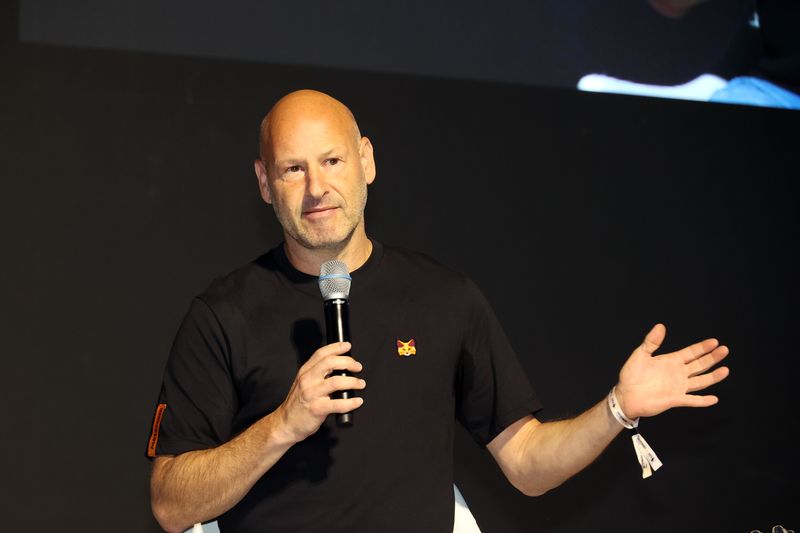
Ethereum co-founder Joseph Lubin offered this assessment of changes in the virtual-asset market during the main conference of Korea Blockchain Week 2026 (KBW2026), held on the 30th at WALKERHILL HOTELS & RESORTS in Seoul. He explained that technological maturity and growing regulatory clarity are encouraging institutional participation and expanding the financial services available to individuals.
Lubin said changes in the U.S. regulatory environment are bringing out latent institutional demand. "Institutions have been watching the technology and experimenting with it privately for 8 to 10 years," he said. "They are now gaining regulatory clarity from the United States Securities and Exchange Commission (SEC) and the Commodity Futures Trading Commission (CFTC)."
He also cited around-the-clock on-chain markets as a factor encouraging institutional participation. Trading and price discovery continue even on weekends, when traditional financial markets are closed, expanding the markets that financial institutions must respond to. "Institutions are realizing that they need to be on-chain across various markets 365 days a year, 24 hours a day," Lubin said.
As the foundation of institutional finance, Lubin emphasized Ethereum's security, reliability, and neutrality. "Ethereum was designed for the future and has focused on building a safe and reliable platform," he said. "Operating for more than 11 years is an achievement worth being proud of."
He attributed scalability to the division of roles between the underlying Layer 1 network and Layer 2. The structure preserves Layer 1's reliability while expanding its range of applications through Layer 2. "The reliability of Layer 1 must be maintained rigorously and carried over to Layer 2," Lubin said. "I expect the government's use of Ethereum to increase as well."
Lubin also sees changes emerging in personal financial services. As traditional financial products enter the blockchain ecosystem, wallets could expand their roles to include investment, asset management, and payments. "Traditional financial institutions and various financial products are entering our ecosystem," he explained. "This has created an opportunity to establish a personal fund-management system through MetaMask."
During a discussion titled "The Next Chapter of MetaMask: Opening Up Money," Lubin presented a vision of developing MetaMask into a "personal asset operating system." "Everything starts with self-custody," he said, adding that users would be able to access global financial infrastructure while directly holding and controlling their assets.
The MetaMask Money Account is a means of linking asset management with payments. "You can earn returns through the same account even when you are paying for dinner," Lubin said. The plan is to use it as a gateway to tokenized stocks, perpetual futures, prediction markets, and other services.
The business strategy centers on distribution and integration. It involves connecting financial products from external providers such as Ondo Finance with MetaMask users. "One of our strengths is a massive distribution network capable of serving tens of millions of users," Lubin said. "We have the ability to bring together multiple providers and create products in an integrated form."
Lubin explained that the separation of ConsenSys and MetaMask was also driven by differing priorities for individual-focused services and institutional and protocol businesses. "When a company expands, it makes sense to split it up and focus on each side's priorities and strengths," he said.
He assessed that South Korea has played an important role in the blockchain ecosystem, led by retail investors. "Korea's blockchain community is vibrant, and its high energy is why I came to Korea," Lubin said, adding that participation by institutional stakeholders is also increasing.
"The directions of institutions and individuals are not in conflict but are complementary," Lubin said. "If there is a gap between them, MetaMask can play a role in bridging it."
[email protected] Bae Hangul, Park Chaeyeon, Seok Jeongeun Reporter