Can It Say 'NO' to a $200 Billion Investment? Testing Safeguards for U.S.-Bound Investments
- Input
- 2026-09-30 16:05:12
- Updated
- 2026-09-30 16:05:12
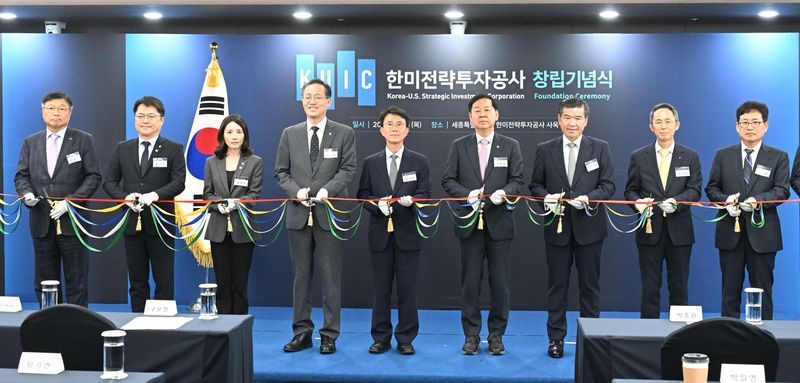
According to political sources on the 30th, the National Assembly's Finance and Economy Committee will conduct the Korea-U.S. Strategic Investment Corporation's first institutional audit on October 20, followed by a comprehensive audit on October 23. The committee will examine the investment decision-making and risk management systems of executives including President Park Jong-won, Head of the Management Planning Division Kang Jong-seok, and Chief Financial Officer Cha Jin-seop.
The first test case is the Encinal Gas Combined-Cycle Power Generation Project in Texas, United States, with a total project cost of $22.3 billion (approximately KRW 31 trillion). Since it has effectively been confirmed as the first U.S.-bound strategic investment, it will be the first case used to assess whether the verification system can screen the risks of a large-scale investment.
U.S.-bound investment projects undergo a three-stage review. MOTIR's Project Management Committee examines the commercial rationale of candidate projects, while the Korea-U.S. Strategic Investment Corporation's Risk Management Committee evaluates financial, legal, and operational risks and recommends mitigation measures. Based on those reviews, the Operating Committee under MOFE deliberates and decides whether to invest, as well as the investment amount and timing. Under this structure, MOTIR assesses a project's commercial viability, the corporation screens its risks, and MOFE makes the final decision.
The parliamentary audit will examine how this system operated as the Encinal project was considered for the corporation's first investment. The government maintains that the Encinal project has commercial rationale, but uncertainty remains over conditions that will determine its profitability, including a long-term power purchase agreement (PPA) and long-term offtakers. In other words, apart from MOTIR's assessment of the project's commercial viability, the key issue is how the corporation evaluated these risk factors internally and how thoroughly it screened them. The October audit will therefore examine how the risks arising from the absence of a finalized PPA and long-term offtakers were assessed, and what safeguards were required if the project was deemed investable. If risk factors were identified, the audit will also examine how much those opinions were reflected in the Operating Committee's final decision.
The independence and expertise of the Risk Management Committee will also be put to the test. The committee assesses risk levels and recommends mitigation measures, but it does not make the final investment decision. The issues include whether it can conduct an independent assessment when government policy needs conflict with the corporation's risk judgment, and whether its conclusions can actually influence investment terms and the disbursement of funds. The audit is also expected to examine whether the corporation has the specialized personnel and review capabilities needed to independently assess overseas infrastructure projects worth tens of trillions of won.
The framework for assigning responsibility for investment decisions will also be scrutinized. The review will examine whether provisions that ease management's liability when there is no intent or gross negligence serve as safeguards for independent decision-making, or whether they could weaken accountability for failed investments.
The effectiveness of the liquidation priority right the government says it secured will also come under scrutiny. The review will assess whether the right to recover investment funds first when a project is liquidated guarantees recovery of 100% of the principal, and how losses would be shared if the remaining assets fall short of the investment amount. The aim is to determine whether the corporation has adequate safeguards not only to screen risks before investment but also to minimize losses if an investment fails.
[email protected] Song Ji-won Reporter