If you've started saying "What?" more often... the condition in which you can hear but cannot understand
- Input
- 2026-09-30 14:58:28
- Updated
- 2026-09-30 14:58:28
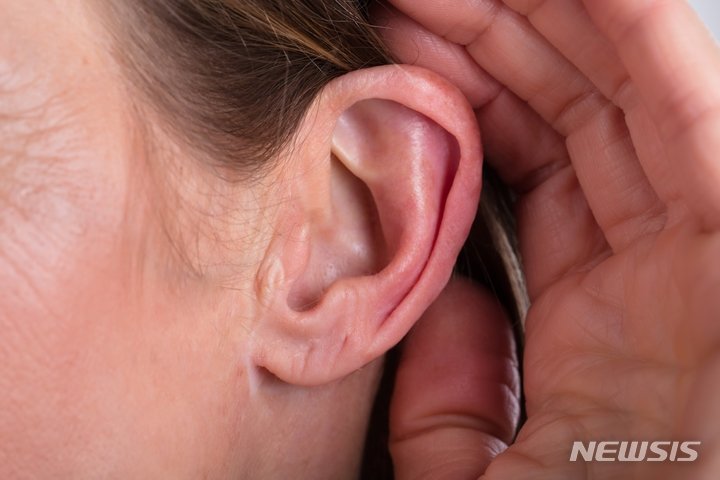
[Financial News] "I can hear the sounds, but I don't know what they're saying." This is a common complaint among patients with age-related hearing loss. Their ability to distinguish words declines before their ability to detect sounds.
Age-related hearing loss is a condition in which the cochlea and auditory nerves in the inner ear gradually degenerate with age, causing a slow decline in the ability to detect sounds and distinguish words. It is the most common type of hearing loss that develops in old age.
The condition usually progresses slowly and simultaneously in both ears, making it difficult to notice in its early stages. As hearing loss advances, people may repeatedly ask others to repeat themselves or struggle to follow conversations in noisy places. In severe cases, they may begin avoiding conversations altogether, which can lead to social isolation and depression.
The role of family members is important in such cases. Age-related hearing loss is often noticed first by people living with the affected individual rather than by the individual themselves. However, asking, "Are you having trouble hearing?" may be considered impolite out of consideration for the other person, delaying diagnosis and causing many people to miss the optimal time for treatment. If the television volume keeps getting louder or someone frequently asks, "What?" it is best not to delay a hearing test.
When hearing loss is suspected, the first steps are taking a medical history, conducting a physical examination, and performing an accurate hearing test. After examining the condition of the ears, an otolaryngology clinic evaluates the extent and type of hearing loss through pure-tone audiometry, speech audiometry, auditory brainstem response testing, CT scans, and other tests.
If hearing in one ear suddenly worsens, especially when accompanied by tinnitus, dizziness, or a feeling of fullness in the ear, patients should not assume it is simply age-related hearing loss and should seek medical attention as soon as possible. Such sudden hearing loss is often caused by damage to sensory organs or nerves, so prompt medication and rehabilitation can help with recovery.
Treatment depends on the severity of the hearing loss and the person's living environment. Mild cases can be monitored through regular follow-up, while hearing aids may be considered when the condition causes discomfort in daily life. If hearing loss is severe or hearing aids do not provide sufficient benefit, other auditory rehabilitation options, such as a cochlear implant (CI), may be considered. It is important to consult a specialist and choose an approach suited to the individual's hearing condition.
Age-related hearing loss is a condition that requires consistent management rather than a cure. Habits that protect hearing, such as keeping earbud volume at an appropriate level and wearing earplugs in very noisy places, can also help prevent it.
Lee Chi-gyu, a professor in the Department of Otorhinolaryngology at Soonchunhyang University Seoul Hospital, said, "Age-related hearing loss is easy to neglect because it is viewed as a natural part of aging. However, leaving hearing loss untreated for a long time can reduce the auditory stimulation reaching the brain and even lead to cognitive decline." He added, "If you find yourself frequently asking others to repeat themselves during conversations or becoming less responsive to sounds, do not delay. It is important to confirm your condition through an accurate hearing test and manage it with hearing aids or other appropriate measures at the right time."
[email protected] Jeong Myeong-jin, medical correspondent Reporter