[Field Report] A 14-Year Investment Pays Off: SK Innovation E&S's 1.3-Million-Tonne-Per-Year LNG Supply Chain in Darwin
- Input
- 2026-09-30 15:00:00
- Updated
- 2026-09-30 15:00:00
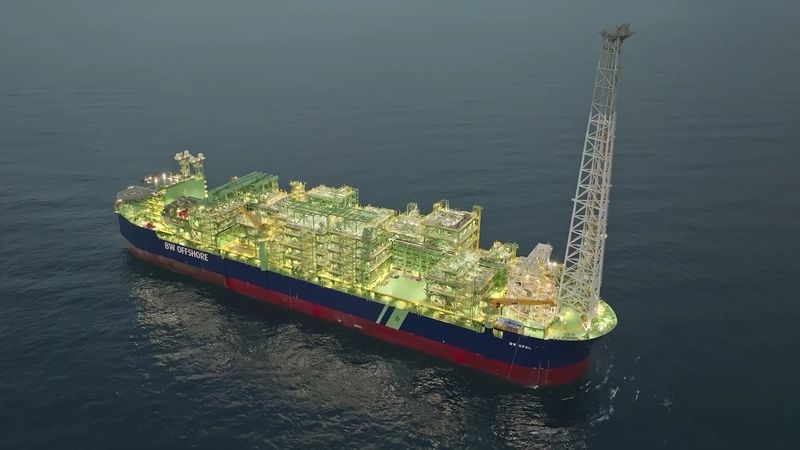
Visited on the 30th, the Darwin LNG Plant spans approximately 70 hectares. Natural-gas processing and liquefaction facilities were connected by pipelines around large storage tanks, while a long loading berth extended toward the sea for LNG carriers. Gas arriving from Barossa is first stripped of moisture and other impurities, then cooled to around minus 162 degrees Celsius to become LNG.■ Gas 3 km underground travels 380 km by pipeline to DarwinThe Barossa gas field lies offshore in northwestern Australia. Ownership of the Barossa gas field project is divided among Santos with 50%, SK Innovation E&S with 37.5%, and JERA with 12.5%. The field holds 3.4 Tcf (trillion cubic feet) of gas reserves and 51 million barrels of condensate, with LNG-equivalent production estimated at approximately 3.5 million tonnes per year.
Kim Hyun-jun, a technical adviser in SK Innovation E&S's LNG Business Division, said, "The Barossa gas field is located approximately 3 km underground, and we drilled production wells about 4 km long to produce the gas."
Gas extracted from beneath the seabed is processed at the offshore floating production, storage and offloading unit (FPSO), where condensate, water, carbon dioxide and hydrogen sulfide are separated before the gas is sent to Darwin. Kim explained, "We transport it approximately 380 km to shore without separate intermediate pressure boosting. To prevent the pipelines from freezing during liquefaction, we remove moisture to 5 parts per million or less."
The Darwin LNG Plant has a nominal liquefaction capacity of 3.7 million tonnes per year. It had liquefied gas from the Bayu-Undan gas field since 2006, but after that production ended, the plant underwent renovations from 2023 to process Barossa gas. Rather than building a new plant, the project uses existing facilities under a "brownfield" approach.■ Domestic deliveries begin after 14 years, securing 1.3 million tonnes annuallySK Innovation E&S invested in Barossa in 2012. "At the time, we thought a project on the scale of mini-LNG might be possible," Kim said. "After drilling five appraisal wells from 2014 to 2017, we secured reserves that could be developed." Full-scale development began after the company reached a final investment decision (FID) in 2021. SK's development investment totaled $1.6 billion.
LNG production began last December, and the first cargo was loaded on January 25 this year. SK Innovation E&S's first shipment arrived at the Boryeong LNG Terminal in February. The company also plans to secure approximately 1.1 million barrels of condensate annually from Barossa. The first shipment, about 300,000 barrels, arrived in South Korea last month and was supplied to SK Incheon Petrochem.
SK Innovation E&S's annual equity share of 1.3 million tonnes of LNG represents approximately 2.8% of South Korea's total LNG imports of 46.72 million tonnes last year. Assuming the gas field produces for about 20 years, total production would amount to approximately 26 million tonnes.
Transport distance is another competitive advantage. According to SK Innovation E&S, the usual transit time to Incheon is 10 to 12 days from Australia, 18 to 25 days from the Middle East, and 22 to 28 days from the United States. Shipments from northern Australia to South Korea also avoid the Strait of Hormuz, helping diversify supply routes.■ Linking the gas field to 5 GW of domestic power generationThe significance of Barossa extends beyond securing 1.3 million tonnes of LNG annually. SK Innovation E&S has built an LNG sourcing portfolio totaling approximately 6 million tonnes, including the Woodford shale gas field and Freeport LNG in the United States, Barossa and Darwin LNG in Australia, and long-term contracts in Indonesia. The company also holds four LNG carriers under long-term charter and long-term use rights at the Boryeong LNG Terminal. In addition, it operates domestic power plants with a combined capacity of approximately 5 GW, including the Paju Energy Power Plant, Yeoju Complex power station, SK E&S Gwangyang LNG Power Plant, Hanam Narae CHP Power Plant and Wirye combined heat and power plant. This structure connects LNG secured overseas to power generation through transportation and terminals.
Kang Ryun-kwon, head of the Management Planning Office at SK Innovation E&S, said, "The 1.3 million tonnes is included in the total demand of 6 million tonnes. If additional volumes are added, the reduction in the share purchased on the spot market is expected to be even greater."
[email protected] Kim Mi-hee Reporter