Ruling Party Speeds Up Follow-Up Measures for Third Commercial Act Amendment, Including Disclosure, Discovery and Anti-Stock-Price-Suppression Bills
- Input
- 2026-09-30 15:23:58
- Updated
- 2026-09-30 15:23:58
■ Disclosure Beforehand, Discovery Afterwards: Securing Information Symmetry
The Democratic Party of Korea's AI Finance and Economy Promotion Task Force and K Capital Market Special Committee held a forum titled 'Capital Market System Reform: Disclosure and Discovery' at the Korea Exchange's public relations center in Yeouido, Seoul, on the 30th. Park Min-gyu, secretary of the Democratic Party of Korea's AI Finance and Economy Promotion Task Force, said, "We will develop systems that enhance the fairness and reliability of our capital market," adding, "Our first topic is the disclosure and discovery systems."
Lee Kang-il, another member of the task force and a Democratic Party of Korea lawmaker, explained, "(Disclosure improvements and the discovery system) are not separate. They are like the two wheels of a cart. If there is only disclosure, the matter stops at raising suspicions. If there is only the discovery system, there is no way to know what should be examined." He added, "Only when disclosure makes the information known and the discovery system makes it possible to hold (companies) substantively accountable will directors' fiduciary duty finally be realized."
Experts attending the forum proposed measures to improve the domestic disclosure system and called for the introduction of a discovery system. Lee Yong-woo, head of the Democratic Party of Korea's AI Finance and Economy Promotion Task Force, argued that the weighted average cost of capital (WACC), which is not currently disclosed, should be made public. His concern was that ordinary shareholders are being harmed because they cannot access information on WACC, despite it being one of the most important variables in companies' financial decision-making.
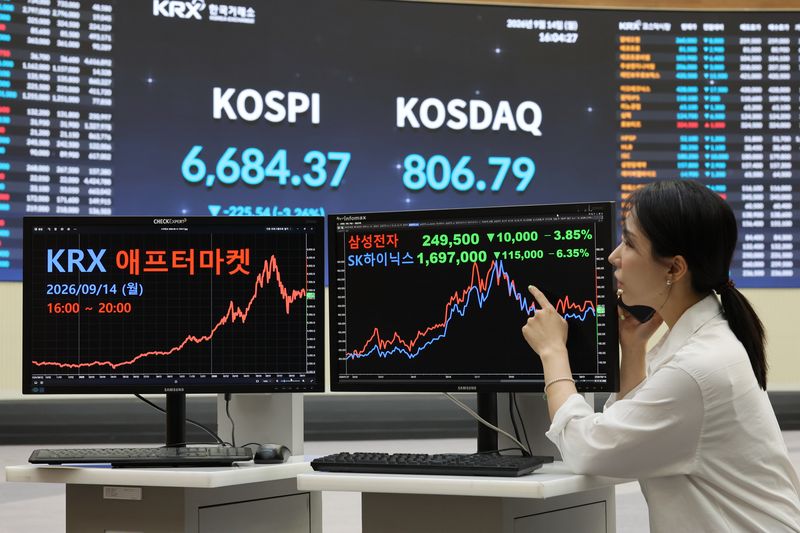
Jongsub Lee, a professor of business administration at Seoul National University, argued that information symmetry should be secured in advance through improvements to the disclosure system, while the discovery system should make it possible to hold companies accountable afterward. He assessed that this would supplement the 'directors' fiduciary duty' established through three amendments to the Commercial Act. He also pointed out that disclosure should be made more quickly to keep pace with changes in market conditions, including the launch of KRX's after-hours market and 24-hour continuous trading in digital assets.
■ Aftershocks from the Ministry of Economy and Finance's Anti-Stock-Price-Suppression Bill... Democratic Party of Korea Determined to Push Through Its Own Proposal
On the same day, Lee Hoon-gi, a Democratic Party of Korea lawmaker on the K Capital Market Special Committee, pointed out that the Ministry of Economy and Finance's anti-stock-price-suppression bill cannot prevent companies from deliberately suppressing their stock prices. At a press conference at the National Assembly's Communication Hall, Lee said, "Although the Ministry of Economy and Finance included an anti-stock-price-suppression measure in its tax reform plan announced on Aug. 3, the measure absolutely cannot prevent stock-price suppression," adding, "The ministry's proposal is a 'bill that leaves stock-price suppression unchecked.'"The Ministry of Economy and Finance has proposed classifying companies as long-term low-PBR companies if, cumulatively, their price-to-book ratio (PBR) falls within the bottom 25% of the KOSPI Composite Index and the bottom 10% of KOSDAQ by industry for 12 of 13 half-year periods, or six years out of six years and six months.
Lee and other members of the Democratic Party of Korea have argued that companies could avoid being classified as long-term low-PBR companies if they fell outside the criteria for just two of the 13 half-year periods, creating a loophole. They viewed the proposal as giving companies room to avoid its application by managing their PBR during only some periods instead of continuously increasing their corporate value.
The Democratic Party of Korea's proposal differs considerably from that of the Ministry of Economy and Finance. An amendment to the Inheritance and Gift Tax Act proposed by Lee would uniformly value shares of listed companies with a PBR below 0.8 at 80% of their net asset value, thereby establishing a floor for calculating inheritance and gift taxes. Its core objective is to eliminate the economic incentive to deliberately lower stock prices by ensuring that the inheritance and gift tax burden does not decline even if stock prices are intentionally reduced.
Amid deep differences between the party and the government over the anti-stock-price-suppression bill, some members of the Democratic Party of Korea have signaled their determination to push the party's proposal through. Because the measure would be introduced through an amendment to the Inheritance and Gift Tax Act, attention is focused on discussions by the Tax Subcommittee of the National Assembly's Finance and Economy Committee.
[email protected] Kim Hyung-gu Reporter