MFDS Revises Safety Guide for GLP-1 Obesity Treatment Drugs
- Input
- 2026-09-30 14:39:22
- Updated
- 2026-09-30 14:39:22
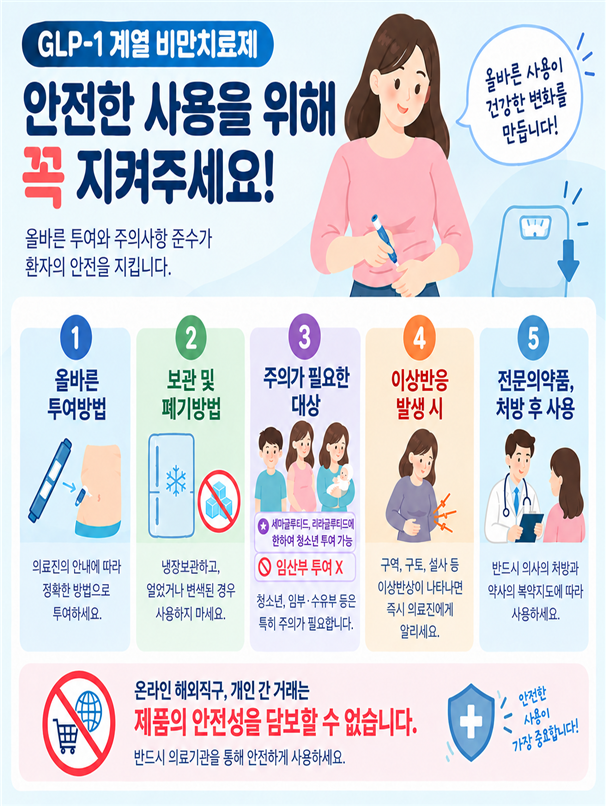
The Ministry of Food and Drug Safety announced on the 30th that it, together with the Korea Institute of Drug Safety and Risk Management, revised the 'Guide to Safe Use of GLP-1 Class Obesity Treatment Drugs' and distributed it to regional medical associations and regional drug safety centers nationwide on the 30th.
GLP-1 class obesity medications are prescription drugs that help with weight loss by reducing appetite and maintaining a feeling of fullness for a longer period. In adults, they are prescribed to obese patients with an initial body mass index (BMI) of 30 kg/m2 or higher, or to those with weight-related conditions such as diabetes or hypertension who have a BMI of 27 kg/m2 or higher.
The revised guidelines also newly include administration standards for adolescents. For adolescents aged 12 to under 18, prescriptions may be issued for certain products only if they meet adult standards for BMI of 30 kg/m2 or higher and weigh more than 60 kg. As they are in a growth phase, the medication should be administered cautiously starting with a low dose, and nutritional intake and growth status must be closely monitored.
If you are taking diabetes medication concurrently, the risk of hypoglycemia may increase, so you should consult with your healthcare provider regarding dosage adjustments.
If you are pregnant, breastfeeding, or planning to become pregnant, you should consult a healthcare professional. This is because there is insufficient evidence regarding the safety of using the drug during pregnancy. If you are planning a pregnancy, you must determine the timing of discontinuation and the duration of contraception by considering the drug's retention period in the body.
Gastrointestinal disorders or injection site reactions may occur during the course of administration, and serious adverse events such as hypersensitivity reactions and acute pancreatitis may also occur. In particular, adolescents should be aware of the impact on growth caused by dehydration and nutritional deficiencies due to vomiting and nausea, as well as rapid weight loss.
When storing, keep it refrigerated away from light, and if the medicine is frozen, particles are visible, or the color has changed, do not use it and discard it.
The Ministry of Food and Drug Safety emphasized that GLP-1 class obesity treatments must be used strictly within the approved scope, under a doctor's prescription and pharmacist's guidance. It also urged people to avoid purchasing medicines through direct overseas online purchases or person-to-person transactions.
[email protected] Jeong Sang-hee Reporter