Seoul YMCA: "Specialized Credit Finance Business Act Must Be Revised to Prevent Competition Among Payment Methods"
- Input
- 2026-09-30 14:51:33
- Updated
- 2026-09-30 14:51:33
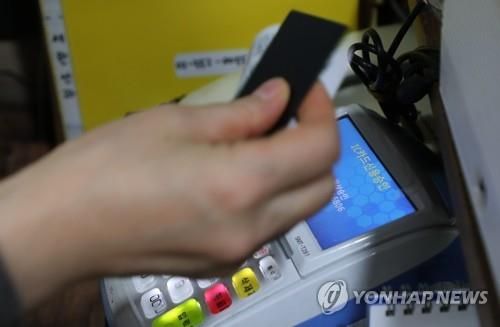
[Financial News] Seoul YMCA has called for improvements to the system so consumers can receive benefits such as discounts and rewards points based on cost differences among payment methods, arguing that this would promote competition in South Korea’s credit card-dominated payment market.
The Seoul YMCA’s Civic Relay Office said on the 30th, "Although various payment methods, including easy payments, debit cards and prepaid payments, have emerged, the current system is preventing the spread of low-cost payment methods," and urged the revision of the Specialized Credit Finance Business Act.
According to the "Usage of Electronic Payment Services in the First Half of 2026," released by the Bank of Korea (BOK) on the 18th, the average daily transaction value of easy payment services such as NAVER, Kakao, Toss, Samsung Pay and Apple Pay reached 1.2264 trillion won, a record high.
However, a considerable portion of easy payments still relies on credit card payment networks. Of the 680 billion won in easy payment transactions provided by electronic financial service providers, 394.8 billion won, or 58.1%, was based on credit cards and other methods.
Seoul YMCA pointed out that the credit card-centered payment structure is increasing the fee burden on merchants. According to the organization, credit card payments totaled approximately 1,022 trillion won, or 79.5%, of the 1,286 trillion won in private consumption expenditure in 2025. The fees merchants pay to credit card companies exceed 7 trillion won annually.
Seoul YMCA identified Article 19 of the Specialized Credit Finance Business Act as a factor hindering the spread of low-cost payment methods. The provision prohibits merchants from treating credit card members unfavorably. The organization argues that this restricts merchants from returning their cost savings to consumers who use lower-fee payment methods in the form of discounts or points.
Seoul YMCA said, "The provision was introduced in 1998 to ensure transaction transparency and expand the tax base, but now that transaction transparency can be secured through various electronic payment methods, it is instead preventing the expansion of low-cost payment methods." It proposed, "The mandatory credit card acceptance principle should be maintained, but the system should be improved so that merchants can provide benefits, within the range of the cost difference, to consumers who choose relatively low-fee payment methods such as debit cards, prepaid payments, recurring transfers and easy payments."
The organization explained that greater competition among payment methods could also help reduce overall payment costs. Based on the 1,022 trillion won in credit card payments in 2025, Seoul YMCA estimated that a 0.1 percentage-point reduction in payment fees would create potential savings of approximately 1 trillion won, while a 0.2 percentage-point reduction would generate about 2 trillion won in savings. Seoul YMCA emphasized, "Beyond administrative fee reductions, we need to create an environment in which various payment methods can compete on fees and service quality." It added, "The policy direction should shift from protecting specific payment methods to promoting competition among payment methods and guaranteeing consumers’ right to choose."
[email protected] Choi Hye-rim Reporter