Japan to Pour Money into Defense Startups and Open Export Routes; Plans Dedicated Agency
- Input
- 2026-09-30 14:28:16
- Updated
- 2026-09-30 14:28:16
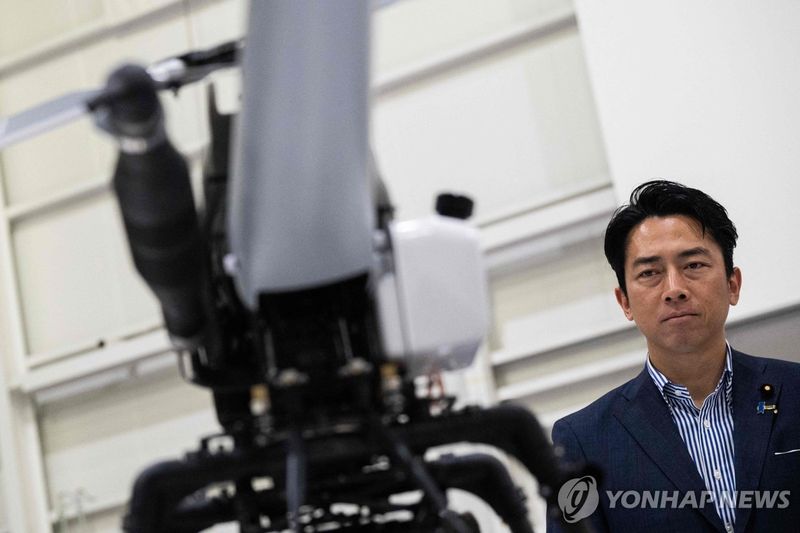
【Financial News, Tokyo—Correspondent Hye-jin Seo】The Japanese government is planning to establish a dedicated organization to support everything from investment in defense startups to equipment exports. The plan aims to strengthen the defense industry's production base by having the government invest first in drone and artificial intelligence (AI) companies struggling to secure funding, while also helping them access overseas markets.
According to the Nihon Keizai Shimbun on the 29th, the Japanese government will establish a system for investing in defense startups through venture capital (VC) as early as fiscal 2027. It plans to submit a related bill to next year's regular session of the Diet to establish an independent administrative agency tentatively called the Defense Production and Technology Base Development Organization. The new organization will be jointly operated by the Ministry of Defense and the Ministry of Economy, Trade and Industry (METI).
The core initiative is the creation of a dedicated fund to invest in defense startups. Japan will select domestic VCs through an open bidding process to provide operating and research funding to new companies, while also supplying capital to private funds. The government plans to identify dual-use technologies that can serve both civilian and military purposes and connect them to the mass production of advanced equipment such as drones.
The government is stepping in as a direct investor because the amount of funding flowing into Japanese defense startups is insufficient compared with other countries. Startups can make decisions quickly, but they have limited financing capabilities, while investors widely believe that recovering capital invested in the defense sector is difficult. The Nikkei reported that there is also a growing sense of crisis within the Ministry of Defense, where officials believe there are "almost no" Japanese startups sustaining their businesses by producing equipment for the Self-Defense Forces.
Government investment will be provided temporarily, until funding from private financial institutions and investors increases. The aim is to attract follow-on private investment by having the government assume the initial investment risks.
The new organization is also expected to take on export-support functions. The government is considering a Japanese version of FMS, under which it would purchase equipment made by Japanese companies and sell it overseas.
Foreign Military Sales (FMS) is a U.S. government program for selling defense equipment to allies and other partner countries. Japan would also serve as the export channel, supporting tasks that companies would find difficult to handle on their own, such as modifying specifications to meet the requirements of importing countries.
The new organization will also consider taking charge of Government-Owned, Contractor-Operated (GOCO) facilities, in which the government owns factories and entrusts their operation to private companies. Under this arrangement, the government would be involved in maintaining production capacity during peacetime so that ammunition and other supplies could be rapidly produced in an emergency.
The plan is also aligned with the growth strategy of the Takaichi Cabinet.
In July, the Japanese government designated the defense industry as one of 17 strategic sectors and decided to invest a combined total of ¥4.3 trillion from the public and private sectors in dual-use technologies by fiscal 2040. In April, it revised the Three Principles on Transfer of Defense Equipment and abolished the "five-category" restrictions that had limited exports of equipment with lethal capabilities.
The push to foster startups also reflects the growing importance of equipment that can be rapidly improved on the battlefield. Large platforms such as frigates and fighter jets take years to develop, whereas drones and similar equipment can be improved within a short period based on problems identified in the field.
The Nikkei reported, "There have been cases in the Russia-Ukraine war in which the weaknesses of drones were addressed within two to three weeks and the improved drones were deployed in the next battle."
The Japanese government expects that rapidly incorporating these technologies into equipment will reduce casualties among Self-Defense Force personnel and improve command-and-control efficiency.
[email protected] Hye-jin Seo Reporter