“Guidance on Their Own Authority” Instead of Directing Investigations: How Far Will Prosecutors Be Involved with Special Judicial Police Officers in Serious Accidents and Other Cases?
- Input
- 2026-09-30 14:47:50
- Updated
- 2026-09-30 14:47:50
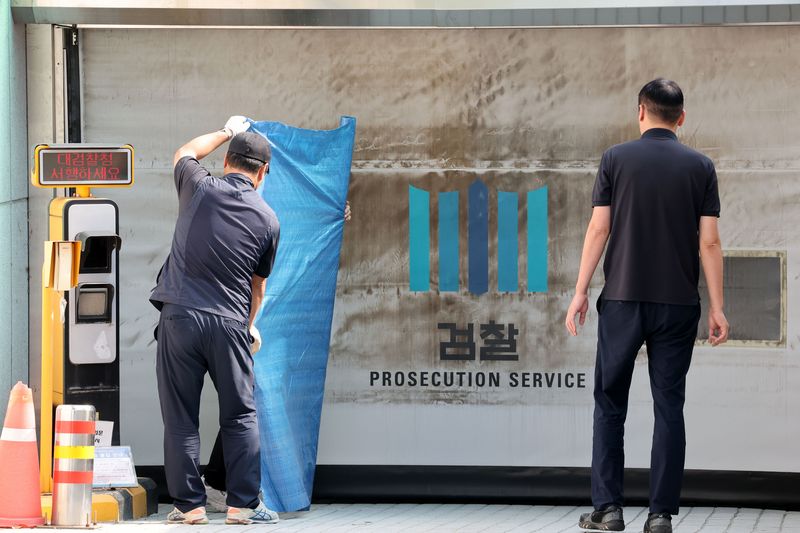
[Financial News] Starting October 2, prosecutors' authority to direct investigations by special judicial police officers will be abolished. However, a channel will remain for prosecutors to provide guidance and advice during investigations even without a request from the officers. In fields such as serious accidents, where special judicial police officers and prosecutors have frequently worked together, the scope of such guidance and advice is expected to significantly affect investigative practice.
According to legal sources on the 30th, the revised Criminal Procedure Act, which takes effect on October 2, will change the relationship between prosecutors and special judicial police officers from investigative direction to mutual cooperation. The current provisions stating that “special judicial police officers shall receive prosecutors' direction in all investigations,” as well as the obligation to comply with prosecutors' directions, will be removed.
Cases involving serious accidents are considered an area that will be directly affected by the change. When a fatal occupational accident occurs, police primarily investigate alleged occupational negligence resulting in death, while labor inspectors serving as special judicial police officers primarily investigate alleged violations of the Occupational Safety and Health Act and the Serious Accidents Punishment Act. Labor inspectors have so far been subject to prosecutors' direction, but going forward they will be able to independently initiate and conduct investigations without such direction.
Instead, the revised law allows special judicial police officers to request guidance and advice from prosecutors during investigations, while also allowing prosecutors to provide such guidance and advice when necessary. The Rules on Mutual Cooperation between Public Prosecutors and Special Judicial Police Officers, enacted the previous day, also allow prosecutors to provide guidance and advice on their own authority when they deem it necessary.
The key question is how far guidance and advice provided on a prosecutor's own authority will extend in practice. Although the legal relationship has shifted to mutual cooperation, specific standards have yet to be established on which cases prosecutors may intervene in on their own authority and to what extent they may present their opinions. The cooperation rules require the forms and procedures for such guidance and advice to be prescribed by an ordinance of the Ministry of Justice, but they do not contain specific criteria.
Hong Jeong-yeon, an attorney at Lee & Ko who previously headed the Labor Investigation Support Division at the SPO and served as a prosecutor seconded to the Ministry of Employment and Labor, said at a seminar on the revised Criminal Procedure Act the previous day, "How requests for guidance and advice function will have a significant impact on investigative practice. It is important to determine the circumstances in which prosecutors may provide guidance and advice on their own authority, but nothing concrete has been established yet."
If prosecutors do not provide guidance and advice on their own authority and special judicial police officers do not request it either, the time from the initiation of an investigation to the referral of a case could be shortened. Hong said, "Previously, an investigation began with a preliminary inquiry before a formal case was opened, followed by interviews with witnesses. The person was then placed under suspicion after receiving directions from a prosecutor. With this process eliminated, investigations are likely to move much faster." Conversely, in cases where guidance and advice are provided, a prosecutor from the Public Prosecution Office may express opinions on the investigation even before the case is referred.
Changes are also expected after referral. In cases where special judicial police officers complete their investigations without separately consulting prosecutors, the Public Prosecution Office may reach a conclusion different from the referral opinion or request a supplementary investigation. Accordingly, the Public Prosecution Office's review of cases after referral, along with how guidance and advice are administered before referral, is expected to become increasingly important.
[email protected] Choi Eun-sol Reporter