"I Can't Leave My Men Behind": ROK Commander Who Stayed in the Rear and Australian Hero Couple Reunited in Busan After 73 Years
- Input
- 2026-09-30 15:27:48
- Updated
- 2026-09-30 15:27:48
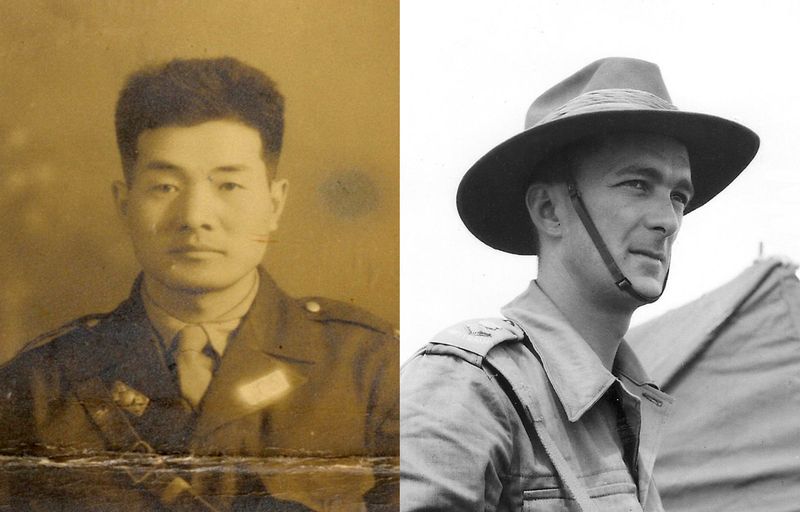
MPVA said on the 30th that it had selected Choi Young-soo and Australian Army Lieutenant Colonel Charles Hercules Green as the October 2026 Korean War Heroes of the Month. The two commanders shared the distinction of leading their units from the front lines at decisive moments in the war and directing the course of battle.
Choi was commissioned as an officer in 1946 and deployed to the front when the war began as deputy regimental commander of the 7th Regiment, ROK 6th Infantry Division. When North Korean forces launched their surprise invasion on June 25, 1950, Choi developed tactics that effectively integrated the regiment's limited firepower, including 81-mm mortars and 57-mm antitank guns. His efforts contributed to holding Chuncheon for three days. As the advance north continued, then in his mid-30s and the head of a family, Lieutenant Colonel Choi rejected an escape route that would have allowed him to survive first. He voluntarily remained at the very rear so that as many of his soldiers, who longed for their hometowns and families, could escape safely to the rear as possible. While rallying stragglers and fighting fiercely as a shield for his troops, Lieutenant Colonel Choi was killed in action amid concentrated enemy fire during the Battle of Onjong-ri on October 30 that year. In recognition of his military spirit and sacrifice for his men, the government posthumously promoted him to colonel and awarded him the Chungmu Order of Military Merit.
The life of Australian Army Lieutenant Colonel Charles Hercules Green, who was selected alongside Choi, reflects a great love story that transcended national borders. When the Korean War broke out, he left his beloved wife, Mrs. Olwyn Green, and their daughter, who had just turned one, in his native Australia. He landed in Busan as commander of the 3rd Battalion, Royal Australian Regiment. After transforming the battalion into an elite unit in a short period, he spearheaded the advance into Pyongyang via Kaesong and Sariwon and led a series of victories through the Battle of Chongju.
But the price of victory was harsh. On October 30, 1950, while commanding an operation along the Dalcheon River near Chongju, Lieutenant Colonel Green suffered fatal wounds from enemy shell fragments. He died three days later at the age of 30. After hearing the news of her husband's death, Olwyn Green never remarried. She spent the rest of her life as a philosophy researcher, documenting the life of her husband and the Republic of Korea, which he had defended with his life. More than 70 years later, in September 2023, Mrs. Green passed away. In accordance with her final wish, "Bury me beside my husband," she was buried alongside her husband, Lieutenant Colonel Charles Hercules Green, at the United Nations Memorial Cemetery in Korea in Busan.
As a new month begins, the life stories of these outstanding commanders—who devoted themselves to defending the Republic of Korea's liberal democracy and were also someone's husbands and fathers—serve as a warning, urging us to pause and reflect, even briefly, on our society today.
[email protected] Lee Jong-yoon Reporter