China Opposes Japan's Call to Remove 'Enemy State Clauses' from UN Charter, Calling Remilitarization a 'Realistic Threat'
- Input
- 2026-09-30 14:26:11
- Updated
- 2026-09-30 14:26:11
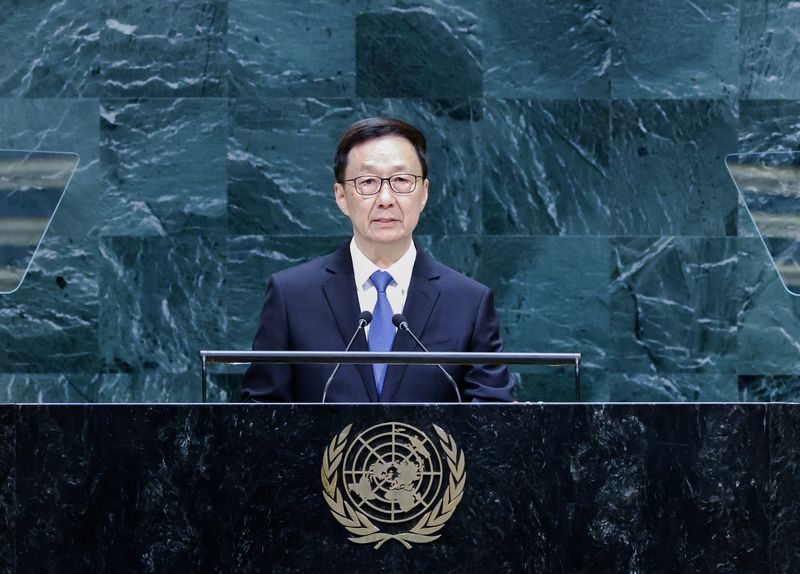
[Financial News] China has opposed Japan's call to remove the 'enemy State clauses' from the Charter of the United Nations (UN Charter), citing Japan's moves toward remilitarization.
According to China's state-run English-language newspaper Global Times on the 30th, Sun Lei, deputy permanent representative of China's mission to the UN, exercised his right of reply during the General Assembly's general debate on the 28th local time. He argued, "Given the reality of Japan's remilitarization, the enemy State clauses in the UN Charter should neither be amended nor deleted."
Sun said, "China firmly opposes Japan's demand," noting that Japan joined the UN after acknowledging its past militarist crimes and accepting the UN Charter in its entirety.
This is viewed as China's official rebuttal to Japanese Prime Minister Sanae Takaichi's call to remove the enemy State clauses in her speech at the General Assembly on the 22nd.
The enemy State clauses are a general term for provisions in the UN Charter concerning former Axis powers, including Japan and Germany, which were enemies of the Allies during World War II. The UN Charter still contains language that could be interpreted as allowing military action against these countries without authorization from the United Nations Security Council (UNSC) or a declaration of war.
The United Nations General Assembly regarded these provisions as outdated and adopted a resolution in 2005 to remove the term 'enemy State.' However, the amendment process needed to reflect the change in the UN Charter has not been completed, so the wording remains in place.
"Relaxation of lethal weapons export controls, deployment of medium- and long-range missiles, and other remilitarization efforts"
After Prime Minister Takaichi suggested last November that Japan could intervene in the event of a 'Taiwan contingency,' China said it could respond militarily if Japan exercised collective self-defense, invoking the enemy State clauses. The Ministry of Foreign Affairs of Japan countered that the provisions had become a dead letter.
In his remarks, Sun also criticized Japan's efforts to strengthen its defense capabilities and argued that the clauses should remain in place.
He cited Japan's sharp increase in defense spending in recent years, its relaxation of lethal weapons export controls, and its efforts to deploy medium- and long-range missiles and strengthen its offensive capabilities. He added, "These facts show that Japan's remilitarization has become a realistic threat to peace and stability in the region and around the world."
He continued, "The premise of Japan's postwar system is deep reflection on its history of aggression and a clear break with militarism," and criticized the Takaichi government for instead glorifying Japan's war crimes and using threats from neighboring countries to justify expanding its military capabilities.
Sun also said, "It is the shared responsibility of the international community to safeguard the postwar international order, uphold the fruits of victory in World War II, and maintain peace and stability in the region," urging Japan to immediately halt its dangerous acts of remilitarization.
Global Times, citing an anonymous Japanese expert in China, claimed that Japan's call to remove the enemy State clauses was an attempt to shed its historical status as a defeated nation in World War II and eliminate constraints on expanding its military power.
The expert added, "Japan's moves are misleading international public opinion and emboldening Japan's right-wing forces," warning that they "could further heighten regional security concerns and trigger an arms race."
[email protected] Lee Seok-woo, international affairs correspondent Reporter