Driving Education Innovation Through Tourism, Maritime Affairs, Healthcare and AI... Busan Education Office Takes on Challenge to Become a Leading Education Innovation Region
- Input
- 2026-09-30 14:29:59
- Updated
- 2026-09-30 14:29:59
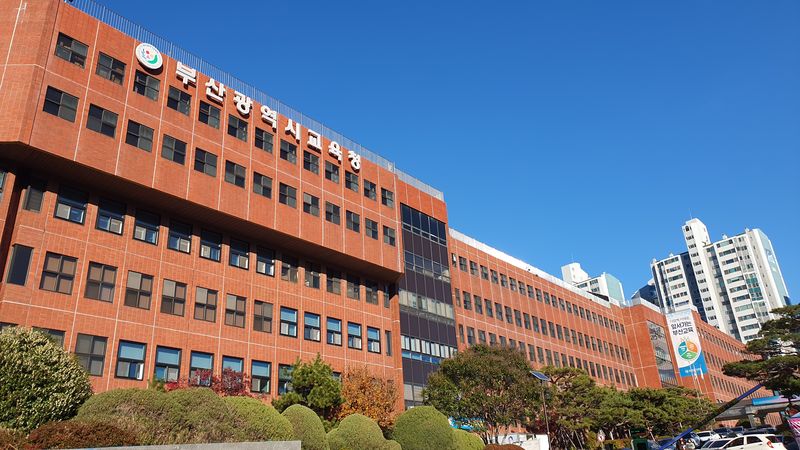
[Financial News] The Busan Metropolitan City Office of Education has joined forces with local governments to apply for the Ministry of Education's Education Innovation Leading Region competition.
The office said on the 30th that it had applied for the Education Innovation Leading Region project along with Busan and five lower-level local governments: Jung-gu, Dong-gu, Seo-gu, Yeongdo-gu and Geumjeong-gu.
The competition is a new project reorganized based on the achievements and limitations of the Education Development Zone project, which concludes this year. It will be implemented starting in 2027 and continuing through 2031 at the latest, with a focus on overcoming regional disparities in educational conditions and establishing tailored education innovation models.
The office selected five areas—Jung-gu, Dong-gu, Seo-gu, Yeongdo-gu and Geumjeong-gu—where declining school-age populations and a rise in small schools limit the operation of curricula at individual schools. It worked with the local governments in these areas to develop the competition's project tasks. Although the areas urgently need improved educational conditions, they have abundant distinctive educational resources, including universities, industry, maritime affairs, tourism and healthcare, making them well suited for region-linked education innovation.
Accordingly, the office plans to establish a regional education system centered on the three education support offices overseeing the five areas. The system will allow schools to share curricula and connect them with resources from local governments, universities, industry and regional organizations.
The office has set the vision for the project as “Learning That Connects Communities, Opening Busan Education Innovation Together.” It will pursue six core initiatives under two main strategies: narrowing educational disparities and strengthening links with universities and industry.
To close educational gaps, it will first pursue three initiatives: Small School BIG3 Innovation, Busan-style On·Dol·Bang and Glocal Jump Up.
Small School BIG3 Innovation will reform curricula, school structures and human resources simultaneously, expand joint curricula among schools, and improve the educational capacity of small schools through integrated school operations and additional teacher placements.
Busan-style On·Dol·Bang will build a warm care and after-school network involving the entire neighborhood, linking care resources at schools and in the community. Glocal Jump Up will also be promoted to develop the linguistic and cultural strengths of students from immigrant backgrounds and expand access to English education for students from disadvantaged backgrounds.
To strengthen university-industry ties, the office will pursue three initiatives: Mu·Han·Seong·Jang Campus, Busan Growth Navigation and Autonomous Public High School 2.0 Open School.
It will connect the specialized resources of the five areas—Jung-gu (global affairs and tourism), Dong-gu (port logistics and history), Seo-gu (healthcare and public health), Yeongdo-gu (maritime affairs), and Geumjeong-gu (ecology and AI)—with universities and industry to operate Mu·Han·Seong·Jang Campus, a regionally specialized campus.
Busan Growth Navigation will support growth pathways for students at general and vocational high schools and out-of-school youth. Through Autonomous Public High School 2.0 Open School, the office will share the distinctive curricula of Autonomous Public High School 2.0 with local students, strengthening links among learning, career planning, further education and employment.
Kim Seok-jun, superintendent of the Busan Metropolitan City Office of Education, said, "The Education Innovation Leading Region initiative is a new attempt to expand children's learning opportunities by connecting the resources of schools and communities, and universities and industry. Even if schools are small, we will make the educational opportunities available to children greater and work with local communities to create a new model for Busan education so that every child in Busan can develop their potential regardless of where they live."
[email protected] Kwon Byung-seok Reporter