Japanese Robot Makers, Squeezed by China's Low-Price Offensive, Expand U.S. Investment
- Input
- 2026-09-30 14:19:04
- Updated
- 2026-09-30 14:19:04
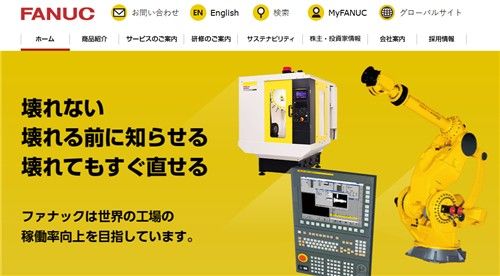
【Financial News, Tokyo—Seo Hye-jin, correspondent】Japanese industrial robot makers are increasing their investments in the United States. Their position in China is being challenged by local companies' low-price offensive, while demand for automation is growing in the United States because of labor shortages at factories. Japanese companies are also actively seeking new markets by integrating artificial intelligence (AI) developed by U.S. technology companies into robots.
According to Nikkei Asia on the 30th, leading Japanese industrial robot maker FANUC is investing $90 million (about 121.9 billion won) to build a plant and logistics center on the site of a former General Motors (GM) plant in Pontiac, Michigan. The facilities are scheduled for completion by the end of 2027.
FANUC makes robots used for welding, painting, assembly and material handling at automobile plants, as well as devices that control machine tools.
Japanese companies are expanding their U.S. operations against the backdrop of intensifying competition in the Chinese market.
Japanese companies had long dominated China's industrial robot market, but local manufacturers such as ESTUN and Inovance Technology are growing rapidly by competing on low prices. According to market research firm Market Intelligence Resource, FANUC lost its top position in shipment volume in China last year.
In the United States, by contrast, labor shortages at factories are driving demand for robot adoption. The fact that the country leads AI development but has no domestic company that dominates the industrial robot sector also presents an opportunity for Japanese manufacturers.
According to estimates by Okasan Securities, FANUC held a 56% share of the U.S. industrial robot market in 2024, while Yaskawa Electric ranked third with a 7% share.
Sales are also showing a shift.
Combined sales in the Americas for FANUC and Yaskawa Electric surpassed those in China in fiscal 2023. In fiscal 2025, sales in the Americas totaled 360.7 billion yen, exceeding China's 344.5 billion yen. The Americas accounted for 27.1% of FANUC's consolidated sales for the fiscal year ending in March 2026, compared with 26.6% for China.
Production investments targeting the growth potential of the U.S. market are also continuing.
Yaskawa Electric is building a $180 million (about 243.8 billion won) plant in Wisconsin. It plans to begin local production of AI-equipped industrial robots by the fiscal year ending in February 2029. NACHI-FUJIKOSHI is also installing an automated assembly line at its existing plant in Indiana and plans to begin robot production as early as this year.
In addition to the automotive painting robots it already produces in the United States, FANUC is considering local production of its core industrial robots.
FANUC is working with NVIDIA and Google to target the Physical AI market. Physical AI combines AI, sensors and robots, enabling machines to perceive their surroundings and perform tasks autonomously in the real world.
However, building factories in the United States does not by itself resolve cost issues. That is because it is difficult to secure a stable local supply of key components such as motors and printed circuit boards. Most of FANUC's suppliers are Japanese companies that have accumulated expertise over several decades while meeting the company's quality standards. Finding or developing suppliers in the United States that can offer the same level of quality will be challenging.
FANUC President Kenji Yamaguchi said, "Costs could rise if components cannot be sourced locally." Even if producing robots in the United States helps avoid tariffs on finished products, components imported from Japan and elsewhere may still be subject to tariffs. An additional 12.5% tariff on robot-related manufactured goods took effect in the United States in July.
The scale of the Chinese market remains overwhelming. According to the International Federation of Robotics, the number of new industrial robots installed in the United States rose 12% from the previous year to 38,400 last year, while the figure for China reached 350,000. Japanese companies are pursuing a strategy of expanding local production and AI partnerships in the United States while responding to China's enormous demand.
[email protected] Seo Hye-jin Reporter