Aircraft MRO Cluster Takes Shape in Incheon's Yeongjong, with Korean Air to Invest KRW 150 Billion
- Input
- 2026-09-30 14:19:33
- Updated
- 2026-09-30 14:19:33

[Financial News, Incheon—Reporter Han Gap-su] The project to establish an aircraft maintenance, repair and overhaul (MRO) hub in Yeongjong International City, Incheon, has entered full-scale implementation. Following approval by the Industrial Site Review Committee, six institutions and companies—including the Incheon Metropolitan City Government, the Incheon Free Economic Zone Authority, Yeongjong-gu Office, Korea Land and Housing (LH), Incheon Metropolitan City Development (iH), and Korean Air—have signed an investment and occupancy agreement, accelerating the project.
The Incheon Metropolitan City Government and the Incheon Free Economic Zone Authority announced on the 30th that they had signed an "Investment and Occupancy Agreement for the Establishment of Korean Air's Aircraft Maintenance (MRO) Cluster and Mutual Growth" with the participating institutions and companies at Songdo G-Tower.
The agreement follows the Industrial Site Review Committee's approval in May of Korean Air's original plan to move into the Yeongjong Aviation General Industrial Complex. It specifies the cooperation required for the project, including the roles of each institution, site development, administrative support, and the training of local talent.
Korean Air plans to invest approximately KRW 150 billion to build engine and component maintenance facilities and related infrastructure, with a total floor area of 101,151 square meters, on the 50,692-square-meter I1-5 and I1-6 sites in the Yeongjong Aviation General Industrial Complex. Construction is scheduled to run from January 2029 through December 2031.
The site is adjacent to Incheon International Airport and can also be linked to Unbuk-dong, where Korean Air currently operates an engine test cell. This is expected to create synergies between the existing aviation infrastructure and the new maintenance facilities.
LH and iH will cooperate on supplying the land and reviewing land-use plans for site grading. iH will oversee the removal of an urban planning road and the relocation of existing obstacles, including streetlights and water and sewage pipes. Korean Air will cover the construction costs required for site grading and plans to sign a sales contract for the designated site.
The Incheon Metropolitan City Government and the Incheon Free Economic Zone Authority will oversee various administrative approvals, including amendments to the development and implementation plans, and operate a working-level consultative body to coordinate differences among the institutions. Yeongjong-gu Office will support permits and improvements to the business environment, as well as the training and hiring of local talent in the aircraft maintenance sector.
Korean Air also agreed to pursue ESG management, including environmentally friendly operations and social responsibility, while cooperating on site-visit programs for mutual growth with the local community and the training of aircraft maintenance specialists. The parties agreed in principle to sign occupancy and land purchase agreements within three months of signing the agreement.
Once the MRO cluster is established, Yeongjong's aviation industry is expected to expand beyond basic maintenance into high-value-added areas such as engines and key components.
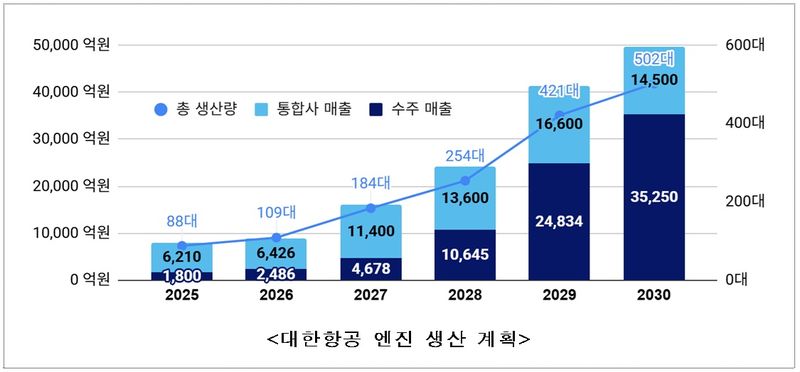
The Incheon Free Economic Zone Authority forecasts that Korean Air's annual engine maintenance output will rise from the current 88 units to approximately 502 units in 2031, when the cluster becomes fully operational. This would represent an increase of about 5.7 times. More than 2,000 specialists are expected to be based in the MRO sector alone, likely contributing to local hiring and job creation.
Mayor Park Chan-dae said, "This agreement specifies the roles and areas of cooperation for each institution in establishing the Korean Air MRO cluster and moves the project into full-scale implementation. We will provide every possible form of administrative support so that the Korean Air MRO cluster can be successfully established and Incheon can grow into a key hub for the aviation industry."
[email protected] Han Gap-su Reporter