LG Uplus cuts consultation wait times from 47 seconds to 5 with AI, aiming for a wait-free customer center
- Input
- 2026-09-30 14:22:56
- Updated
- 2026-09-30 14:22:56
Own customer centers serve as AI test beds: Betting on an in-house AICC
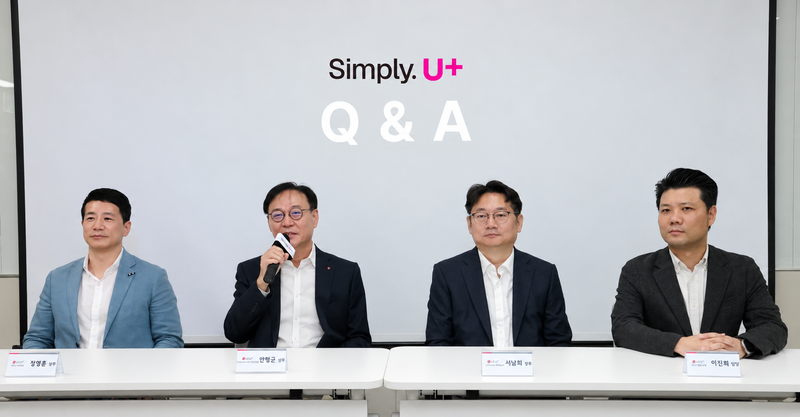
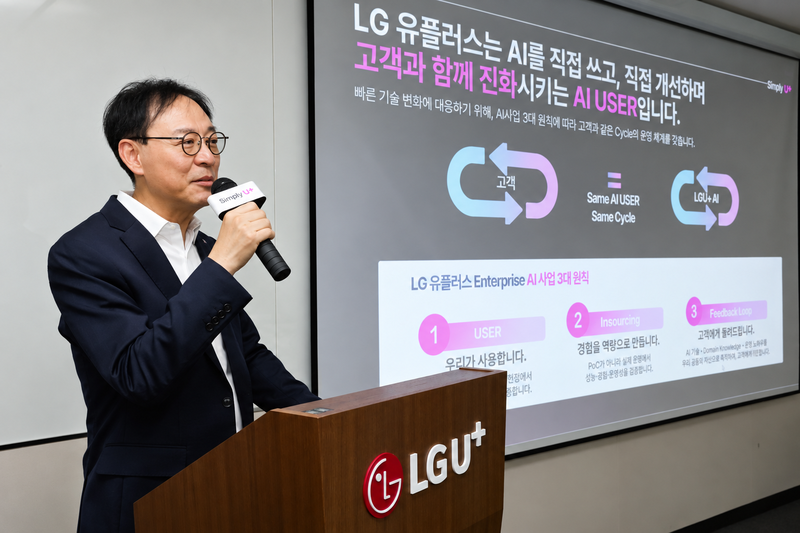
LG Uplus held a press briefing on the 30th at LG Gasan Digital Center in Geumcheon District, Seoul, where it disclosed its AICC business strategy and results from applying the technology to its customer centers. Key technologies include AI callbots and chatbots, an AI Consultation Advisor that supports customer service agents in real time, and AI Auto QA, which automates consultation quality assessments.LG Uplus's key competitive edge is its in-house AICC. Rather than simply developing AI technology and supplying it to customers, the company first applies the technology at its own customer centers to verify consultation quality, then uses the results to improve its solutions. To this end, LG Uplus uses 17 customer centers nationwide, where tens of millions of customer consultations take place each year, as test beds for its AI technology. Functions whose reliability has been verified using real consultation data are offered as business-to-business (B2B) solutions.
AI is also used to build AICCs. Using EXAONE from LG AI Research and AI models from global technology companies, the system generates consultation scenarios, work procedures, and customer service agents when a customer enters its business objectives and guidelines. The company then tests consultation quality in an environment similar to actual operations and identifies areas for improvement based on the accumulated data.
AI is introduced in stages during customer consultations as well. AI callbots and chatbots handle simple inquiries, such as checking bills or signing up for services, while customers are connected to human agents when human judgment is required. AI callbots and chatbots currently handle approximately 8 million customer inquiries each year.
From callbots to agent support: AI throughout the consultation process
AI callbots analyze the entire context of a conversation to determine a customer's intent. Even if a customer pauses while speaking, the callbot waits until the customer finishes and then provides an answer based on the full context. For example, it can recommend a suitable roaming plan after the customer provides a destination and outbound and return travel dates.Once a customer is connected with an agent, the AI Consultation Advisor provides support. It converts the conversation between the customer and the agent into text in real time through speech-to-text (STT), while AI analyzes the consultation and displays the necessary information and suggested responses on the screen.
For example, if a customer asks about an affordable plan for seniors, information about senior plan products and a response guide appear on the agent's screen. If the customer asks about additional discounts or data allowances, AI searches for and presents the relevant policies, reducing the time agents spend searching internal systems.
After a consultation, AI Auto QA analyzes the interaction and identifies each agent's strengths and areas for improvement. Unlike the previous method, in which consultation coaches reviewed recordings manually, the technology can analyze a larger number of consultations using the same standards.
According to LG Uplus, applying AI throughout the consultation process reduced the average wait to connect with an agent by approximately 90%, from 47 seconds in 2024 to 5 seconds this year. Consultation times also fell by 16% over the same period.
The time freed up through AI adoption is being used for personalized consultations. Customers aged 65 and older receive priority service, while customers with hearing impairments are connected with sign-language agents. LG Uplus is also maintaining its principle of allowing customers to choose how they want to receive service.
AI analyzes consultation histories: 'Wait-free customer service' by 2030
LG Uplus plans to build an 'AI-native contact center' by 2030, with AI at the center of every stage of customer service operations. Its goal is to provide 'wait-free customer service,' in which AI determines a customer's intent based on past consultation histories and subscription information, then proactively provides the necessary information.AICC technologies validated at LG Uplus's own customer centers will be expanded to external corporate customers. LG Uplus plans to develop AICC into a core growth engine for its enterprise AX business and grow revenue from the related business by more than 50% annually on average through 2030.
Ahn Hyung-gyun, head of LG Uplus's Enterprise AI Business Group, said, "Building on the experience accumulated through operating our own customer centers and our in-house capabilities, we will support enterprise customers in their AI transformation and develop the AICC business into a core growth engine for our enterprise AX business by 2030."
[email protected] Yoon Hong-jip Reporter