GENENCELL Founder Sentenced to Four Years in Prison and Fined 40 Million Won in Second Trial Over 'Kim Seung-won Favor-Solicitation Allegations'
- Input
- 2026-09-30 15:12:21
- Updated
- 2026-09-30 15:12:21
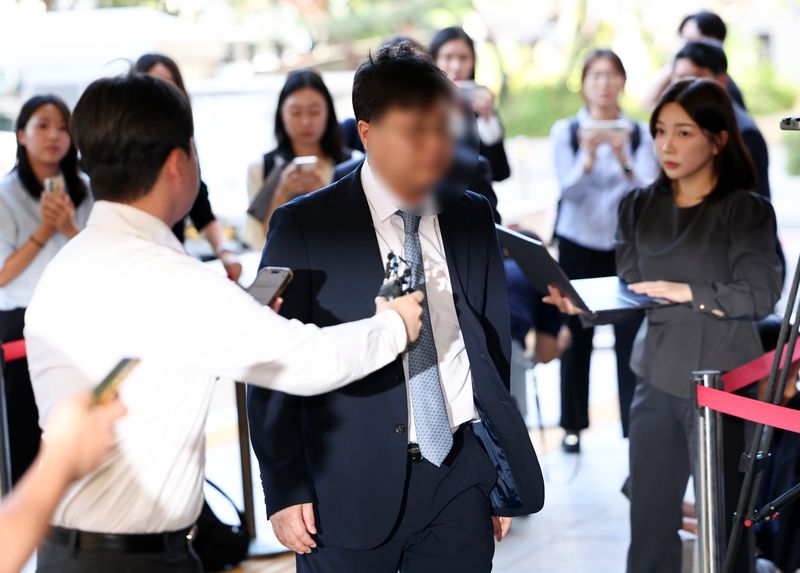
[Financial News] Kang, the founder of pharmaceutical company GENENCELL, who faced allegations of soliciting favors related to a new drug from Kim Seung-won, a Democratic Party of Korea lawmaker who voluntarily withdrew as a candidate for minister of justice, was sentenced to four years in prison and fined 40 million won in his second trial. He was also taken into custody in court. The sentence was harsher than the three-year prison term suspended for five years that he received at the first trial, as some of the charges previously dismissed were found guilty on appeal.
The Criminal Division 7 of the Seoul High Court, presided over by Judge Gu Hui-geun, handed down the sentence on the 30th to Kang, who was indicted on charges including violating the Act on the Aggravated Punishment, etc. of Specific Economic Crimes (breach of trust), the Act on Regulation and Punishment of Criminal Proceeds Concealment, and obstruction of official duties by deceptive means.
Kang was brought to trial on charges including obtaining clinical trial approval during the development of a COVID-19 treatment by omitting data on adverse effects from animal testing, and disguising payments made in return for lobbying the Ministry of Food and Drug Safety through political connections as legitimate transactions.
The appellate court overturned the first trial's not-guilty verdict on the charge of concealing criminal proceeds related to the acquisition of convertible bonds (CBs) worth 600 million won. The charge involved using GENENCELL funds to acquire 600 million won worth of convertible bonds issued by a company owned by broker Yang, while disguising the payment for brokering as a legitimate transaction.
The court found, "It is clear that the defendant asked Democratic Party of Korea lawmaker Kim Seung-won, through businessman and broker Yang, to obtain clinical trial approval from the Ministry of Food and Drug Safety and paid 600 million won in return for the brokering. He disguised the payment as a legitimate investment transaction by structuring it as an acquisition of convertible bonds."
The court added, "Because it is difficult to distinguish between the amount paid as consideration for the solicitation and brokering and the amount for a legitimate transaction, we have no choice but to recognize the entire amount as consideration for the solicitation and brokering. We overturn the portion of the first-trial ruling that found Kang not guilty of all charges under the Act on Regulation and Punishment of Criminal Proceeds Concealment."
The convictions for attempted fraud involving the manipulation of the treatment's efficacy and obstruction of business were also upheld, as in the first trial. The court found that Kang had acted deceptively by submitting a report to the Ministry of Food and Drug Safety that intentionally deleted and omitted the fact that hamsters had died and experienced drug reflux and hematemesis during animal testing, thereby obtaining clinical trial approval.
The Capital Markets Act charge was also upheld, with the court finding Kang guilty of sharing nonpublic information related to an investment in Sejong Medical.
The court rebuked him, saying, "As a university professor, the defendant was required to fulfill a high degree of ethical responsibility in the development and approval of pharmaceuticals that directly affect the human body, but he abandoned that duty. He is highly blameworthy for exploiting the national disaster of COVID-19, exaggerating the chances of success for the new-drug development and attempting to reap huge profits by selling shares at inflated prices."
It continued, "He caused enormous harm to ordinary stock buyers who invested based on the favorable news about clinical approval," citing this as grounds for the prison sentence and detention.
Kang and Yang are standing trial separately at Seoul Western District Court on charges including requesting through Kim the expedited processing of clinical trial approval by the Ministry of Food and Drug Safety and promising to provide a 5 million won donation in return. The charges include a promise to offer a bribe.
[email protected] Lee Chang-hoon Reporter