1 in 5 Koreans Suffer from 'Spinal Disease'... 2 Million Treated Annually
- Input
- 2026-09-30 11:17:06
- Updated
- 2026-09-30 11:17:06
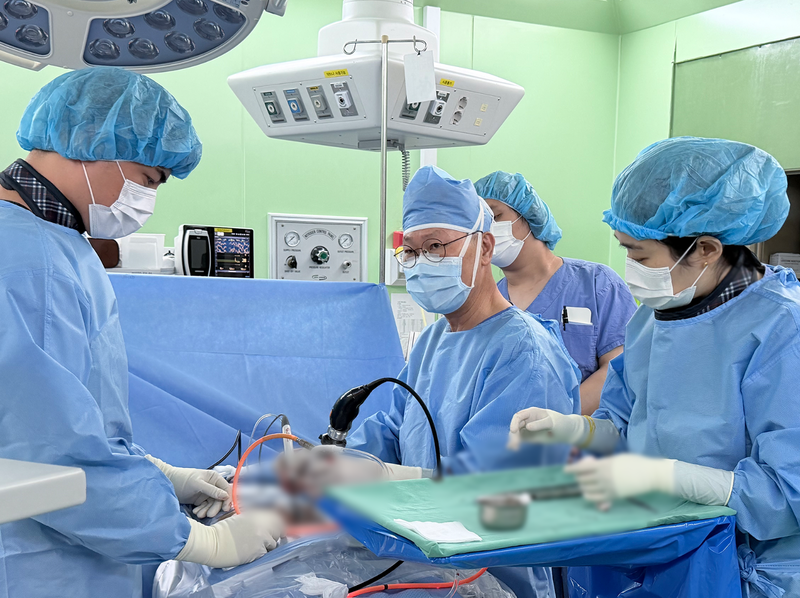
[Financial News] It has been revealed that the number of people receiving treatment for herniated discs (lumbar disc herniation) in Korea is approaching 2 million annually, and the total number of people with spinal diseases reaches 11 million.
With the increase in sedentary lifestyles and the use of smart devices, the diagnosis rate is on the rise not only among the middle-aged population in their 50s and 60s but also among the younger generation in their 20s and 30s.
Seo Seong-woo, Director of the Spine Center at On Hospital in Busan (a neurosurgeon), advised on the 30th, "The most basic way to reduce back pain and sciatica is to correct your posture in daily life before relying on surgery or medication."
Patients with sciatica and herniated discs need to exercise caution.
Center Director Seo Seong-woo pointed out that forcing oneself to climb stairs or perform excessive squats when suffering from spinal abnormalities or disc symptoms can actually irritate the nerves due to the weight bearing.
On the other hand, they said that seated indoor bicycles with backrests reduce the burden on the spine as body weight is distributed to the saddle, and that the slightly leaned-forward posture widens the space for the spinal canals, which is beneficial for pain relief.
Half squats that maintain spinal neutrality, bird dog core exercises, McKenzie extension exercises, and brisk walking on flat ground are also considered representative exercises for reassurance.
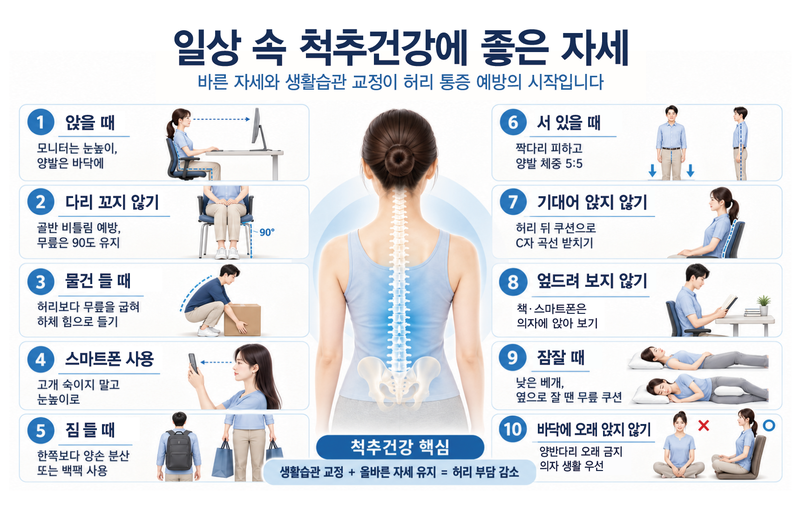
Center Director Seo Seong-woo pointed out that bad postures unconsciously adopted in daily life accelerate spinal degeneration.
When looking at a monitor, instead of slouching, you should align the top with your eye level and sit deep in the chair. Since crossing your legs while sitting twists the pelvis, you should place both feet flat on the floor and maintain a 90-degree knee angle. When lifting objects, do not bend only at the waist; instead, approach the object, bend your knees to sit down, and lift it using the strength of your lower body to prevent spinal injury.
Additionally, sitting with your hips pushed back as if lying down should be corrected by placing a cushion behind your lower back to support the C-shaped curve. The habit of reading books or using a smartphone while lying face down causes excessive bending of the neck and lower back, so sitting upright in a chair with your gaze raised is recommended. When carrying loads, placing all the weight on only one shoulder or hand causes the spine to bend sideways, so you should distribute the weight between both hands or use a backpack to distribute the load.
The habit of leaning on one leg while standing is bad, and you must maintain a standing posture with your weight evenly distributed 50/50 on each foot. When sleeping, avoid using a high pillow or sleeping on your stomach; it is advisable to use a low pillow that supports the curve of the neck or place a cushion between your knees when sleeping on your side. The habit of sitting cross-legged on the floor for long periods puts strain on the hip joints and lower back, so you should prioritize using a chair, and if you must sit on the floor, use a floor chair with a backrest. The "text neck" posture, where you use a smartphone with your head bowed low, should be corrected by holding the smartphone up to eye level to maintain a neutral neck position.
Recently, the treatment of herniated discs has predominantly consisted of "minimally invasive" methods that minimize incisions and protect normal tissues. 80 to 90% of patients can recover without surgery through non-surgical procedures and conservative treatment. A representative Unilateral Biportal Endoscopy (UBE) procedure involves inserting a high-definition endoscope and surgical instruments through two holes less than 5 mm in diameter to precisely treat the lesion. This method causes minimal muscle damage and is performed under local anesthesia, allowing even elderly patients to undergo the procedure safely.
Radiofrequency fluid decompression (PNP), which involves inserting a thin needle to shrink disc fluid using high-frequency thermal energy, and Neuroplasty (PEN), which involves inserting a catheter through the tailbone to physically remove inflammation around the nerve and administer medication, are also being actively performed.
Center Director Seo Seong-woo advised, "The key to treating herniated discs is not unconditional surgery or procedures, but finding a customized treatment method tailored to the patient's pain level through precise diagnosis," adding, "Even after treatment, maintaining proper posture and combining safe strength training are necessary to prevent recurrence."
[email protected] Byun Ok-hwan Reporter