Jeju's Share of Elementary Students in the Overweight-or-Obesity Group Hits 34.6%, Highest Nationwide; 46.7% Among Fifth-Grade Boys
- Input
- 2026-09-30 11:18:40
- Updated
- 2026-09-30 11:18:40

[Financial News, Jeju—Reporter Jeong Yong-bok] One in three elementary school students in Jeju Province was found to be overweight or obese. The share in the overweight-or-obesity group was 34.6%, the highest among the nation's 17 cities and provinces, while the figure for fifth-grade boys reached 46.7%.
The findings also suggest that the issue cannot be left solely to individual students to manage their eating habits. The rate of exercise participation among elementary school students in eup-and-myeon areas was 11.6 percentage points lower than in dong areas, and their consumption rates for milk, dairy products, and vegetables were also lower. Because risk patterns vary by gender, school-transition period, and place of residence, the report recommends improving not only health education at school but also commuting environments, sports facilities, and access to food.
According to the policy brief "The Current Status of Obesity Among Elementary School Students in Jeju Province and Policy Implications," published on the 30th by the Jeju Women's and Family Research Institute, 34.6% of elementary school students in Jeju Province were in the overweight-or-obesity group according to the Ministry of Education's 2024 student health examinations. This was 5.2 percentage points above the national average of 29.4%.
The study was led by Jeong Yeo-jin, a senior research fellow at the Jeju Women's and Family Research Institute. It combined analyses of the Ministry of Education's student health examinations, the Korea Disease Control and Prevention Agency's youth health behavior survey, and previous studies on children's eating habits and nutrition in Jeju Province.
Here, the overweight-or-obesity group is an indicator that combines overweight and obesity. Therefore, the 34.6% figure should not be interpreted as the share of students who received a medical diagnosis of obesity.
■ Highest Nationwide at 34.6%; Nearly Half of Fifth-Grade Boys
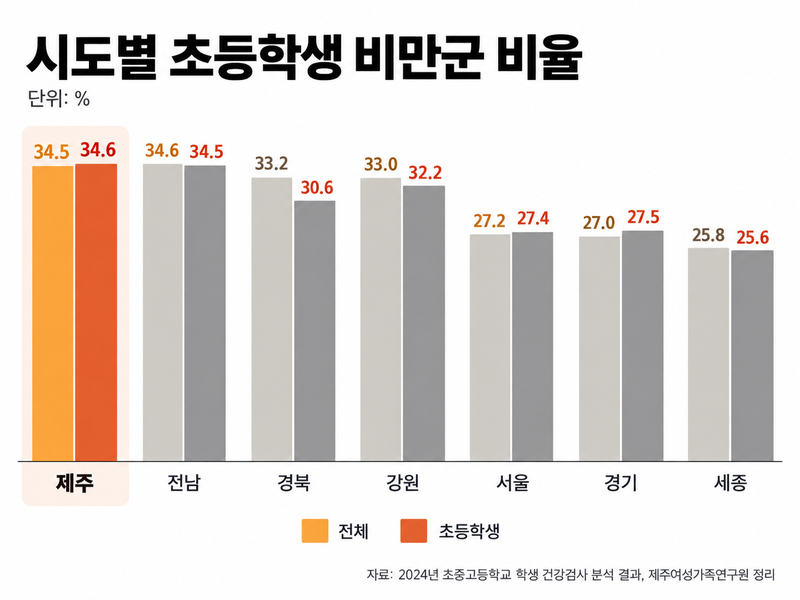
Jeju Province had the highest share of elementary school students in the overweight-or-obesity group among the cities and provinces. South Jeolla Province followed closely at 34.5%, followed by Gangwon Province at 32.2% and North Gyeongsang Province at 30.6%. Seoul stood at 27.4%, Gyeonggi Province at 27.5%, and Sejong at 25.6%.
The gender gap was also clear. Among all elementary school students in Jeju Province, 38.4% of boys were in the overweight-or-obesity group, 8.0 percentage points higher than the 30.4% recorded for girls.
When grade and gender were considered together, fifth-grade boys had the highest share in the overweight-or-obesity group at 46.7%. This confirmed a pattern in which the risk of overweight or obesity among boys increased as they advanced into the upper elementary grades.
Girls showed a different warning sign. The share engaging in vigorous physical activity at least three days a week was 52.22% in elementary school but fell to 24.28% in middle school, a decline of 27.94 percentage points.
The figure for boys also declined, from 69.26% in elementary school to 55.26% in middle school and 38.52% in high school. For girls, however, the decrease was concentrated around the transition to middle school.
The institute analyzed that health interventions should be strengthened for boys beginning in the upper elementary grades and for girls during the transition from elementary to middle school.
Differences by place of residence were also identified. Among elementary school students in eup-and-myeon areas, 51.7% engaged in vigorous exercise at least three times a week. This was 11.6 percentage points lower than the 63.3% recorded in dong areas.
Differences also emerged in food consumption. The share eating milk or dairy products every day was 45.8% in dong areas but 36.9% in eup-and-myeon areas, a gap of 8.9 percentage points.
The share eating vegetables other than kimchi every day was 29.0% in dong areas and 23.4% in eup-and-myeon areas, a difference of 5.6 percentage points. By contrast, the share eating ramen at least once a week was 83.2% in eup-and-myeon areas, 1.3 percentage points higher than the 81.9% in dong areas.
The institute did not conclude, however, that access to sports facilities or fresh foods in eup-and-myeon areas was a direct cause of obesity based solely on these differences. It determined that further verification was needed because the findings indicate a possible association between living environments and health behaviors.
■ Abnormal Triglyceride Levels Found in One in Four to Five Students with Obesity
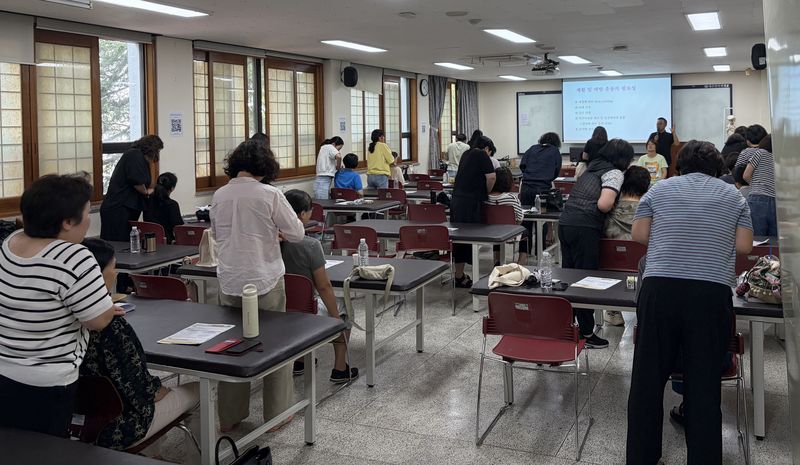
The weight problem was also reflected in blood tests. Among students with obesity in fourth grade of elementary school, first grade of middle school, and first grade of high school, the rate of abnormal triglyceride levels was the highest at 24.72%. That amounts to roughly one in every four to five students with obesity.
The rates of abnormal LDL cholesterol, abnormal HDL cholesterol, abnormal liver function, and elevated total cholesterol were 18.65%, 18.56%, 16.80%, and 16.95%, respectively.
The patterns also differed by gender. Among boys, abnormal triglyceride levels and abnormal HDL cholesterol levels were recorded at 25.21% and 21.64%, respectively. Among girls, abnormal LDL cholesterol levels and abnormal liver function were relatively higher, at 20.12% and 18.44%.
Health risks identified in elementary school continued into adolescence. According to the youth health behavior survey, the obesity rate among adolescents in Jeju Province rose from 13.4% in 2024 to 17.2% last year. The increase was particularly sharp among boys, from 15.7% to 23.2%.
However, the overweight-or-obesity group in the student health examinations and the obesity rate in the youth health behavior survey were calculated from different populations and using different methods. The two figures therefore should not be directly connected and interpreted as a rate of increase or decrease.
■ High Ramen Consumption and Declining Milk Intake and Exercise with Advancing School Levels
The study also identified indicators requiring long-term management of eating habits. In the 2024 student health examinations, 82.15% of elementary school students in Jeju Province ate ramen at least once a week. The figures were 92.76% for middle school students and 86.31% for high school students.
By contrast, the share consuming milk or dairy products every day fell sharply as school levels rose, from 43.95% among elementary school students to 23.53% among middle school students and 14.63% among high school students.
The rate of skipping breakfast also increased, from 7.89% among elementary school students to 21.21% among middle school students and 23.20% among high school students.
The rate of participation in vigorous physical activity fell from 60.95% in elementary school to 40.47% in middle school and 27.20% in high school.
Previous studies on dietary habits in Jeju Province cited by the institute repeatedly identified picky eating, reliance on processed foods, and excessive sodium and sugar intake.
Many of those previous studies, however, were based on surveys conducted between 2009 and 2015, limiting their use as materials that accurately reflect current conditions. The institute also proposed establishing regular surveys of the latest nutritional conditions among children and adolescents in Jeju Province.
■ From 'Individual Habits' to Living Environments: Proposal to Improve Sports and Walking Conditions in Eup-and-Myeon Areas
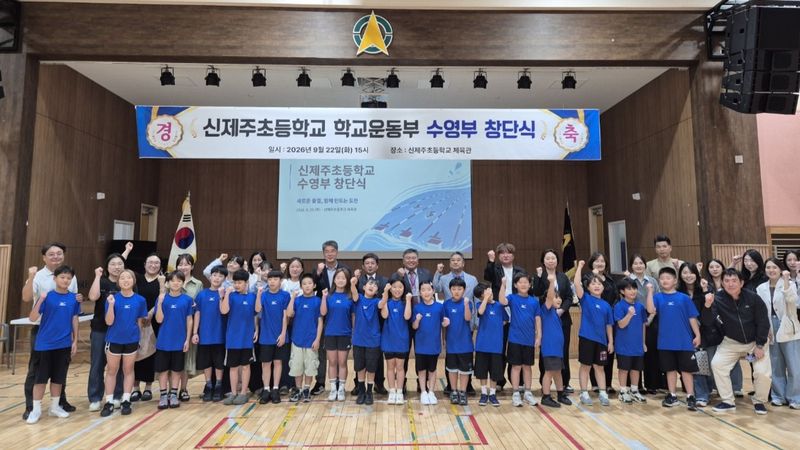
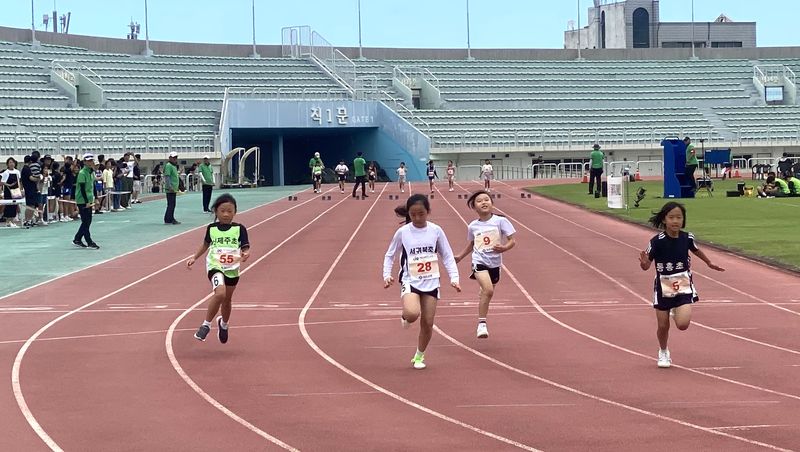
The proposed policy direction focuses on changing both education within schools and living environments outside them. The institute proposed creating pedestrian-friendly routes to school and expanding sports facilities and mobile physical-activity programs in eup-and-myeon and island areas.
It also determined that snacks at local children's centers and care facilities should be improved to focus on fresh foods made with locally grown agricultural products, while management of high-calorie, low-nutrient foods around schools should be strengthened.
A tailored approach based on gender and school level was also proposed. For boys, the upper elementary grades, when the share in the overweight-or-obesity group rises, should be designated as a period for intensive management. For girls, participatory exercise programs should be strengthened during the transition to middle school, when physical activity declines sharply.
The institute also presented as a matter for consideration extending through middle and high school the current system linking screening and treatment for elementary school students with severe obesity.
The Jeju Special Self-Governing Provincial Office of Education has operated "Happy Challenge," which combines medical, exercise, nutritional, and psychological support for elementary school students with severe obesity. The existing program recorded reductions in body mass index and body fat percentage, increases in muscle mass, and improvements in nutritional scores and some metabolic indicators. It has now been expanded as "Happy Challenge Plus."
The institute also proposed conducting regular nutritional surveys of children and adolescents and managing indicators separately by gender, school level, and eup-and-myeon-dong area. It determined that a cooperative system involving the education office and Jeju Province departments responsible for health, children, and urban affairs was also necessary.
Kim El-lim, president of the Jeju Women's and Family Research Institute, proposed, "It is necessary to consider requiring every school to provide obesity prevention and dietary education, which are currently offered selectively as part of health education, for a minimum number of hours."
[email protected] Jeong Yong-bok Reporter