After independence in personnel authority, organization and budgets are next... Calls grow for the Local Councils Act to be enacted this year
- Input
- 2026-09-30 10:46:34
- Updated
- 2026-09-30 10:46:34
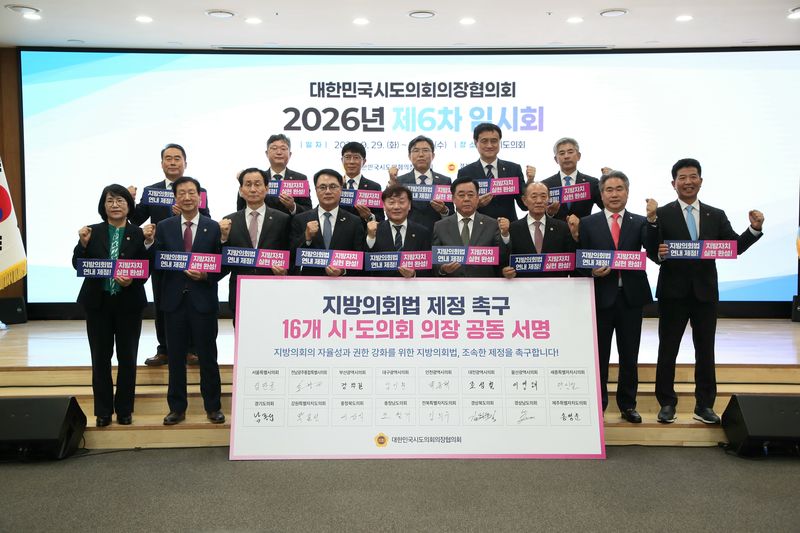
【Financial News Jeju = Reporter Jung Yong-bok】Calls are spreading among metropolitan and provincial councils nationwide for a separate law to guarantee autonomy over organizational and budgetary operations, following the independence of local councils' personnel authority. Song Young-houn, chair of the Jeju Special Self-Governing Provincial Council, also joined a joint signature campaign with the chairs of metropolitan and provincial councils nationwide calling for the Local Councils Act to be enacted by the end of the year.
According to the Jeju Special Self-Governing Provincial Council and other sources on the 30th, Chair Song attended the 6th extraordinary session of the 2026 meeting of the Association of Chairpersons of Metropolitan and Provincial Councils of Korea, held at Gyeonggido Assembly the previous day.
The association adopted a resolution calling for the prompt enactment of the Local Councils Act to enhance the status and strengthen the independence of local councils as Agenda Item No. 1 for the first half of the 20th term. The resolution calls for expanded autonomy over the organization and staffing of local councils and their budgetary operations, backed by a separate statute.
The joint signature included the names of the chairs of 16 metropolitan and provincial councils, including Chair Song. The chairs of 15 councils, excluding Seoul Metropolitan Council, attended the event. They called on the National Assembly to enact the Local Councils Act by the end of the year and strengthen the autonomy and authority of local councils.
The issue concerns organizational and budgetary powers that remain unresolved even after local councils gained independence in personnel authority in 2022.
Under the fully revised Local Autonomy Act that took effect in 2022, the authority to appoint public officials belonging to local councils was transferred from the heads of local governments to the chairs of local councils. The current Local Autonomy Act also stipulates that council chairs handle the appointment and dismissal, education and training, conduct of service, and disciplinary action involving administrative staff.
However, personnel authority and organizational authority are not the same. Under current law, the number of administrative staff at a local council is set by ordinance according to standards such as personnel expenses prescribed by presidential decree. Although a chair can appoint staff, the council is not structured to determine entirely on its own the organization and staffing levels it requires.
The same applies to budgets. The Local Autonomy Act requires the head of a local government to draw up an annual budget proposal and submit it to the local council. The council deliberates on and votes on the proposal, but it cannot increase expenditure budgets or create new expenditure items without the head's consent. This is why autonomy in budget formulation has emerged as a key issue in discussions over enacting the Local Councils Act.
Discussions are already underway in the National Assembly on regulating local councils through a separate statute. According to an issue analysis released by the National Assembly Research Service (NARS) in August, 6 Local Councils Act bills have been introduced in the 22nd National Assembly and are pending before the relevant standing committees.
Although the details differ by bill, key issues include autonomy over the organization and staffing of council secretariats, expanding the number of policy support officers and improving their working conditions, operating confirmation hearings, and strengthening the ethics and accountability of local councils.
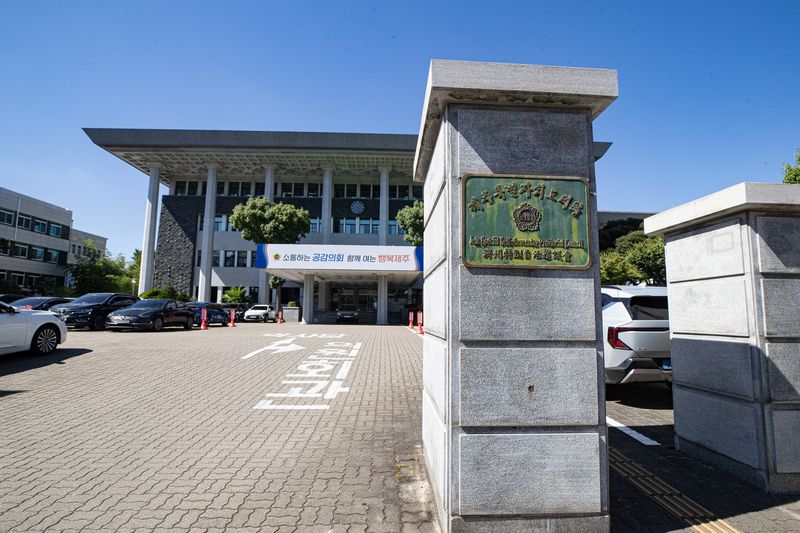
Some local councils are calling for organizational authority, authority to formulate budgets, and internal audit functions to be incorporated into a separate statute. However, the legislative process still faces the task of designing the division of powers between the heads of local governments and local councils, addressing the financial burden of expanding council organizations, and establishing accountability and oversight mechanisms commensurate with the enhanced powers.
In Jeju, discussions over the Local Councils Act are also intertwined with the issue of revising the Jeju Special Act.
The Jeju Special Act stipulates that the Jeju Special Self-Governing Provincial Council may have up to 21 policy research officers to support the enactment and amendment of ordinances, the review of budgets and settlements, and administrative audits. Even if the number of council members and legislative workload change, the statutory cap cannot be exceeded. An amendment to the Jeju Special Act is therefore required to increase the authorized number.
Song Chang-gwon, a member of the Jeju Special Self-Governing Provincial Council, also requested on the 2nd that the council prepare a proposal to the central government and the National Assembly urging the enactment of the Local Councils Act during a 5-minute floor speech at the council's plenary session.
Song argued that the council should join forces with metropolitan and provincial councils nationwide to demand enactment of the Local Councils Act guaranteeing autonomy over organization, staffing, and budgets, and expand the policy research officer system by reflecting that principle in the Jeju Special Act.
Chair Song has also continued consultations among metropolitan and provincial councils, including discussions on enacting the Local Councils Act with a floor leader delegation from Gyeonggido Assembly that visited the Jeju Special Self-Governing Provincial Council on the 9th of this month.
With the joint signatures, the call for enactment of the Local Councils Act has expanded beyond individual local councils to become a shared issue for the Association of Chairpersons of Metropolitan and Provincial Councils of Korea.
The key issue going forward will be how to reconcile the various Local Councils Act bills pending in the National Assembly. The legislative process is expected to focus on how far to grant councils independent authority over the organization and staffing of their secretariats and budget formulation procedures, how to expand policy support staff, and how to establish accountability mechanisms such as ethics rules, audits, and information disclosure in line with the expanded powers.
In Jeju, enactment of the Local Councils Act could be linked to the subsequent legislative task of adjusting the 21-person cap on policy research officers under the Jeju Special Act.
[email protected] Jung Yong-bok Reporter