"This Is Immoral and Benefits the Enemy"—Cho Gabje Criticizes Film 'Assassin(s)'
- Input
- 2026-09-30 10:35:57
- Updated
- 2026-09-30 10:35:57
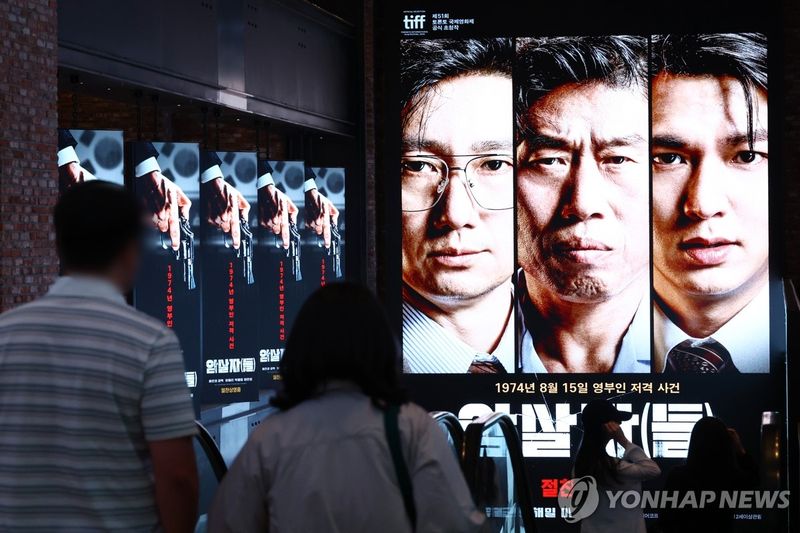
[Financial News] Cho Gabje, head of Chogabje TV, criticized the film 'Assassin(s),' which is based on the shooting of First Lady Yuk Young-soo, calling it "an immoral act and an act benefiting the enemy." Cho objected to the way the film addresses theories about those behind the incident.
Cho appeared on CBS FM's 'Park Jae-hong's Hanpan Seungbu' on the 29th and took issue with scenes that lead viewers to suspect that former President Park Chung Hee or the Korean Central Intelligence Agency (KCIA) may have been behind the incident.
Cho said, "I know more about this incident than any other living journalist," adding, "I get stressed when I see such absurd claims." He continued, "The film is maliciously distorting the facts while hiding behind the creative freedom of cinema," and declared, "This is an immoral act and an act benefiting the enemy."
He also explained the circumstances of the incident based on an audio recording from the shooting scene. Cho said, "Mun Se-gwang accidentally fired the first shot as he sat down and tried to draw his handgun, striking his thigh," adding, "He then ran into the corridor and fired the second shot, which hit the podium where President Park was standing. The third shot misfired, and the fourth struck First Lady Yuk Young-soo." He continued, "The handgun used in the crime was stolen from a police box in Osaka, Japan, a fact also confirmed by Japanese police," and said, "There is not the slightest room for doubt."
Cho also claimed that the incident was carried out on orders from North Korea. He said, "Mun Se-gwang was recruited by a Chongryon operative, boarded the Man Gyong Bong, and received instructions from North Korean agents," adding, "This was an incident personally ordered by Kim Il Sung." He further claimed, "The only person to benefit from making the truth of the incident ambiguous is Kim Il Sung."
Cho also rejected the production team's explanation that the film fell within the realm of creative expression. He said, "Cases involving logical conspiracy theories, such as claims that there were two perpetrators in the assassination of John F. Kennedy, can be covered, but there is no room for doubt in this incident," and pointed out, "If facts are twisted and distorted, historical truth is ultimately damaged." He went on to predict that a movement to boycott the film could emerge among civil society groups opposed to its content.
The production team, meanwhile, released a statement on the 28th, saying, "'Assassin(s)' is not a film made to establish a new specific historical conclusion or to deny or distort existing facts." It also explained that the film did not identify any particular person as being behind the incident and did not present its hypotheses or dramatic settings as historical facts.
[email protected] Han Seung-gon Reporter