"Only 5 of 29 National Strategic Technology R&D Projects Are Jointly Run by Multiple Ministries... None in AI or Semiconductors"
- Input
- 2026-09-30 10:53:16
- Updated
- 2026-09-30 10:53:16
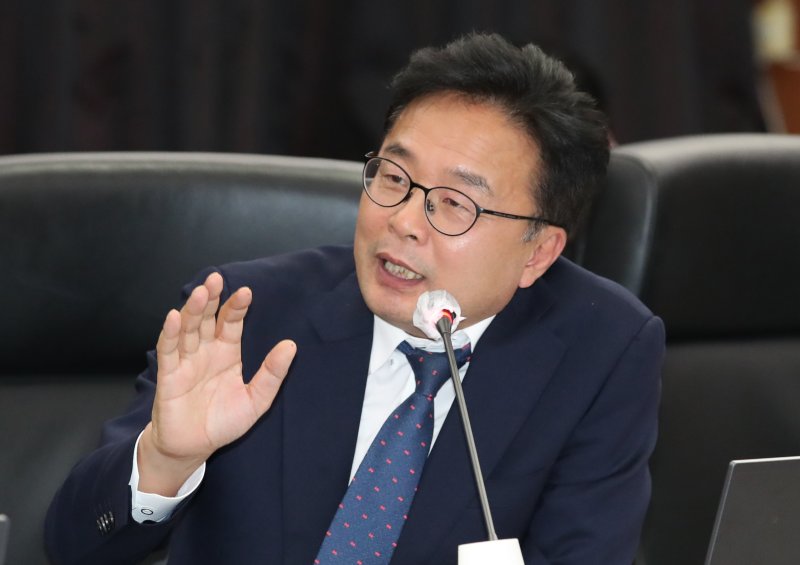
[Financial News] Despite increased investment in national strategic technology R&D, only 5 of 29 projects were found to be joint projects pursued by multiple ministries. None of the government's priority areas, including Artificial Intelligence (AI) and semiconductors, has a joint project. Although cooperation and a division of responsibilities among multiple ministries are needed to develop national strategic technologies, they have not been reflected in practice, prompting calls for the situation to be reviewed.
According to data submitted by the Ministry of Science and ICT to Kim Woo-young, a Democratic Party of Korea lawmaker and member of the National Assembly's Science, ICT, Broadcasting, and Communications Committee, on the 30th, there are 29 national strategic technology R&D projects this year, with a total budget of 831 billion won. This represents a substantial increase from last year's 12 projects, which were worth 388.5 billion won. The operating plan for designating these projects was established in December 2024, and the designation began last year.
However, concerns have been raised that it is necessary to examine whether cross-government cooperation for developing national strategic technologies is leading to actual project coordination and a division of responsibilities, given that only 5 of the 29 projects are jointly conducted by multiple ministries. Joint projects currently include advanced mobility (one project), next-generation nuclear power (two projects), and Advanced Biotechnology (two projects), among others. Projects involving semiconductors and displays, rechargeable batteries, space, aerospace, and maritime affairs, AI, next-generation communications, and quantum technology are not being jointly pursued despite being designated projects. In other words, no joint projects are underway in 6 of the 9 fields.
After establishing measures in March to overhaul the pan-government technology management system and strengthen cooperation, the government held a standing consultative body twice, with participation from the Ministry of Science and ICT, the Ministry of Economy and Finance, and the Ministry of Trade and Industry. However, according to Kim, the standing consultative body is responsible only for policy coordination, while coordination of individual R&D projects is handled by the R&D Investment Review Bureau of the Office of Science, Technology and Innovation under the Ministry of Science and ICT. Under these circumstances, it is difficult to say that responsibilities are being smoothly divided among the ministries.
Kim Woo-young emphasized, "As national strategic technology projects and their budgets are expanding rapidly, it is necessary to monitor not only joint projects involving multiple ministries but also how responsibilities are divided among the ministries during the actual budget allocation and project coordination processes. During the parliamentary audit, I will verify whether the pan-government cooperation emphasized by the government is leading to substantive project coordination and results."
[email protected] Lee Hae-ram Reporter