KR and KAIST to Support Shipbuilding and Maritime Deep-Tech Startups with Technology and Field Validation
- Input
- 2026-09-30 10:30:23
- Updated
- 2026-09-30 10:30:23
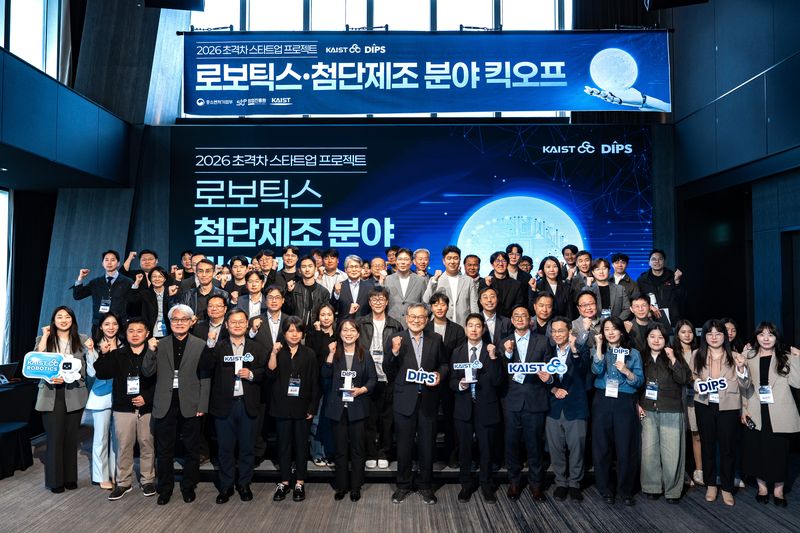
[Financial News] Korean Register (KR) has teamed up with the Korea Advanced Institute of Science and Technology (KAIST) to provide tailored support for shipbuilding and maritime deep-tech startups, ranging from technology reviews and consulting to field validation in industrial settings.
KR announced on the 30th that it had recently selected six companies for technology commercialization support for shipbuilding and maritime deep-tech startups, in cooperation with the KAIST Global Technology Commercialization Center (GCC).
The support is being provided as part of the Ministry of SMEs and Startups' '2026 Super-Gap Startup Project.' The project supports the technological advancement and commercialization of promising deep-tech startups, with KAIST serving as the lead organization.
The KAIST GCC supports technology commercialization in robotics and advanced manufacturing, while KR provides consulting linked to the shipbuilding and maritime industries, along with field validation.
Robotics and advanced manufacturing technologies can lead to commercialization only after their applicability and stability have been verified in actual industrial settings beyond the laboratory. However, it is difficult for startups to independently secure validation environments and opportunities at shipyards or on vessels.
The partnership aims to narrow this gap by establishing a tailored support system for companies that spans technology reviews and consulting through field validation in industrial settings.
Following a demand survey and preliminary consulting, KR selected TeamGRIT, GeoSona, HOP, FRT ROBOTICS, SLM, and SHECO as the six companies eligible for support. The selected companies will receive reviews of their technologies' applicability based on classification rules and the requirements of the shipbuilding and maritime industries, as well as technical consulting. KR will also support connections and validation cooperation with actual potential customers, including shipyards and shipping companies.
Two of the companies will pursue field validation in shipbuilding and maritime settings. After first verifying the technologies' stability and safety conditions through simulations, they will conduct limited field validation. This approach is intended to minimize safety and operational risks while confirming the technologies' applicability in the field at an early stage. The companies will then analyze operational data to assess the technologies' potential for use in actual industrial settings and consider follow-up commercialization plans.
KR Vice President Kim Dae-heon said, "Verification in actual operating and working environments is important for securing the reliability of technologies in the shipbuilding and maritime sectors," adding, "We will leverage KR's technical expertise and industry network to help promising deep-tech technologies undergo validation in shipbuilding and maritime settings and lead to commercialization."
[email protected] Kwon Byung-seok Reporter