Government Wins Second ISDS Case Against Iran's Dayyani Family; KRW 770 Billion Compensation Claim Dismissed
- Input
- 2026-09-30 10:30:01
- Updated
- 2026-09-30 10:30:01
[Financial News] The government has won in full in an Investor–State Dispute Settlement (ISDS) case worth KRW 770 billion filed against South Korea by the founding family of Entekhab, the Islamic Republic of Iran's largest home appliance and petrochemical company. The Dayyani family initiated a second arbitration, claiming that delays in receiving compensation awarded in the first ISDS case had caused additional losses. However, the arbitral tribunal determined that the Korean government's measures did not violate the investment agreement.
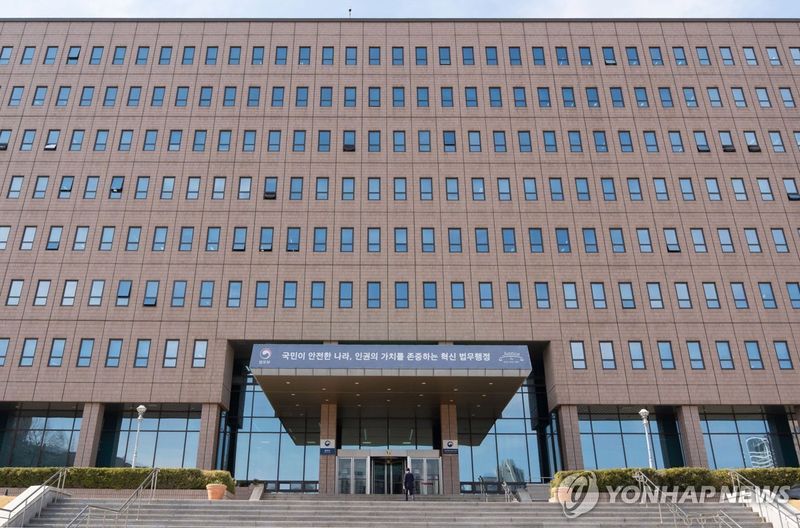
The Ministry of Justice announced on the 30th that, in the second ISDS case filed in October 2021 by six members of the Dayyani family, all of whom are nationals of the Islamic Republic of Iran, under the Korea–Iran investment protection agreement, the arbitral tribunal had rejected all of the claimants' arguments on the 28th.
The final compensation amount sought by the Dayyani family was €500,171,697, equivalent to approximately KRW 770 billion as of the date of the ruling. The tribunal also ordered the Dayyani family to bear approximately KRW 4 billion, or 75% of the litigation costs incurred by the Korean government, along with approximately KRW 800 million in arbitration administrative costs.
The dispute began with the Dayyani family's attempt to acquire Daewoo Electronics in 2010.
Through its subsidiary D&A, the Dayyani family paid approximately KRW 57.8 billion as a contract deposit to acquire Daewoo Electronics, which was undergoing a workout program. However, the creditors terminated the agreement and forfeited the deposit, citing reasons including Entekhab's failure to submit an investment commitment letter.
The Dayyani family filed the first ISDS case against the Korean government in 2015 and won an award in June 2018 ordering the government to pay approximately KRW 73 billion plus interest. The government's action to set aside the award in a British court ultimately failed in December 2019.
The government subsequently began the compensation payment process, but U.S. economic sanctions against the Islamic Republic of Iran became an issue. Approval from the Office of Foreign Assets Control of the U.S. Department of the Treasury (OFAC) was required to pay foreign currency to an Iranian national.
After obtaining OFAC approval in January 2022, the government paid approximately KRW 62.2 billion to the Dayyani family in April of the same year, out of total compensation of approximately KRW 85.8 billion.
The remaining approximately KRW 23.6 billion was deposited with the court pursuant to attachment and collection orders issued by a Korean court. The orders followed the court's provisional attachment and attachment and collection orders against the compensation claim in connection with a lawsuit filed by Winia Electronics, formerly Daewoo Electronics, against Reza Dayyani over payment for goods.
The Dayyani family, however, filed the second ISDS case in October 2021, claiming that it had lost returns it could have earned by investing the funds elsewhere while payment of the compensation was delayed.
The damages initially claimed amounted to approximately KRW 1.26 trillion, but the figure was reduced to approximately KRW 770 billion during the arbitration proceedings. The central issue in the second ISDS case was whether the Korean government had unfairly discriminated against the Dayyani family during the payment of compensation under the first award.
The Dayyani family argued that the Korean government had delayed payment by requiring OFAC approval because the claimants were Iranian nationals. It also contended that the government's filing of a set-aside action against the first award and its deposit of part of the amount pursuant to attachment and collection orders issued by a Korean court violated the obligation to provide fair and equitable treatment under the Korea–Iran investment protection agreement.
The arbitral tribunal rejected these arguments. It determined that obtaining OFAC approval in consideration of U.S. economic sanctions against the Islamic Republic of Iran was a reasonable measure and did not constitute unfair discrimination against an Iranian investor.
The tribunal also found that the government's filing of a set-aside action against the first ISDS award in a British court, the court at the seat of arbitration, was a permitted exercise of its rights under international arbitration procedures. It further determined that depositing part of the compensation pursuant to the Korean court's attachment and collection orders could not be considered arbitrary or improper.
The tribunal also rejected the alleged violation of the obligation to ensure free transfers asserted by the Dayyani family.
The tribunal determined, "The free-transfer provision under the investment agreement merely prevents a state from unduly restricting an investor's transfer of its investment assets abroad; it does not apply to situations in which the government directly pays compensation under an arbitral award in foreign currency."
The Dayyani family's claim that "a new ISDS could be brought solely because implementation of the first arbitral award was delayed" was also rejected.
The tribunal stated, "If an existing arbitral award is not enforced, an investor may pursue compulsory enforcement proceedings in the courts of the country where the award is to be enforced," adding, "Seeking a new ISDS and demanding new compensation on that basis is inconsistent with the purpose of the investment agreement."
The tribunal nevertheless found that it had jurisdiction over the case, determining that the compensation awarded in the first ISDS case constituted an "extension of the investment" based on the original contract deposit.
For this case, the government coordinated its response with relevant ministries under the International Investment Dispute Response Team. The government was represented by the Korean law firm Peter & Kim and the U.S. law firm Arnold & Porter.
The Ministry of Justice said, "We will respond to any possible follow-up proceedings and also pursue the recovery of litigation costs."
[email protected] Reporters Yoo Seon-jun and Choi Eun-sol Reporter