Major Defense System Integrators and SMEs to Share Technology, Expanding the Foundation for Win-Win Cooperation in Defense
- Input
- 2026-09-30 10:36:37
- Updated
- 2026-09-30 10:36:37
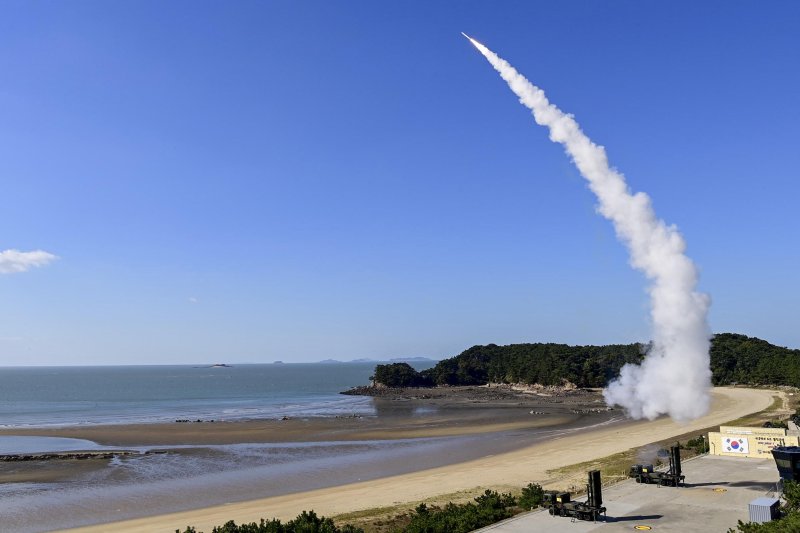
The Defense Acquisition Program Administration (DAPA) and the Korea Research Institute for Defense Technology Planning and Advancement (KRIT) held a briefing session on the 2026 second-half Request for Information (RFI) at the Nine Tree Premier ROKAUS Hotel Seoul Yongsan on the 30th. The session, held regularly twice a year, included briefings on capabilities in fields such as command and reconnaissance and guided weapons. It also newly provided a platform for capable SMEs and venture companies to directly introduce their core technologies and components to large companies serving as defense system integrators.
A Request for Information (RFI) is an administrative procedure through which the military gathers information and opinions from universities, research institutes and companies in South Korea and abroad on the current level of technologies available for development before introducing a new weapon. The process is regarded as a key step in establishing the foundation of the defense R&D ecosystem because verifying private-sector technological capabilities can improve the objectivity and efficiency of preliminary research.
Defense R&D in South Korea has so far produced both achievements stemming from close university-industry-research ties and cases of trial and error caused by a lack of communication. One notable success involved matching a private SME’s specialized materials technology and a university research institute’s algorithm with a military guided-weapon system from the early stages, thereby raising the localization rate. In contrast, there have also been cases in which a major defense system integrator conducted preliminary research based on overseas components without knowing what technologies domestic SMEs possessed. Later attempts to match those technologies with domestic SMEs led to project delays caused by specification mismatches and disruptions in supply chain management.
This is why DAPA and KRIT have expanded exchanges between large companies and SMEs and venture companies from the early stages of weapon-system projects. Their plan is to proactively connect companies’ technologies with demand and prevent administrative errors that could arise during the formation of future consortia.
The initiative is also aligned with a supply chain strategy aimed at overcoming South Korea’s structural limitations amid its recent population decline. In a security environment with limited natural resources, the competitiveness of future national defense will come from human resources and technological capabilities. Security experts say that, as the country faces a demographic cliff and a sharp decline in the pool of military personnel, it must train skilled professionals and create synergies by efficiently bringing together the capabilities of industry, academia, research institutes and government to develop and maintain advanced weapon systems.
Jeong Beom-seung, director general of DAPA’s Defense Acquisition Policy Bureau, said, "It is important to create an environment where SMEs and venture companies with innovative technologies can easily enter the defense industry ecosystem." He added, "This briefing session will contribute to discovering outstanding technologies and strengthening supply chain competitiveness." Son Jae-hong, head of KRIT, also stated, "We will continue to expand the university-industry-research cooperation framework as a first step toward communicating and preparing together for future weapon systems."
[email protected] Lee Jong-yoon Reporter