Samlip Targets KRW 500 Billion in Global Revenue by 2030, Expands Overseas Business
- Input
- 2026-09-30 09:24:33
- Updated
- 2026-09-30 09:24:33
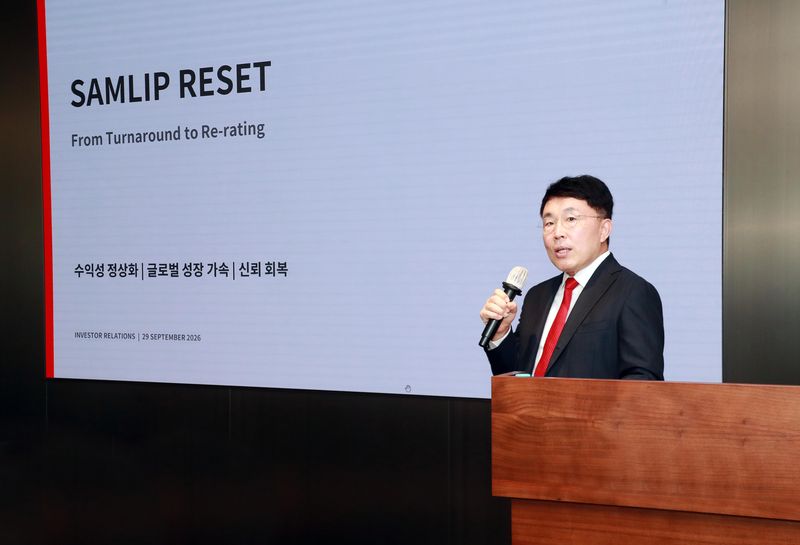
[Financial News] Samlip is stepping up its push into overseas markets, targeting KRW 500 billion in global revenue by 2030.
Samlip said on the 30th that it held an investor relations briefing for analysts and institutional investors on the 29th, where it announced a mid- to long-term vision and a business transformation roadmap. Inho Jeong, who took office as co-CEO in April, personally outlined specific management goals and execution plans.
The company aims to significantly expand its global business and deliver tangible results over the next 18 months, including improved profitability and a reshaped business portfolio.
Over the longer term, Samlip plans to achieve standalone revenue of KRW 2.1107 trillion, operating profit of KRW 170 billion and an operating margin of 8% by 2030. To that end, it will develop global business, D-commerce, frozen dough and product innovation as core growth drivers while investing aggressively in R&D and marketing.
In particular, Samlip will grow its global revenue from the current level of KRW 75 billion to approximately KRW 500 billion by 2030.
The company will establish a "global scale model" by expanding its proven success formula in the U.S. market, including at Costco Wholesale, to other regions and distribution channels. It will also increase exports centered on flagship bakery products and K-desserts.
Revenue related to Costco Wholesale in the United States will increase fivefold, from KRW 30 billion this year to KRW 150 billion in 2030. The number of stores carrying Samlip products will rise from 300 to more than 900 worldwide, while the product lineup will expand from two to six categories.
In its food business, Samlip will strengthen its No. 1 position in the fast-growing sandwich and salad markets. It will also expand into business-to-business (B2B) supplies of low-sugar and wellness sauces, as well as K-sauces and ready meals.
The meat-processing business expects to improve its annual profit and loss by approximately KRW 2.5 billion by focusing on the B2B channel. Samlip also plans to pursue an additional KRW 14 billion in profitability improvements by streamlining noncore businesses and taking other measures.
The company also detailed measures to shift toward an execution-focused management system, including stronger policies to enhance shareholder value and higher safety management standards. Inho Jeong said, "The next 18 months will be a critical turning point as Samlip begins to fully implement its profitability-focused transformation and build a foundation for growth. We will establish a sustainable growth system through global business expansion and business-structure innovation, while increasing both corporate and shareholder value."
[email protected] Seoyeon Kim Reporter