AI Divide Among South Korean Workers: ‘AI-Leading Workers’ Make Up Just 4%, Less Than One-Third of the Global Figure
- Input
- 2026-09-30 09:20:20
- Updated
- 2026-09-30 09:20:20
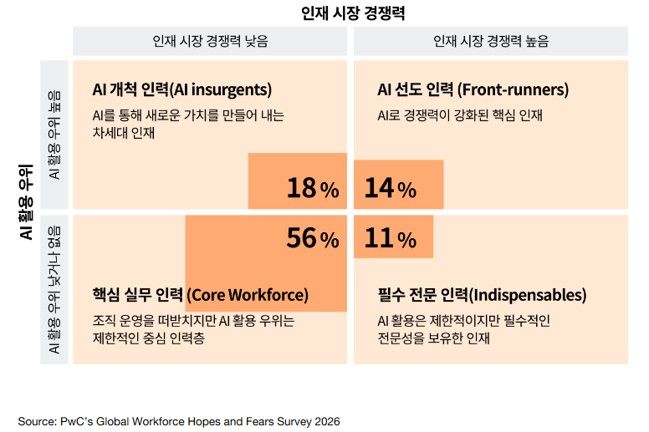
According to the 2026 Global Workforce Survey released by Samil PwC on the 30th, AI-leading workers accounted for 4% of the workforce in South Korea, 10 percentage points below the global average of 14%.
By contrast, core operational workers responsible for key organizational functions such as customer response, operations and services accounted for 81% in South Korea. That was 25 percentage points higher than the global average of 56%. Samil PwC analyzed that many employees at South Korean companies could fall relatively behind in opportunities for growth through AI use, despite handling their organizations’ day-to-day operations.
The survey was conducted among 49,364 workers in 48 countries worldwide, including 1,013 participants in South Korea. AI use itself is spreading rapidly. Sixty-four percent of workers worldwide said they had used AI at work during the past 12 months, up 10 percentage points from the previous year. The share of workers using generative AI every day also rose from 14% to 22%.
The problem is the disparity in the benefits gained from using AI. Among AI-leading workers, who accounted for 14% of all respondents, 85% expressed strong confidence in their job security. Nearly 80% also said they had access to learning and skills-development resources.
By contrast, among core operational workers, who made up 56% of the total, only about half expressed confidence in their job security. Less than 40% said they had access to learning and skills-development resources.
Samil PwC noted that companies must move beyond simply adding AI tools to existing tasks if they want their AI investments to improve productivity beyond a limited group of employees. They need to redesign workflows and roles themselves.
Choi Chang-beom, a people strategy partner at PricewaterhouseCoopers (PwC) Consulting, said, "Given that South Korean companies have a higher share of core operational workers than the global average, it is important to simultaneously pursue role-based learning and work redesign so existing employees can use AI to grow," adding, "Strengthening managers’ capabilities, rebuilding trust, and providing tailored support by generation and career stage will be key conditions for turning AI investment into tangible productivity and growth."
[email protected] Kim Hyun-jung Reporter