Defense Agency for Technology and Quality Provides Full Practical Support for SMEs on 'Airworthiness Certification'—"Lowering the Barrier to Localizing Military Aircraft Parts"
- Input
- 2026-09-30 09:35:28
- Updated
- 2026-09-30 09:35:28
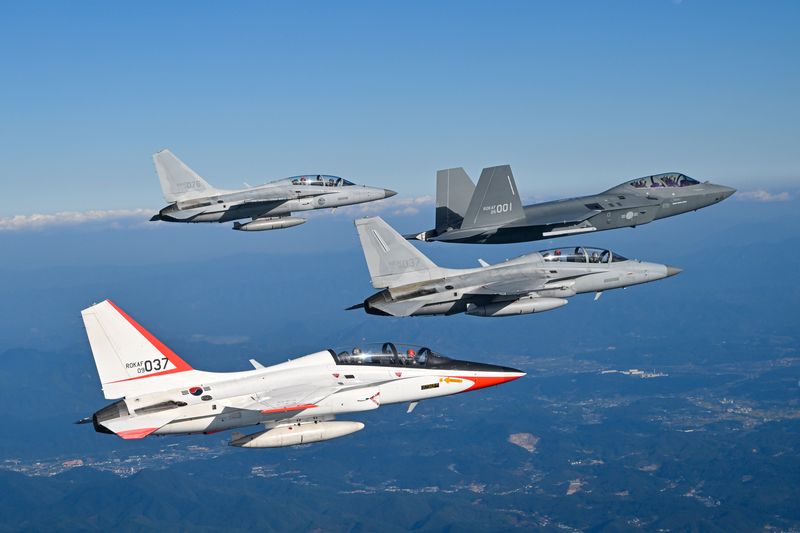
'Airworthiness Certification' means 'proving that something has the conditions or quality needed to be fit for flying through the air.' It is a government legal certification procedure and system that scientifically verifies and approves whether the tens of thousands of parts inside a military aircraft meet the standard of being 'safe to install on an aircraft that actually flies.' Even domestically produced parts made with outstanding technology cannot be installed on military aircraft unless they pass this official certification, which has long been regarded as the highest technical barrier to localizing aircraft parts for small and midsize defense companies.
On the 30th, the Defense Agency for Technology and Quality (DTaQ) held the 2026 Airworthiness Certification Briefing for SMEs at the Complex Innovation Center in Jinju Innovation City, South Gyeongsang Province, to help small and midsize companies overcome this barrier. About 50 working-level representatives from 20 defense companies, including domestic military aircraft parts manufacturers participating in projects to maximize the performance of existing military capabilities and localize aircraft parts, attended the event and demonstrated strong interest.
The briefing was organized to provide practical relief to promising SMEs that possess technical capabilities and a commitment to localization but were experiencing difficulties in the field because of complex and demanding Airworthiness Certification standards and documentation procedures.
The briefing covered key administrative and technical procedures for Airworthiness Certification that SMEs encounter in practice while pursuing defense projects, along with major success and failure cases. In particular, DTaQ moved beyond simply providing information by setting up dedicated booths for SMEs that had submitted individual applications in advance. It also offered simultaneous one-on-one customized technical consultations tailored to each company's parts, earning a favorable response from participants.
Jang In-gi, head of the DTaQ Airworthiness Certification Research Center, emphasized, "We expect this briefing to serve as a practical opportunity to improve SMEs' understanding of the Airworthiness Certification system and resolve the structural difficulties they face during the actual implementation process. We will continue to expand our policy and practical support systems by consistently gathering feedback from the field so that SMEs can smoothly complete defense aviation projects."
[email protected] Lee Jong-yoon Reporter