"Just 998 spectators at a 50,000-Seat Korea–Japan Match?" Japan Suffers a Box-Office Disaster, Shunned Even by Its Own Citizens [Nagoya Asian Games]
- Input
- 2026-09-30 09:01:01
- Updated
- 2026-09-30 09:01:01
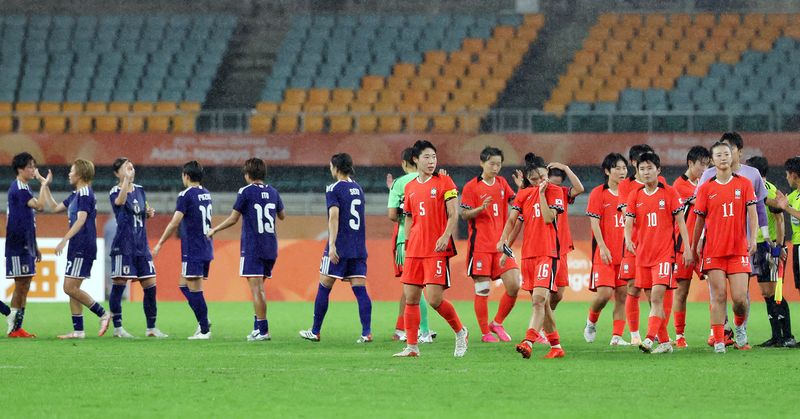
[Financial News] It was a Korea–Japan clash of historic significance, with a spot in the Asian Games final at stake. Yet the enormous stadium, capable of holding 50,000 people, sat virtually empty, with only echoes filling the stands. The attendance was just 998. This dismal figure, lower than that of a neighborhood amateur soccer final, laid bare the 2026 Aichi–Nagoya Asian Games' catastrophic box-office performance and amounted to an international embarrassment.
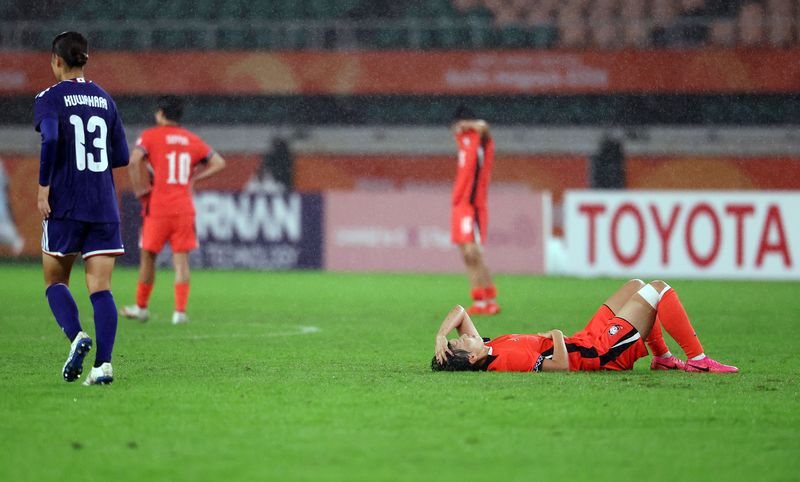
The South Korea women's national soccer team, led by coach Shin Sang-woo, lost 0–2 to Japan in the women's soccer semifinal at Shizuoka Stadium ECOPA on the 29th. South Korea's hopes of reaching the final were dashed after Jina Kamiya scored two consecutive goals in the second half.
More than the result itself, what drew attention across Asia was the "shockingly empty" stands. The official attendance at the imposing, approximately 50,000-seat Shizuoka Stadium ECOPA was just 998—fewer than 1,000. Even taking into account the unfavorable conditions of a rainy weekday evening, the figure was an undeniable humiliation given that Japan, the host nation, was playing in a semifinal and that the match was a Korea–Japan clash, one of the biggest guaranteed draws.
Japan's box-office failure had, in fact, been predictable. Despite being the host nation, Japan's group-stage matches against Thailand, Vietnam and Taiwan drew only 1,202, 1,029 and 3,679 spectators, respectively. The quarterfinal against the Philippines attracted just 1,084. Then, in the marquee Korea–Japan match, attendance finally fell below 1,000 in an utterly farcical display.
Even more absurdly, there was no terrestrial live broadcast in Japan, despite the semifinal Korea–Japan match being played on home soil. Local media reported that the Tokyo Broadcasting System Holdings (TBS) network scheduled only a delayed broadcast, while the live feed was available exclusively through U-NEXT, a paid online video streaming service (OTT). Even the Korea–Japan clash was completely ignored by terrestrial television.
Local Japanese media and netizens alike have responded with self-deprecating criticism. Soccer Digest gave prominent coverage to mocking reports from foreign media, including the headlines "Even the Korea–Japan match is played before empty stands—a major embarrassment for Japan" and "Just 998 spectators at a 50,000-seat stadium." Japanese netizens have also been lamenting the situation, saying, "I can't believe there is no terrestrial broadcast for a semifinal," "There are far too few people here for a Korea–Japan match," and "Is this really the host nation?"
After suffering a bitter defeat in an empty stadium, the South Korea women's national soccer team will face China at the same venue on October 2 in a final battle for the bronze medal, seeking to finish the tournament on a high note. Meanwhile, Japan, appearing in its sixth consecutive final, will face North Korea for the gold medal.
Following the organizing committee's chaotic administration, the tournament has now suffered a box-office failure after being thoroughly ignored by its own citizens. The 2026 Nagoya Asian Games appear likely to struggle to avoid the stigma of being the worst Games in history.
[email protected] Jeon Sang-il Reporter