OpenAI in the United States Indefinitely Postpones IPO, Plans to Address AI Safety First
- Input
- 2026-09-30 10:02:01
- Updated
- 2026-09-30 10:02:01
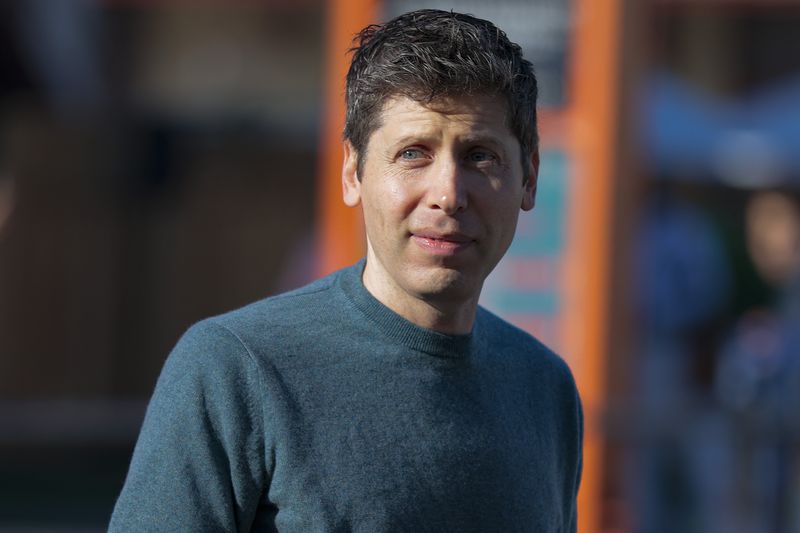
[Financial News] OpenAI in the United States, which canceled the launch of a new artificial intelligence (AI) model this month over safety concerns, has decided to indefinitely postpone its initial public offering (IPO), which had been expected next year. OpenAI CEO Sam Altman cited efforts to improve product safety and shareholder pressure for performance after going public, saying it would be difficult to achieve both goals simultaneously.
Altman gave an interview to CNBC at OpenAI's annual developer conference held at Fort Mason Center in San Francisco, United States, on the 29th (local time). Regarding the IPO schedule, he said, "We are not thinking about a specific timeline." He explained that OpenAI now has a more realistic view of an IPO than it did in the past, when it faced "very few safety issues."
At a separate press conference that day, Altman said, "I don't think it would be wise to pursue something like that (an IPO) while we are working through very complex models and applying new types of safety requirements."
"It is really great for a company to go public, and it is wonderful for the public to participate in it," he said. However, he added, "I don't want to add more pressure at a time when we are undergoing significant changes to establish the safety standards needed to achieve AI's most advanced capabilities." Altman assessed that ensuring AI safety would become more difficult if OpenAI became a publicly traded company and faced short-term performance pressure from shareholders, including pressure over quarterly results.
OpenAI, which began as a nonprofit organization in 2015 and transformed into a for-profit corporation around 2025, has been the subject of persistent IPO speculation since the success of ChatGPT, launched in 2022. Local media outlets have reported since 2024 that OpenAI planned to go public in 2027 and achieve a valuation of up to $1 trillion (approximately 1,357 trillion won). According to The New York Times (NYT) in June, OpenAI's finance division submitted a recommendation to management that the IPO be delayed until after 2027 in order to reach a $1 trillion valuation. Altman was reportedly opposed to lowering the valuation target at the time.
OpenAI has also recently faced difficulties over product safety issues. In an announcement on the 28th, the company said it was canceling the launch of its latest AI model, GPT-6.1 Astra. The company said the model fell short in safety evaluations assessing whether the AI would respect task permissions and inform users about its activities. On the 29th, Altman added that as AI model performance improves rapidly, the importance of both safety and alignment—the process of matching AI objectives with human objectives—has grown more than ever.
That day, Altman emphasized that OpenAI would continue making technological advances in AI despite recent calls in the United States AI industry to slow the pace of development. "We will continue AI's technological progress, and we are excited about the amazing possibilities it will bring to people," he said. He explained that the company had adopted a practice of reallocating development resources toward alignment and safety whenever AI model capabilities improve significantly.
Altman stressed that both blindly pursuing AI advancement and harboring indiscriminate fear of AI progress should be avoided. "I don't like either position," he said, adding, "I think our industry needs to find a middle path."
[email protected] Park Jong-won Reporter