"U.S. Fuel-Economy Rule Easing: Hyundai Motor and Kia Seen as Long-Term Winners"
- Input
- 2026-09-30 08:56:01
- Updated
- 2026-09-30 08:56:01
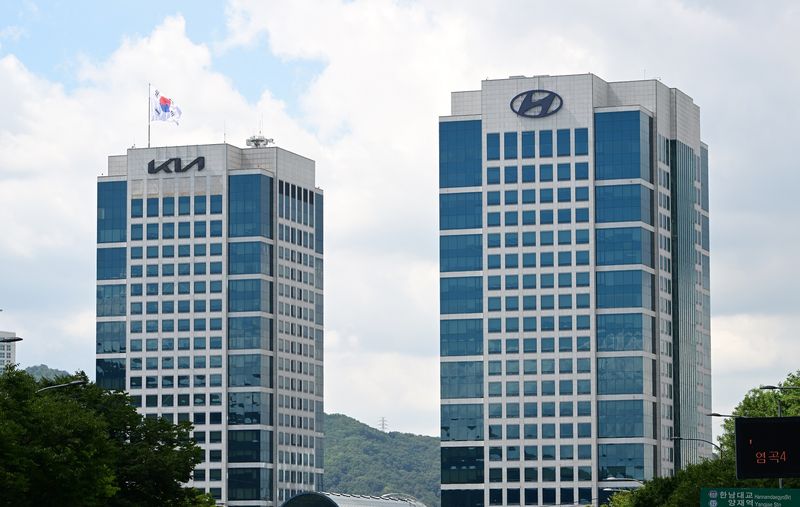
[Financial News] U.S. automakers are expected to benefit in the short term from the easing of vehicle fuel-economy regulations. In the long term, however, analysts say Hyundai Motor and Kia will gain a competitive edge with diversified powertrains spanning hybrids and electric vehicles.
Korea Investment & Securities maintained its overweight rating on the auto sector, saying the easing of U.S. fuel-economy regulations would have a limited immediate impact on vehicle demand but would reduce automakers' regulatory compliance costs.
The changes are favorable to U.S. automakers with a high share of internal-combustion engine vehicles in the short term. However, Hyundai Motor and Kia are viewed as better positioned given the possibility that clean-vehicle policies could be strengthened again.
On the 30th, Kim Chang-ho, an analyst at Korea Investment & Securities, made the assessment after the National Highway Traffic Safety Administration (NHTSA) finalized a rule lowering the 2031 corporate average fuel economy (CAFE) standard from 50.4 mpg to 34.9 mpg. The new standard is 31% lower than the target introduced under the Joe Biden administration.
The move is part of the second Trump administration's broader push to ease auto regulations. Last July, the passage of the tax-and-spending law (OBBBA) effectively reduced fines for failing to meet CAFE standards to zero won. In February this year, the Environmental Protection Agency (EPA) repealed the endangerment finding that served as the basis for vehicle greenhouse-gas regulations, along with carbon dioxide emissions standards. The CAFE reduction is the third major regulatory easing measure.
Korea Investment & Securities expects demand for different powertrains in the United States to change little in the short term despite the regulatory easing. The firm believes the market had already moved ahead of the regulatory changes because CAFE fines had already disappeared and EV tax credits had ended. In fact, battery electric vehicles (BEVs) accounted for 5.8% of U.S. vehicle sales from January through August this year, down 2.1 percentage points from the same period a year earlier.
However, automakers' investment plans are expected to undergo substantial changes. The easing will reduce the burden of increasing EV-related investment to comply with regulations or purchasing emissions credits from other companies.
NHTSA estimates that the auto industry's fuel-economy technology costs for 2027-2031 will fall to $60.6 billion from the previous estimate of $115.8 billion as a result of the regulatory easing.
GM is expected to see the largest cost reduction at $20.4 billion, followed by Stellantis at $6.6 billion and Ford at $5.8 billion. Accordingly, the so-called Detroit Three, which have a high share of internal-combustion engine vehicles, are expected to benefit from the relaxed regulations in the medium term.
By contrast, analysts say the environment could become relatively unfavorable for Tesla, which has a high proportion of clean vehicles.
Kim Chang-ho said, "U.S. consumers' actual demand is shifting from electric vehicles to hybrids," and explained, "With gasoline prices rising due to geopolitical risks in the Middle East, fuel efficiency is an important purchasing factor for U.S. consumers who drive long distances. As the burden of charging infrastructure remains and EV tax credits have ended, the shift in demand toward hybrids is also becoming increasingly clear."
Hybrids accounted for 15.6% of total U.S. vehicle sales from January through August this year, up 3.0 percentage points from a year earlier.
The market is expected to grow to more than 1.5 times its 2024 size. Korea Investment & Securities expects the expansion of the hybrid market to have a positive impact on Hyundai Motor and Kia's performance.
Hyundai Motor and Kia are viewed as having long-term competitiveness because they are securing profitability through hybrids while maintaining and expanding their EV lineups.
If U.S. clean-vehicle support policies are strengthened again, companies that have scaled back EV investment could face difficulties in responding. As the transition to EVs continues in major markets such as Europe and China, it would be difficult to adjust investment strategies based solely on the easing of U.S. regulations.
Kim Chang-ho concluded that the ability to diversify powertrains, rather than short-term benefits from regulatory changes, will determine long-term competitiveness. Hyundai Motor and Kia, which offer both hybrids and electric vehicles, will be able to respond flexibly to uncertainties surrounding policy changes and market demand.
[email protected] Kang Jung-mo Reporter