If National Pension Investment Returns Rise by 2 Percentage Points, Fund Depletion Can Be Prevented Through 2120
- Input
- 2026-09-30 08:43:08
- Updated
- 2026-09-30 08:43:08
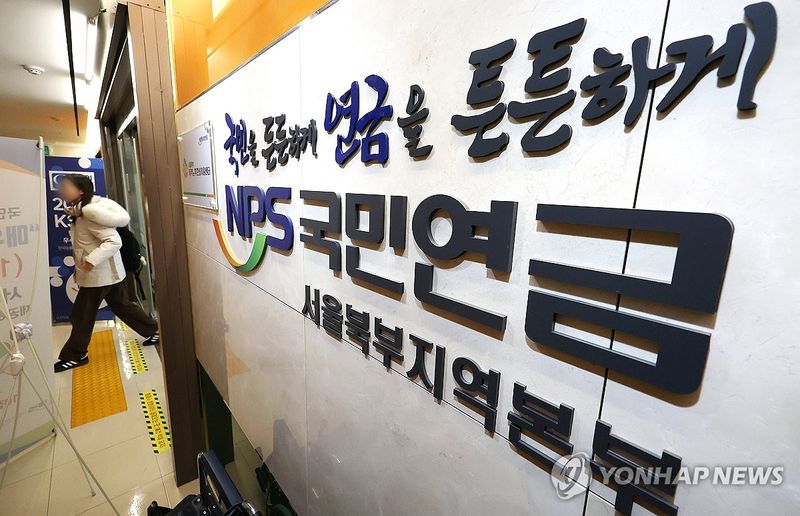
[Financial News] An analysis found that raising the National Pension fund's long-term investment return by 2 percentage points above the current projection would allow the fiscal balance to remain in surplus through 2120, preventing the fund from being depleted.
Even Raising the Contribution Rate to 13% Would Not Prevent Fund Depletion in 2069
According to the research and analysis report on the "Fiscal Outlook for National Pension Under Various Scenarios," which the office of Nam In-soon, a lawmaker from the Democratic Party of Korea on the National Assembly Health and Welfare Committee, commissioned the National Assembly Budget Office (NABO) to prepare, the National Pension's fiscal balance is projected to turn into a deficit in 2050, with the accumulated fund fully depleted in 2069 if the current system remains unchanged. The current system is based on the pension reform enacted in 2025.
Under amendments to the National Pension Act, the contribution rate, previously set at 9%, will rise by 0.5 percentage points annually beginning in 2026, reaching 13% in 2033. The nominal income replacement rate—the ratio of pension benefits received after retirement to average lifetime income—was raised from 40% to 43% beginning in 2026.
NABO's baseline projection applies a 13% contribution rate and a 43% income replacement rate. It is based on Statistics Korea's medium population projection assumption from its December 2023 population projections, along with an average basic investment return of around 4.6% over the projection period.
Even with the reform raising the National Pension contribution rate to 13%, the outlook indicates that it will be difficult to avoid a shift into deficit in 2050 and fund depletion in 2069 due to a decline in the number of contributors caused by low birth rates and population aging, as well as rising benefit expenditures.
A 1-Percentage-Point Increase in Investment Returns Would Delay the Shift Into Deficit by 10 Years
Nam's office determined that increasing only the contribution burden on participants would have limitations. It therefore asked NABO to assess alternative scenarios centered on two measures: improving the fund's investment returns and providing government fiscal support.
Under a scenario that raised the fund's investment returns, increasing the average return over the projection period by 1 percentage point would delay the shift into deficit by 10 years, to 2060. The fund depletion date would also be extended by 13 years, to 2082.
If the average return over the projection period were raised by 2 percentage points, the fiscal balance would remain in surplus throughout the entire projection period, through 2120, and the fund would not be depleted.
Under a scenario involving direct government fiscal support, the timing of the support proved to be as important as its size. If the government provided 1% of GDP from the state treasury each year in advance beginning in 2026, the cumulative compound-interest effect on fund management would delay the shift into deficit by 18 years, to 2068. Fund depletion would be postponed by 31 years, to 2100.
By contrast, if 1% of GDP were injected beginning in 2050, when the deficit starts, the shift into deficit would be delayed only to 2057 and fund depletion to 2078—delays of seven and nine years, respectively.
NABO, meanwhile, explained that the results were from a simulation based on assumptions established by Nam's office and did not represent NABO's official position.
[email protected] Ahn Ga-eul Reporter