Civil Servant Moved Car Carrying 90 Million Won in Cash After Bribery Probe Began; Supreme Court Finds Him Not Guilty of Instigating Evidence Concealment
- Input
- 2026-09-30 08:28:07
- Updated
- 2026-09-30 08:28:07
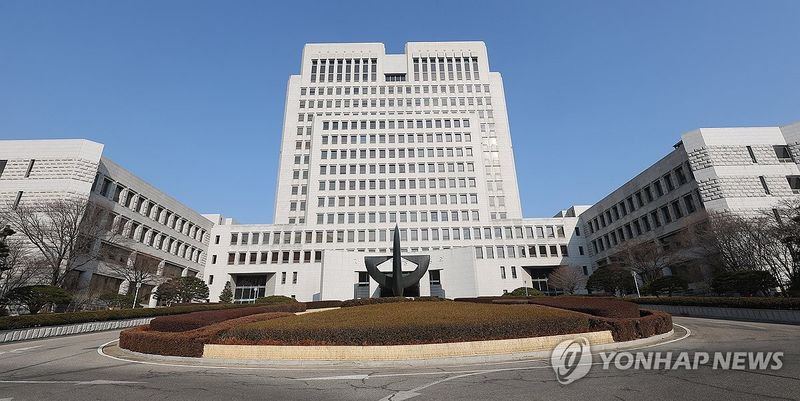
According to legal sources on the 30th, the First Petty Bench of the Supreme Court of Korea, presided over by Justice Cheon Dae-yeob, upheld the appellate court's ruling on the 3rd. The ruling sentenced A, a former chief of the Accounting Division at Iksan City Hall in North Jeolla Province, to two years in prison and a 30 million won fine and ordered the forfeiture of approximately 12.65 million won. A had been indicted on charges of accepting bribes and instigating the destruction of evidence.
A was indicted on charges of receiving money and entertainment in exchange for favors while handling contracts awarded without competitive bidding in the Accounting Division. A allegedly received meals worth approximately 660,000 won on nine occasions and golf outings worth approximately 990,000 won on six occasions from the chairperson and a director of an association. A also allegedly received gift certificates worth 8 million won on eight occasions from an executive director of one company, as well as 3 million won in cash from the CEO of another company. The 2 million won in cash received from company representative B was also included in the charges.
After police detected signs of bribery and searched Iksan City Hall, A had a subordinate contact A's family and arrange for the passenger car to be moved. The car contained 91.4 million won in cash and gift certificates worth 8.53 million won.
The issue was whether having someone else hide evidence in one's own criminal case could be considered an abuse of the right to defense. Under the Criminal Act, the crime of destroying or concealing evidence applies only to evidence in another person's criminal case. However, the Supreme Court ruled in March 2000 that even when the evidence concerns one's own case, instigating another person to destroy it constitutes an abuse of the right to defense and establishes the crime of instigating the destruction of evidence.
The first and second trials reached opposite conclusions. The first trial found A guilty of instigating the concealment of evidence but acquitted A of the charge involving the 2 million won received from B, sentencing A to one year in prison and a 20 million won fine. The second trial overturned the acquittal, stating, "It is reasonable to conclude that A accepted the bribe with the intent to appropriate it." However, it acquitted A of instigating the concealment of evidence, finding that "it is difficult to conclude that the act caused a serious obstruction to the administration of criminal justice or posed such a risk" and that "there is sufficient reason to view it as falling within the category of evidence concealment committed by A himself." The prison term was increased to two years.
Both sides appealed, but the Supreme Court upheld both rulings. In response to the prosecution's appeal, the court stated, "There is no error in the lower court's judgment that violates the rules of logic and experience, exceeds the limits of the principle of free evaluation of evidence, or misunderstands the legal principles concerning the establishment of the crime of instigating the destruction of evidence." The court also rejected A's argument that the emergency arrest was illegal and that the seized items were therefore inadmissible, stating, "There is no error in the lower court's judgment that misunderstood the legal principles concerning the establishment of the crime of accepting bribes, emergency arrest, and the exclusionary rule for unlawfully obtained evidence."
[email protected] Kim Dong-gyu Reporter