Michigan Moves Left, New Hampshire Toward the Center: The Two Parties' Experiment Ahead of 2028 [The U.S. Midterm Elections Seen Through Battleground States (2)]
- Input
- 2026-09-30 13:59:54
- Updated
- 2026-09-30 13:59:54
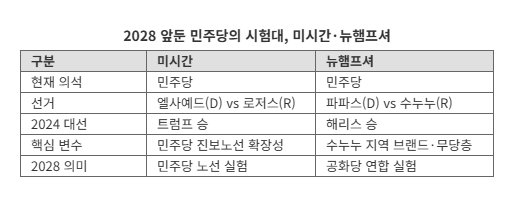
[Financial News, New York—Correspondent Lee Byung-chul] The two parties' ideological experiments ahead of the 2028 U.S. presidential election will begin with this November's midterm elections, two years ahead of schedule. Michigan and New Hampshire are the testing grounds.
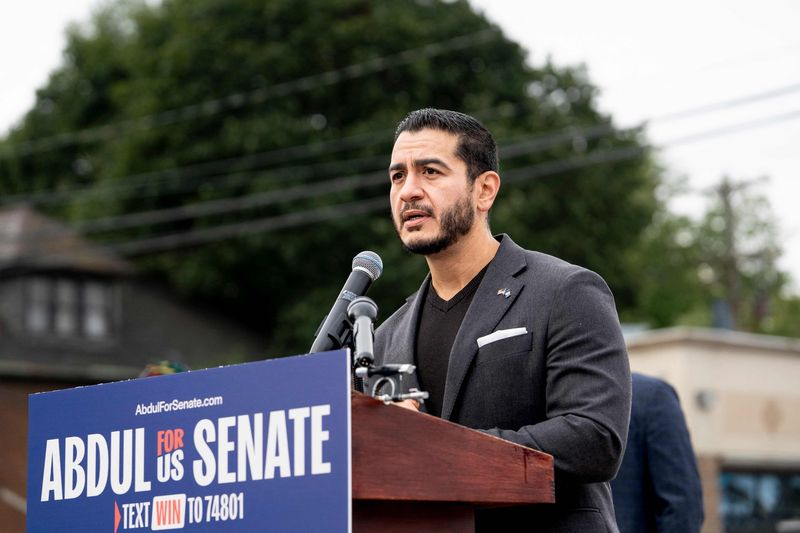
Michigan will test whether the Democratic progressive camp's policies and voter coalition can remain competitive in a presidential battleground state. In New Hampshire, the focus is on whether a Republican candidate with a political record distinct from President Donald Trump can win over both Trump's supporters and moderates and independents.■ Potential presidential contenders flock to Michigan as Democrats' platform faces a testIn Michigan, Democrat Abdul El-Sayed and Republican Mike Rogers are competing for the seat of retiring Democratic Senator Gary Peters. The nonpartisan Cook Political Report classifies Michigan as a Toss Up. Michigan is a major Rust Belt battleground state where Trump defeated Kamala Harris by about 1.4 percentage points in the 2024 presidential election.
El-Sayed, a physician and former Detroit health commissioner, has received support from Senator Bernie Sanders and Representative Alexandria Ocasio-Cortez (AOC), among others. He advocates "Medicare for All" and opposes U.S. arms support for Israel. In the Democratic primary, he defeated the relatively moderate Representative Haley Stevens.
The key question is whether El-Sayed can secure support from progressives, young voters and Arab Americans while keeping Black voters, working-class voters and suburban moderates within the Democratic coalition. After the Democrats' defeat in the 2024 presidential election, the party has been divided between calls to move toward the center and demands for stronger economic populism focused on the cost of living, health care and housing.
Potential 2028 presidential candidates are also getting involved. Former Vice President Kamala Harris visited Detroit on the 22nd (local time) and campaigned publicly with El-Sayed for the first time. Former Transportation Secretary Pete Buttigieg and others are also supporting El-Sayed.
Recent polls also highlight the Democrats' challenge. A survey by The Washington Post and George Mason University's Schar School found El-Sayed at 48% and Rogers at 45%, within the margin of error. While 53% of voters wanted Democrats to control the Senate, support for El-Sayed stood at 48%. The gap was wider among Black voters, at 83% and 67%, respectively. Overall, 48% of voters considered El-Sayed "too progressive."
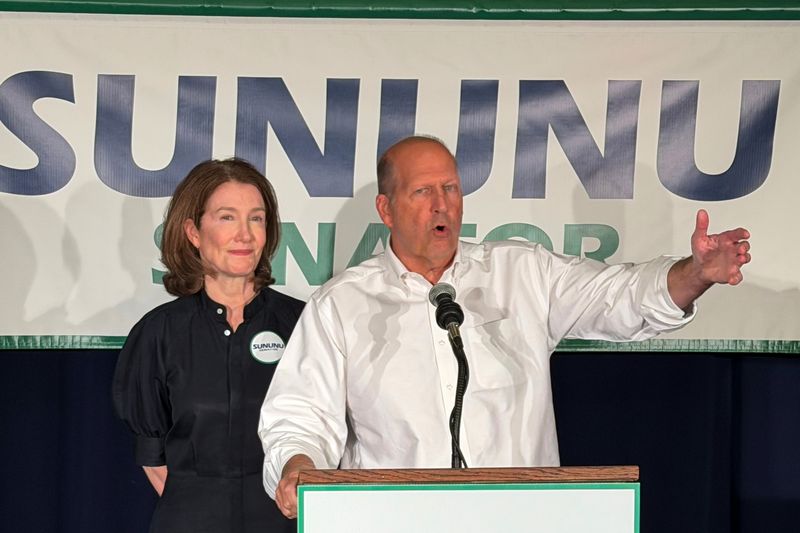
Rogers is seeking to exploit this gap and broaden his support among Democratic-leaning voters and independents. He lost to Democrat Elissa Blair Slotkin by about 19,000 votes in the 2024 Michigan Senate election.■ Sununu once criticized Trump: Another Republican experimentIn New Hampshire, Democratic Representative Chris Pappas and former Republican Senator John E. Sununu are competing for the seat of retiring Democratic Senator Jeanne Shaheen. On the 15th, the Cook Political Report changed its rating for the state from "Lean Democratic" to "Toss Up."
Democratic candidates have won all six presidential elections in New Hampshire since 2004, but Republicans are also strong in gubernatorial races. The state also has a tradition of ticket splitting, with voters choosing the president and federal lawmakers from one party and the governor from another. Independents are particularly numerous. According to the New Hampshire Secretary of State's Office, as of August, the state had about 247,000 registered Democrats, 300,000 Republicans and 352,000 independents.
Sununu served as a U.S. senator from 2003 to 2009. His father, John H. Sununu, served as governor of New Hampshire and as chief of staff to President George H.W. Bush, while his younger brother, Chris Sununu, was governor for eight years.
During the 2024 Republican presidential primary, Sununu backed Nikki Haley and publicly criticized Trump as a "loser." This year, however, Trump endorsed Sununu as a Senate candidate, and Sununu won the Republican primary.
The key question is whether Sununu can maintain his own local political brand while benefiting from Trump's endorsement and attract both Republican voters and independents. The Cook Political Report also identified Sununu's local brand and New Hampshire's tendency toward ticket splitting as major variables.
Michigan and New Hampshire pose different questions: Can the Democrats' progressive voter coalition expand into battleground states? Can a Republican candidate with a political record distinct from Trump broaden support to include independents? The results of the two elections are expected to offer useful reference points in the two parties' debates over their platforms as they prepare for the 2028 presidential election.
[email protected] Lee Byung-chul, Correspondent Reporter