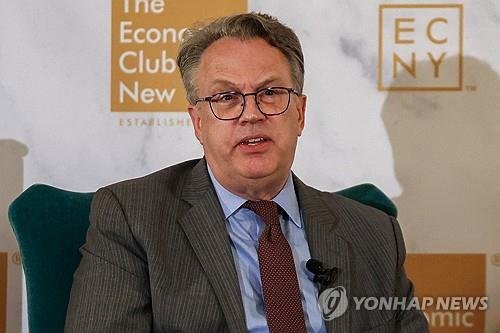
John Williams, New York Fed President: "There Is No Need to Rush Another Rate Hike"
- Input
- 2026-09-30 06:03:03
- Updated
- 2026-09-30 06:03:03
According to The Wall Street Journal (WSJ) on the 29th local time, Williams said in a speech in Buffalo, "Given the policy actions we took at the September meeting, there is no need to rush."
He said inflation remained excessively high and that another rate hike later this year could be appropriate. However, he believes there is time to assess forthcoming economic data rather than move immediately toward further tightening.
Williams's remarks carry more weight than those of other Fed officials. The president of the FRBNY serves as vice chair of the Federal Open Market Committee (FOMC), and Williams has generally made comments reflecting the policy consensus within the FOMC rather than his own independent views.
The market reacted immediately. According to CME Group, the probability of a rate hike on October 28, which stood at around 70% before Williams's speech, fell to approximately 50% afterward.
The Fed raised its benchmark interest rate by 0.25 percentage points on the 16th. It was the first rate hike in three years. With Fed officials projecting at least one more hike this year and Fed Chair Kevin Warsh also taking a hawkish stance, expectations of another rate hike in October had spread through the market.
Williams's remarks effectively put the brakes on those expectations. Rather than signaling opposition to another hike itself, they provided guidance on its timing, leaving open the possibility of a December hike instead of one in October.
Another factor that could allow the Fed to slow the pace of rate increases is the surge in market interest rates.
Long-term U.S. Treasury yields have recently set new 19-year highs one after another. The benchmark 10-year Treasury yield rose to 5.25% that day. It had climbed by approximately 0.25 percentage points in just two weeks from around 5% on the 16th, when the Fed raised interest rates.
If the rise in long-term yields continues, borrowing costs for businesses and households will increase, curbing investment and consumption. In effect, financial markets would produce a tightening effect even if the Fed did not immediately raise its benchmark rate again.
Inflation remains a concern for the Fed. The inflation measure preferred by the Fed stood at 3.7% in the latest reading for July, well above its 2% target.
Williams, however, assessed that some underlying price pressures were easing on their own. Housing cost increases have slowed, and despite a robust labor market, there are no clear signs that wage growth is pushing consumer prices higher further.
[email protected] Lee Byung-chul, correspondent Reporter