Smooth Driving and Precise Control Mask Its Heft: Range Rover Sport Electric
- Input
- 2026-09-30 08:01:00
- Updated
- 2026-09-30 08:01:00
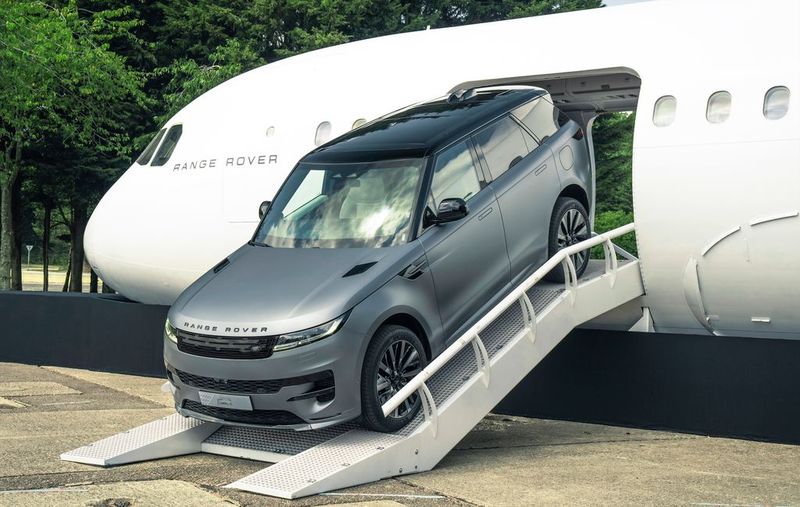
On July 18, local time, I test-drove a prototype of the Range Rover Sport Electric at a secure facility inside the JLR headquarters in Gaydon, UK. The course included paved roads, uneven sections, and a retired Airbus A320 fuselage.
In Comfort mode just after setting off, the electric vehicle's characteristic quietness and the Range Rover's refined ride were especially noticeable. Even when the smooth road gave way to a series of potholes, the body did not sway excessively. It felt as though the suspension filtered out the impacts and quickly stabilized the vehicle's movements.
After switching to Dynamic mode and pressing the accelerator, the vehicle responded immediately. In corners, it showed less of the sluggish movement typically associated with large SUVs.
When the reporter asked whether it was really an SUV because of its comfortable ride, the instructor riding along replied, "That is precisely the point," adding, "The goal of this vehicle is to combine ultimate luxury and a refined ride with outstanding driving performance, design, and dynamism."
Its performance also lives up to the word "Sport" in its name. Its two electric motors produce a peak output of 550 horsepower (PS) and maximum torque of 86.7 kg·m. With Dynamic Launch Mode, it can accelerate from a standstill to 100 km/h in 4.5 seconds.
The highlight of the test drive was passing through the Airbus A320 fuselage. The ramp leading to the entrance was steep, and inside the fuselage there was only about a hand's breadth of clearance between the vehicle and each side wall. Before entering the ramp, I selected Rock Crawl mode for climbing over rocks and raised the vehicle's height to Off-Road Level 1.
The One-Pedal Driving function, which controls starting, deceleration, and stopping through the accelerator, proved useful in the confined space. By making fine adjustments to the accelerator, I could move the vehicle forward gradually and bring it to a stop without any abrupt movements.
While checking the interior display and turning the steering wheel little by little, I guided the large vehicle into the fuselage. On the way out, careful accelerator control allowed me to descend the ramp without difficulty.
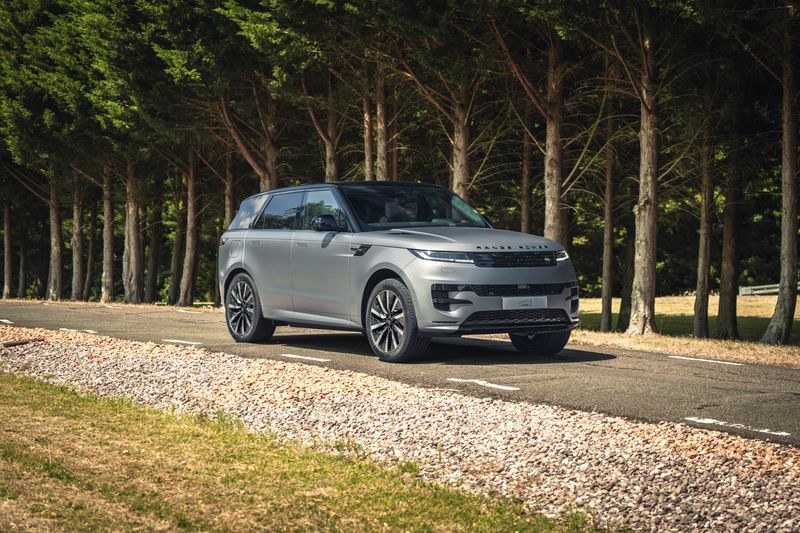
Matthew Becker, director of vehicle engineering for Range Rover, explained, "We combined a strengthened body structure, a low center of gravity, precise torque control, and advanced chassis technology. The vehicle remains comfortable while being agile enough to feel smaller than its actual size."
His explanation matched what I experienced in the narrow fuselage. The vehicle responded to small steering inputs within a predictable range.
Equipped with a 118.5 kWh battery, the vehicle has a manufacturer-claimed range of up to 609 km under the European WLTP standard. Under conditions that enable its maximum charging speed, 10 minutes of fast charging can add up to 220 km of driving range.
Martin Limpert, managing director of Range Rover, said, "This is a Range Rover Sport before it is an electric vehicle. Thanks to the organically integrated electric propulsion system, we were able to achieve a new level of responsiveness and precision. We designed it to deliver the ultimate driving pleasure in a sporty luxury SUV."
The Range Rover Sport Electric I experienced in Gaydon was quiet and smooth, as JLR described, yet it moved nimbly when needed and was remarkably delicate on narrow roads. The precise control it demonstrated inside the aircraft fuselage offered the clearest illustration of how electrification has brought out the vehicle's "Sport" character.
[email protected] Kim Hak-jae Reporter