OpenAI Launches AI Agent 'Dots': "Give It a Goal, and It Will Work Continuously on Its Own"
- Input
- 2026-09-30 03:40:22
- Updated
- 2026-09-30 03:40:22
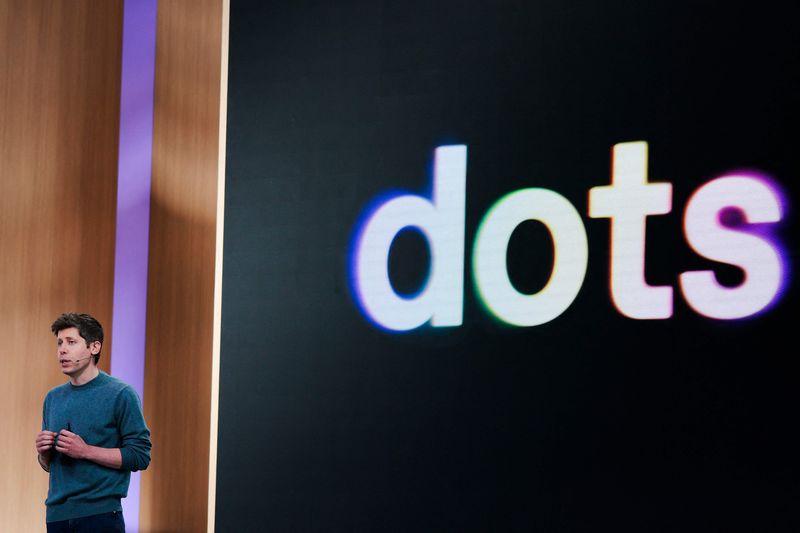
OpenAI launched its AI agent 'Dots' on the 29th local time. The ambitious project comes as OpenAI urgently seeks to monetize its AI technology ahead of an initial public offering (IPO). Dots was introduced amid intensifying competition, with Meta Platforms unveiling its AI agent Muse and causing a stir.
OpenAI unveiled Dots at its annual OpenAI DevDay event. According to the company, the agent is designed to operate independently around the clock until the user's goal is achieved and to learn from the user's feedback over time.
OpenAI has now entered in earnest the market for AI agents, which has emerged as one of Silicon Valley's most promising AI sectors.
The agent performs tasks autonomously once the user assigns it a role. Within a cloud-based virtual computer, it actively completes projects involving research, data analysis, document creation, software development and more.
It runs on GPT-6 Astra, OpenAI's most advanced AI model. When users explain a goal, it understands the related context and carries out the work on its own.
According to the Financial Times (FT), Dots differs from existing AI chatbots and agents in four major ways.
First, it operates autonomously and independently without stopping. Rather than simply answering a question or carrying out a one-time command, Dots continues working autonomously without requiring the user to intervene each time once a "goal" is provided.
Unlike existing AI agents, which operate within set parameters and require separate retraining, Dots learns in real time from user feedback during the work process. Over time, it adapts its work to the user's style and goals and carries out tasks on its own.
Dots goes beyond searching for information or assisting with writing to serve as a customized personal assistant. It can become deeply involved in a person's daily life and work and handle entire professional tasks on the user's behalf.
Moreover, instead of merely providing guidance, it uses various software tools to reach conclusions directly.
The biggest difference is that, while conventional AI was a tool that answered questions when asked, Dots is closer to a personal assistant that works on its own around the clock when given only a goal and improves through feedback.
[email protected] Song Kyung-jae Reporter