'Tumor Treatment' Medical Radiation Moves from Localization to Exports... 20 Years of Radiation Research Bear Fruit [On-Site Report]
- Input
- 2026-10-01 00:00:00
- Updated
- 2026-10-01 00:00:00
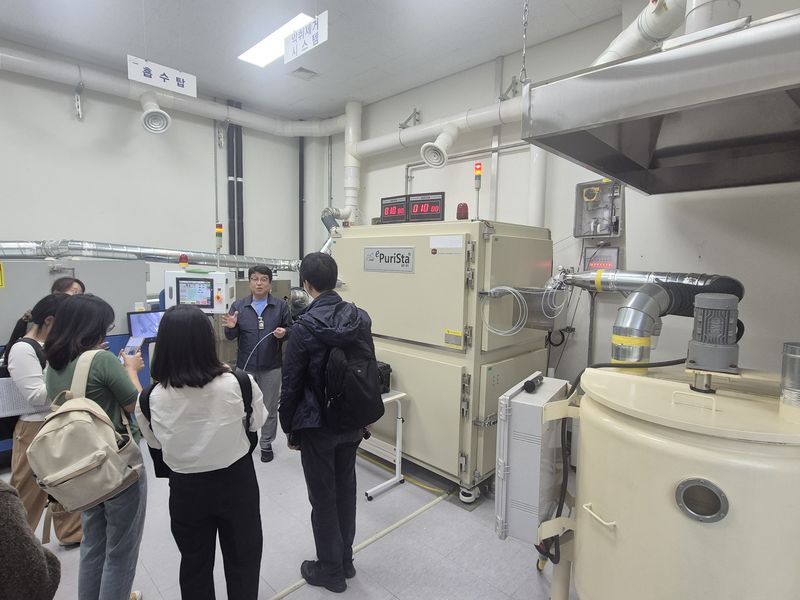
#2. An electron accelerator about the size of a large refrigerator. A foul-smelling gas is fed into it through an odor generator. The accelerator emits radiation known as an electron beam. The beam's movement can be observed on a large screen installed in front of the machine. When the movement on the screen stopped, the odor had disappeared. It took less than a minute. The electron beam removed the odor by altering the material's molecular structure or killing microorganisms.
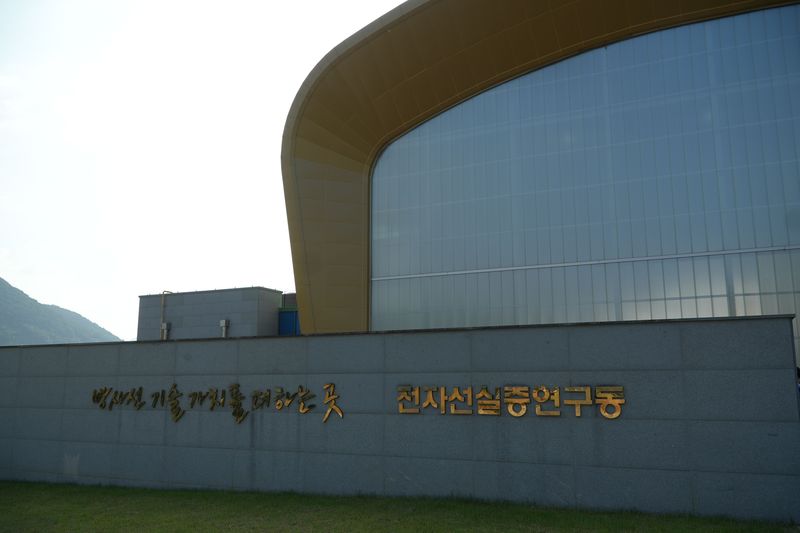
This is the KAERI Advanced Radiation Research Institute in Jeongeup, North Jeolla Province, visited on September 29. As the institute marks its 20th anniversary, it is developing radiation technologies useful in medicine, industrial settings, and everyday life.
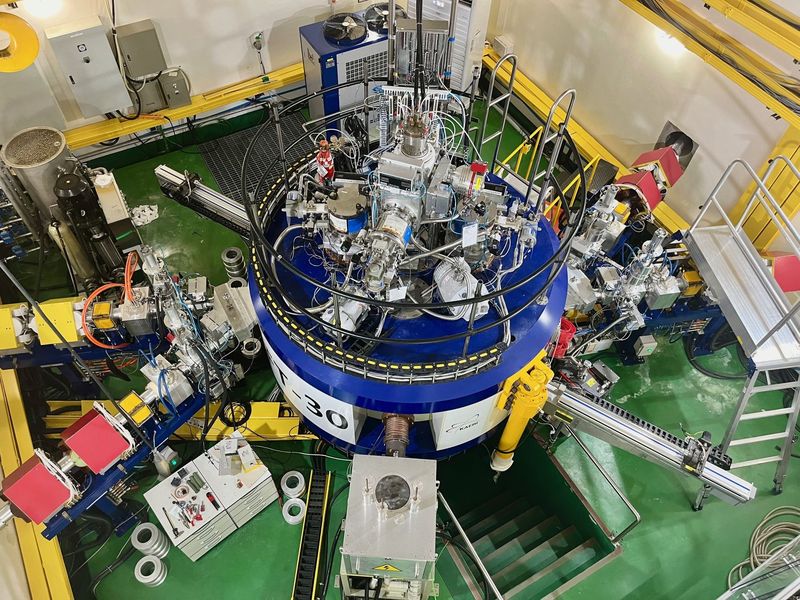
The first medium-sized cyclotron built in Korea is a core piece of the institute's infrastructure. Although the cyclotron was initially developed as a prototype operating in manual mode, it underwent extensive upgrades in three stages beginning in 2015. As a result, medical radioisotopes that had previously been entirely imported have not only been fully developed domestically but are also being supplied regularly to Korean medical institutions and exported overseas.
After domesticating Zirconium-89 for antibody-immunology research, the institute also succeeded in localizing the production of Germanium-68 for diagnosing glioma and Copper-67, which is gaining attention as a next-generation therapeutic isotope. Research and development is now under way to domestically develop a Gallium-68 generator capable of diagnosing hard-to-treat cancers.
Jung Hoon Park, head of the cyclotron research laboratory at the Advanced Radiation Research Institute, said, "The cyclotron facility is one of the world's leading facilities." He added, "Since 2022, we have been stably supplying domestically developed isotopes, including the long-half-life isotopes Zirconium-89 and Germanium-68, to major countries such as the United States, China, South Africa, and Thailand."
In particular, Zirconium-89 is expected to receive approval from the U.S. Food and Drug Administration (FDA) soon.
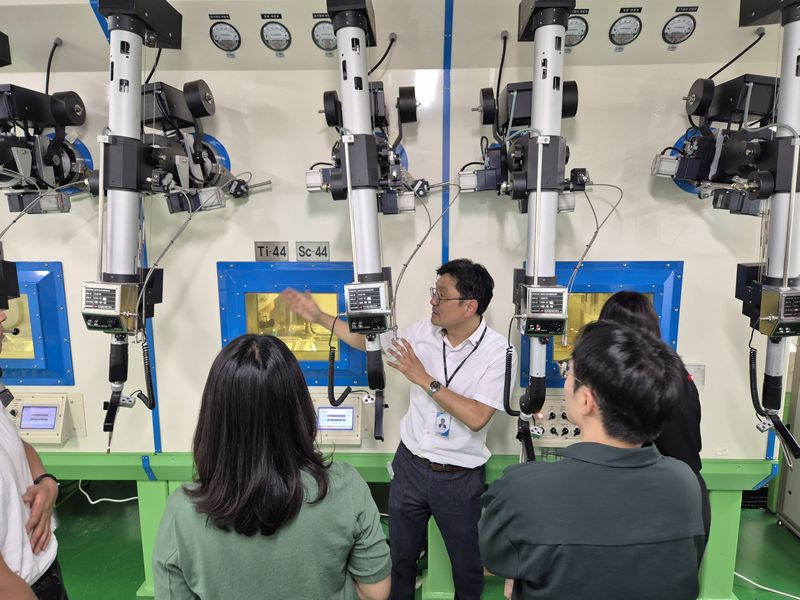
Byung Yup Jung, director of the Advanced Radiation Research Institute, said, "Zirconium-89 has already secured a leading position in Asia, and exports are expected to increase further if it receives U.S. approval." He added, "For the Gallium-68 generator currently under development, we have successfully developed the core technological elements. We also aim to fully develop it domestically and supply it to hospitals."
The institute has also achieved a range of other radiation research accomplishments. To preserve the Geumgang pine, an old wooden cultural heritage species, it has used radiation to kill insects inside the wood. It has also used high-energy treatment to preserve the tangible cultural properties Gwanseo Myeongseung Doccheop and Yeongsan Hoesangdo. This was made possible through electron beams (Electron Beam).
Director Jung said, "An electron beam is radiation that accelerates electrons generated by an electron gun to very high speeds under high voltage and fires them at materials." He added, "Electron-beam technology began in advanced materials and medicine and is steadily expanding into areas such as odor reduction at industrial sites, cultural heritage preservation and restoration, and reliability assessments for future space components."
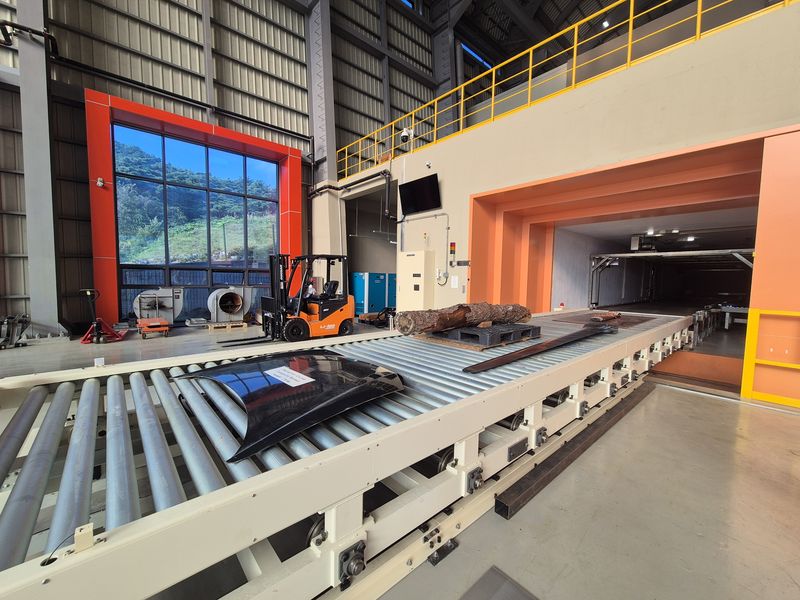
The Advanced Radiation Research Institute has strengthened its position as a global research institution by being designated an International Atomic Energy Agency (IAEA) International Cooperation Center four consecutive times from 2012 to the present. In Korea, it has established eight research institute companies and presented a successful model for commercializing radiation technologies.
Woo Sik Jung, president of the Korea Atomic Energy Research Institute, said at a ceremony on September 30 marking the institute's 20th anniversary, "The past 20 years have been a time that proved radiation technology is a force for innovation capable of transforming our society beyond the laboratory." He added, "We will expand convergence research that leads the future and take another leap forward as a world-class research hub that contributes to public health and safety and national competitiveness."
[email protected] Yeon Ji-an Reporter