Fourth North Korean Mine Found in DMZ Field Survey; Defense Minister Kang Shin-chul Says, "Phased Corresponding Measures Will Be Implemented"
- Input
- 2026-09-29 19:39:13
- Updated
- 2026-09-29 19:39:13

Defense Minister Kang Shin-chul told a full session of the National Defense Committee of the National Assembly on the 29th that the cause of the recent DMZ mine explosion was clear: "The mines were definitely emplaced by the North Korean military." Kang stressed that the incident was an unmistakable violation of the Armistice Agreement and a military provocation by North Korea, saying, "Because responsibility lies with North Korea, we will gradually implement corresponding measures in line with that responsibility." He declined to elaborate on specific response options, citing operational security.
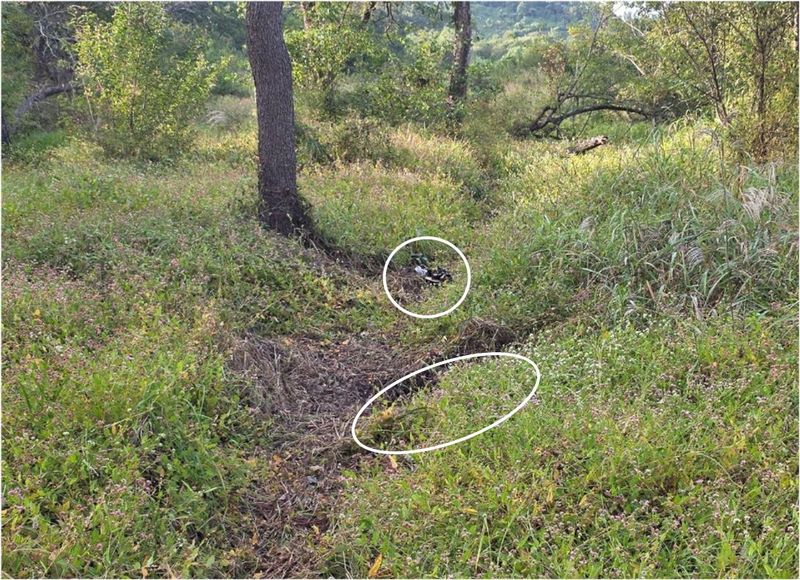
The military reached this conclusion based on a joint field inspection conducted by the Republic of Korea military and the United Nations Command (UNC). According to military authorities, on the third day of the inspection, one additional North Korean plastic anti-personnel mine was recovered near the blast site under the jurisdiction of the 25th Infantry Division (Republic of Korea), in addition to the three mines previously identified. The mine was found buried in the ground about 1 meter behind the second blast site.
The fact that all four mines were concentrated within a narrow area measuring about 4 meters in diameter is decisive evidence supporting the conclusion that they were deliberately emplaced rather than naturally displaced. Kang explained, "The likelihood that mines would be washed away by flooding and become concentrated in one place like this is extremely low," adding, "We believe North Korea deliberately emplaced them in connection with its ongoing work to 'fortify the border line.'" The ROK JCS also assessed that the site was likely a tactical minefield emplaced at least a year ago, rather than recently, based on the soil and roots covering the mines.
The illegality and deliberate nature of the provocation were also established through a detailed joint forensic investigation by the military authorities. Kwon Dae-won, Deputy Chairman of the Republic of Korea Joint Chiefs of Staff (ROK JCS), officially announced at a briefing by the MND the previous day, "The results of the joint field inspection and forensic investigation show that the explosion in the western-sector DMZ was a clear act of provocation in which North Korean troops secretly crossed the Military Demarcation Line (MDL) and deliberately emplaced mines along our forces' search route."
In particular, military authorities recovered fragments of protective equipment—including ballistic helmets, bulletproof vests and mine-protective overshoes—worn by injured soldiers, including the search battalion commander, immediately after the explosion. An emergency analysis detected the military high-explosive compounds trinitrotoluene (TNT) and RDX in the debris. Neither compound is found in the composition of mines used by the ROK military. Combined with the complete absence of records showing that the ROK military had emplaced mines in the area, the findings provided decisive physical evidence that the explosive was a North Korean mine intended for lethal use.
The ROK military and the UNC will continue conducting additional field inspections to determine the precise circumstances of the mine emplacement. Once the final findings are confirmed, they plan to work with the international community to hold North Korea clearly accountable.
[email protected] Lee Jong-yoon Reporter