Korea and India Strengthen Defense Industry Ecosystem Cooperation, Shifting Beyond Finished-Product Exports Toward 'Joint Development'
- Input
- 2026-09-29 19:22:22
- Updated
- 2026-09-29 19:22:22
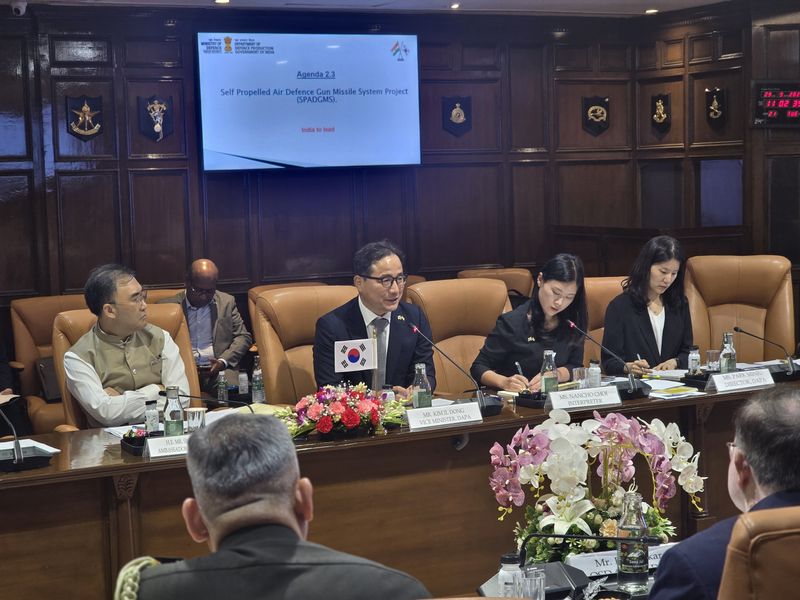
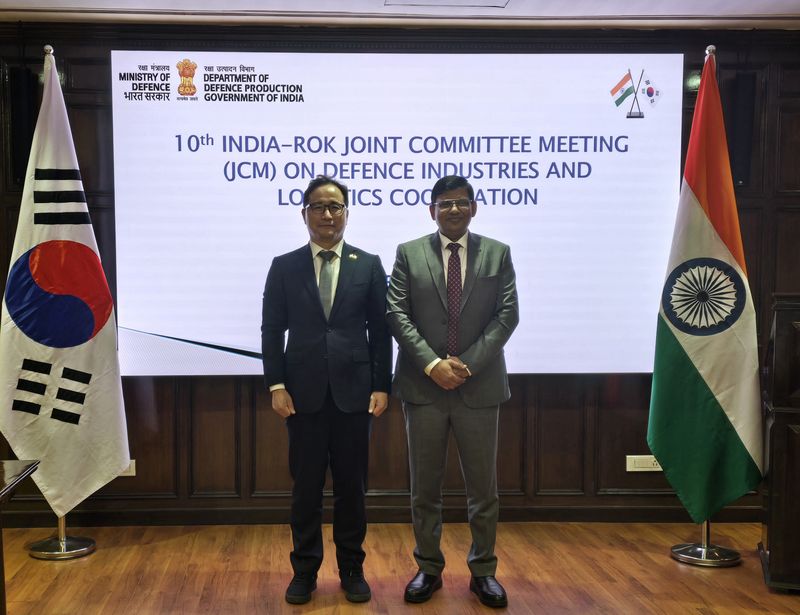
The Defense Acquisition Program Administration (DAPA) held the 10th Korea-India Joint Committee on Defense and Defense Logistics with India's Ministry of Defence in New Delhi on the 29th. The two sides discussed ways to expand defense cooperation and elevate it to a new level based on their special strategic partnership.
The Joint Committee was convened to flesh out follow-up measures from the Korea-India summit held in April. Kim Il-dong, Deputy Administrator of DAPA, and Dinesh Mahur, India's Deputy Minister for Defence Production, served as co-chairs. Defense acquisition officials from both countries, along with executives from key domestic and international defense companies, attended to discuss implementation plans.
Kim Il-dong, Deputy Administrator of DAPA, said, "This Joint Committee was an important venue for turning the two countries' strengthened commitment to defense industry cooperation into practical cooperation." He added, "We will continue to further develop strategic defense cooperation with India and build a sustainable defense cooperation ecosystem based on mutual trust."
At the meeting, the two sides revitalized the Korea-India Defense Cooperation Roadmap signed in 2020 and fleshed out plans for operating the Korea-India Defense Innovation Platform (KIND-X), a cooperation platform linking companies, investors and universities. The initiative is intended to establish a medium- to long-term cooperation structure encompassing local joint research and development (R&D) and technological exchanges, moving beyond simple exports in line with India's drive to foster domestic manufacturing.
The discussions also focused on improving the operational efficiency of weapons systems. The Korean side highlighted the K-30 Biho hybrid air defense system project currently under discussion with India's Ministry of Defence, as well as the stable advancement of the K9 self-propelled howitzer project, which the Indian Army operates as a mainstay on the front lines, and continued cooperation in operations and maintenance.
Private companies also continued their efforts to strengthen local supply chains. Hanwha Aerospace, Hanwha Systems, Korea Aerospace Industries (KAI), Korean Air and DS Navcours participated in the Joint Committee. They engaged with Indian officials to explore partnership opportunities beyond simple exports of finished products.
Meanwhile, the advancement of defense cooperation is closely linked to India's growing military and geoeconomic importance in the global security landscape. With its vast population and economic power, India is a key country driving the diversification of defense industry supply chains in the Indo-Pacific. Amid global competition for hegemony, including tensions between the United States and China, India is regarded as a geostrategic hub for countries seeking to secure supply chain stability while maintaining independent security policies and a strong military standing. South Korea's defense industry becoming a practical partner in India's military modernization projects carries geoeconomic significance beyond simple commercial gains, contributing to the creation of a stable and reliable security ecosystem in the Indo-Pacific region.
[email protected] Lee Jong-yoon Reporter