Jeju Takes Aim at KRW 60 Billion Startup City Competition... Startups' 'First Customer' and One-Stop Support
- Input
- 2026-09-29 18:52:05
- Updated
- 2026-09-29 18:52:05
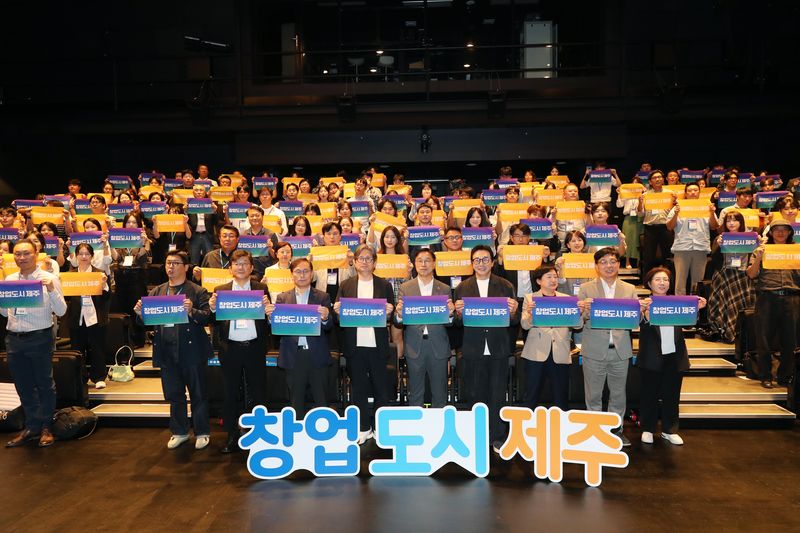
【Financial News Jeju = Reporter Jeong Yong-bok】 As Jeju Province competes in the Ministry of SMEs and Startups' Startup City Development Project, it has proposed serving as the “first customer” by prioritizing purchases of products and services from local startups, along with establishing a one-stop startup support center.
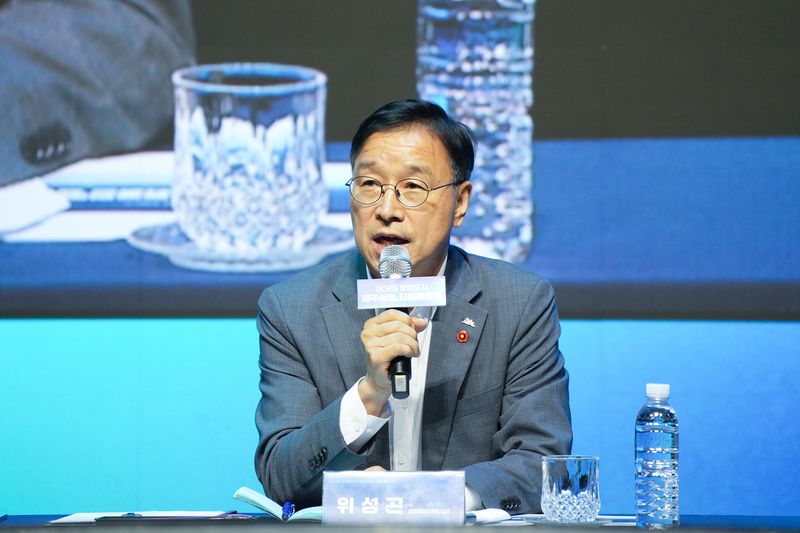
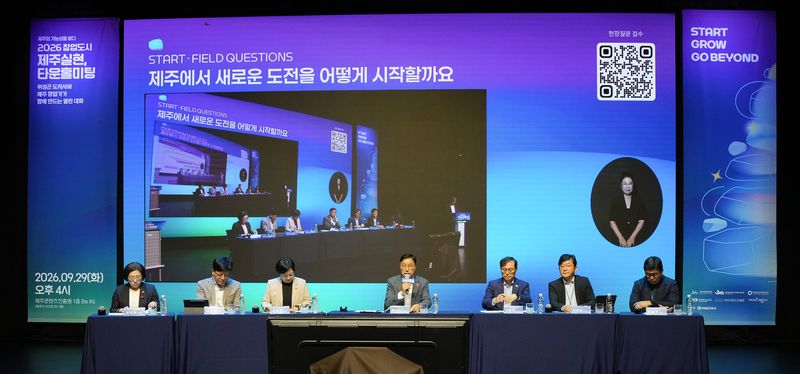
According to Jeju Special Self-Governing Province on the 29th, the province held a “Town Hall Meeting: Realizing Startup City Jeju” that afternoon at the Be IN performance venue of the Jeju Content Promotion Institute to gather policy proposals from startup founders and prospective founders.
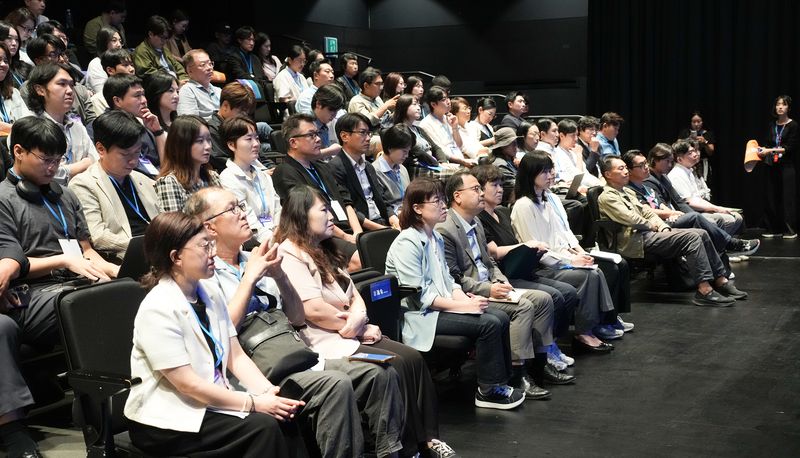
More than 150 people attended, including Jeju Province Governor Wi Seong-gon; officials from startup support organizations such as the Jeju Economic and Trade Promotion Agency, the Jeju Center for Creative Economy and Innovation, and the Jeju The Bigger Tomorrow Center; startup and venture companies; university startup clubs; and prospective founders.
Rather than focusing on explaining policies, the event centered on hearing about the problems companies actually face as they launch and grow. Before the event, Jeju Province received 142 policy proposals from 141 people between the 10th and 15th.
The proposals were divided into three stages: “START,” covering early-stage startups and commercialization; “GROW,” addressing company growth, investment, sales channels, and talent; and “GO BEYOND,” targeting expansion into markets outside the province and overseas.
At the initial stage, participants called for commercialization funds, assistance in securing first customers, and integrated access to startup support information currently scattered across multiple organizations.
Once companies reach a certain level of growth, follow-up investment, sales channels, and securing skilled personnel become key challenges. Participants also called for explanations of the reasons for rejection and areas requiring improvement when applications for support programs are unsuccessful.
Growth-stage companies requested support for entering markets outside the province and overseas, connecting exports with investment attraction, and reducing logistics costs. Proposals also included expanding housing and digital infrastructure to bring outside talent to Jeju.
One of the most notable measures proposed by Jeju Province is the public sector's role as a “first customer.” To address the difficulty local startups face in entering the market when they cannot secure initial sales despite developing products or services, the province plans to prioritize purchases from them.
Governor Wi Seong-gon said Jeju Province would prioritize purchasing products and services from Jeju-based companies so that the public sector could serve as their first customer. He also said the province would establish a one-stop support center where companies could access startup support information in one place.
The system under which companies must search individually for support programs run by different organizations is also slated for improvement. Jeju Province plans to integrate the support system so startups can check in one place which programs and investment and sales-channel assistance match their current stage of growth.
The province will also address the problem of companies facing a gap in support after their initial startup assistance ends.
Jeju Province plans to establish a package of follow-up support that continues according to each stage of growth, from early-stage startups and commercialization to investment, sales channels, securing personnel, and entry into domestic and overseas markets. It is also considering expanding commercialization funds and investment support, as well as linking the Future Growth Fund and export and sales-channel support programs with growth-stage companies.
Logistics problems stemming from Jeju's geographic limitations are another challenge. Jeju Province plans to use a public distribution platform and joint logistics infrastructure to improve local companies' access to sales channels outside the province and overseas markets. It is also considering housing support for companies relocating to Jeju or hiring outside professionals, along with digital equipment that can be shared.
The ultimate goal of these policy discussions is the Ministry of SMEs and Startups' Startup City Development Project competition. The government is pursuing the project to help companies launched in local areas progress through commercialization, investment, growth, and settlement. Jeju Province plans to respond to the competition by developing a Jeju-specific model that brings together local industries, startup support organizations, universities, and the investment ecosystem.
If selected, the province will receive KRW 60 billion in central government funding over four years. Jeju Province plans to reflect the 142 policy proposals received that day and the opinions expressed at the event in its competition proposal and implementation plan.

Regardless of whether the province is selected for the competition, it will also be important to see how specifically the proposed support measures are developed into actual provincial government projects. The target companies and scale of first-customer priority purchases, the operating model for the one-stop support center, and the budget and implementation timeline for the follow-up investment and sales-channel package must be specified in future implementation plans.
Broadcaster Tak Jae-hoon was also appointed as a public relations ambassador for Jeju Special Self-Governing Province on the same day. He is expected to use online media to promote Jeju tourism and food content, while also participating in the marketing of local startups and companies and expanding the “Startup City Jeju” brand.
Governor Wi Seong-gon said, "Rather than having support end at the early startup stage, we will ensure that the assistance companies need continues at every stage of their growth. We will turn policies needed in the field into concrete measures, from serving as the first customer for companies' products to providing investment and sales-channel support and helping them enter markets outside the province and overseas."
He continued, "Let us also take on the challenge of achieving the goal of having companies that started in Jeju grow together and generate KRW 1 trillion in sales. We will reflect the problems and proposals raised at the event in the Startup City implementation plan."
[email protected] Jeong Yong-bok Reporter