Is Hyundai Motor Company Pursuing a Third Plant in India? "Maharashtra and Gujarat Sites Reportedly Leading Candidates"
- Input
- 2026-09-29 18:09:52
- Updated
- 2026-09-29 18:09:52
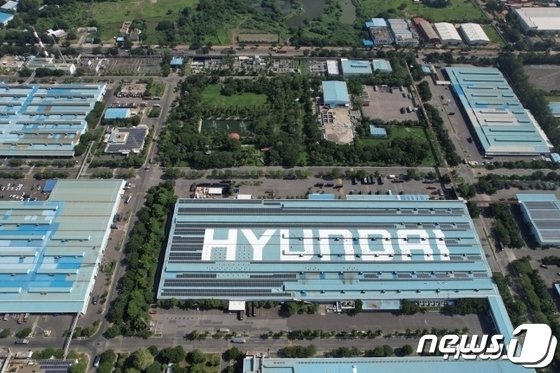
[NEW DELHI, India—Pragya Awasthi, Correspondent] Hyundai Motor India Limited (HMIL) is reportedly considering building a third production plant in India to support the aggressive launch of new vehicles and expand production. The two sites currently under consideration are Chhatrapati Sambhajinagar in Maharashtra and Sanand in Gujarat. The review of additional production capacity is aimed at meeting rising domestic sales and export demand as India is expected to emerge as a key growth market for Hyundai Motor Group.
According to local media reports on the 29th, an Indian news outlet reported, citing a source familiar with the company, that HMIL is searching for a site for its third manufacturing facility.
However, discussions are reportedly still at an early stage. Hyundai Motor Company has not finalized the specific site, initial production capacity, investment schedule, or vehicle models to be produced. Additional candidates could also be added, according to the report.
If Hyundai Motor Company's new plant project becomes a reality, the company could make a long-term investment of more than $2 billion (approximately 2.7 trillion won), according to reports. This would be a separate investment from HMIL's existing plan to invest approximately 450 billion rupees (636.3 billion won) by fiscal 2030. The new facility is being discussed as starting operations around 2030 and gradually expanding production capacity over the following five to seven years.
If production capacity is ultimately expanded, HMIL's annual output could increase by approximately 500,000 vehicles, according to forecasts. In response to related inquiries, HMIL said, "We do not comment on market speculation or industry rumors," adding, "If a material matter requiring disclosure arises, we will announce it through the appropriate official and regulatory channels."
The review of additional production capacity comes as Hyundai Motor Company prepares to launch a large number of new vehicles in India. By fiscal 2030, the company plans to introduce a total of 26 models, including new launches, full model changes, and product enhancements. It will particularly increase the share of sport utility vehicles (SUVs), hybrids, and electric vehicles.
Industry sources believe the new plant could produce midsize SUVs, multipurpose vehicles (MPVs), and electric vehicles for the Indian and overseas markets. Hyundai Motor Company uses India not only as a domestic market but also as a global export production base. The company is expected to allocate approximately 30% of its future Indian production to overseas markets.
Hyundai Motor Company currently operates production in India through its plant near Sriperumbudur in Tamil Nadu, close to Chennai, and its plant in Maharashtra's Talegaon. The Talegaon plant is gradually expanding its production capacity and will supplement the existing Sriperumbudur facility.
The two facilities are expected to meet Hyundai Motor Company's production needs for the next several years. However, considering the expansion of its product lineup through 2030, additional production capacity will likely be needed over the long term.
The pressure to expand production capacity is already becoming evident. According to a media report, Hyundai Motor Company raised its annual production target for 2026 from approximately 770,000 vehicles to around 820,000. The increase of about 50,000 vehicles is being supported by strong sales of the Hyundai Creta and Hyundai Venue, demand during the festival season, growth in the rural market, and additional sales of two new SUV models.
SUVs account for approximately 70% of Hyundai Motor Company's domestic sales in India. In the first quarter of fiscal 2027, rural-area sales accounted for 25.9% of total sales, up 23% from the same period a year earlier.
[email protected] Pragya Awasthi, Correspondent Reporter