Jeju 4·3 Film Festival 'Bulanji' Records 526 Submissions, a Record High... 10 Finalists Confirmed
- Input
- 2026-09-29 16:48:11
- Updated
- 2026-09-29 16:48:11
[Financial News Jeju = Reporter Jeong Yong-bok] A record-breaking 526 entries have been submitted to 'Bulanji,' the short film competition of the Jeju 4·3 Film Festival, which has expanded cinematic themes ranging from the memory of Jeju 4·3 to state violence, forced mobilization, migration, discrimination, and individual identity. With the number of submissions surpassing 500 just three years after its introduction, the 10 films selected to compete in the finals have been chosen.
According to the Jeju 4.3 Peace Foundation on the 29th, a total of 526 films were submitted to the 'Bulanji' short film competition of the 4th Jeju 4·3 Film Festival, including 461 feature films, 31 documentaries, 31 animations, and 3 other films such as experimental films. This is the largest scale in history, an increase of 185 films, or 54.3%, compared to the 341 films submitted last year.
'Bulanji' was first introduced at the 2nd Jeju 4·3 Film Festival in 2024. The number of films increased from 295 in the first year to 341 last year, and surpassed 500 for the first time this year.
Bulanji is a Jeju dialect word meaning firefly. It embodies the meaning of carrying on the values of peace, human rights, and hope from the pain of the Jeju 4·3 Incident, just like a firefly that emits light in the darkness.
In this year's competition, 80 entries were shortlisted out of 526 in the first round, and then 10 finalists were selected through additional evaluation and face-to-face discussions with the judges.
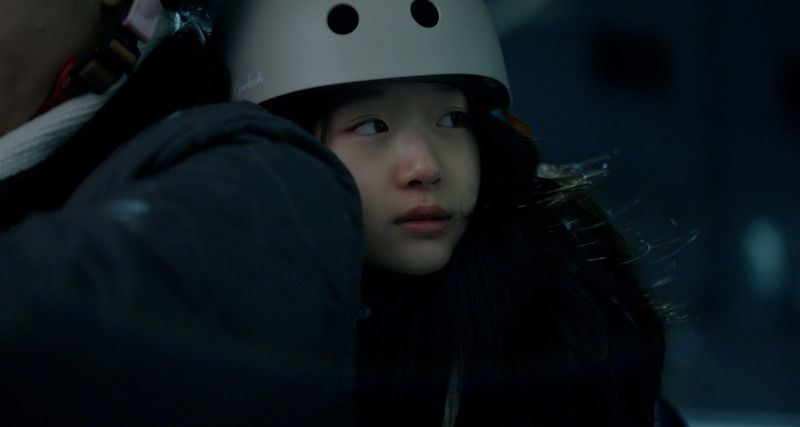
Director Kim Eun-seo's 'Treasure Hunt', Director Lee Seong-man's 'We Remembered the Alien', Director Moon Seong-won's 'Survival Swimming', Director Ahn Yu-ri's 'Roaring Ashes', and Director Lee Won-sik's 'Don't Lubo' advanced to the finals.
Director Kim Woo-sik's 'Jeongam in My Dreams', Director Kim Jin-gook's 'The Place Returned', Director CHANG Seo Yun's 'Speak, Young Granny', Director JANG Juseon's 'The Language of Uiju', and Director Cho Jeong-gang's 'Dom Lyubvi' also advanced to the finals.
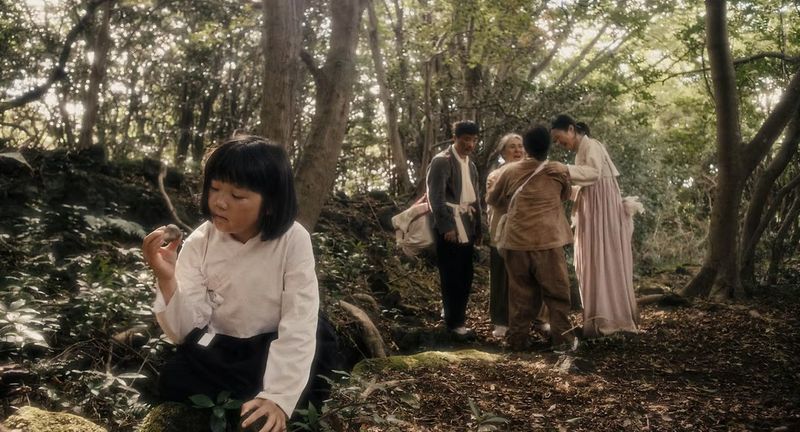
The subject matter of the work does not stop at the Jeju 4·3 Incident. 'Treasure Hunt' is a piece in which an eight-year-old girl living in Donggwang-ri, Jeju, confronts the tragedy of Jeju 4·3 while searching for a 'singing stone' to reclaim what she has lost. Through the eyes of a child, it reveals a tragedy that could not be explained in words, and combines fiction and non-fiction to bring memories of the past into the present.
'Donzurubo' traces the traces of forced mobilization of Koreans remaining in underground military facilities in Nara Prefecture, Japan. 'Roaring Ashes' explores the memories of East Asia—connecting colonialism, war, the Cold War, and the diaspora—through images and sound, looking from Hokkaido to Sakhalin and from Jeju to Tsushima.
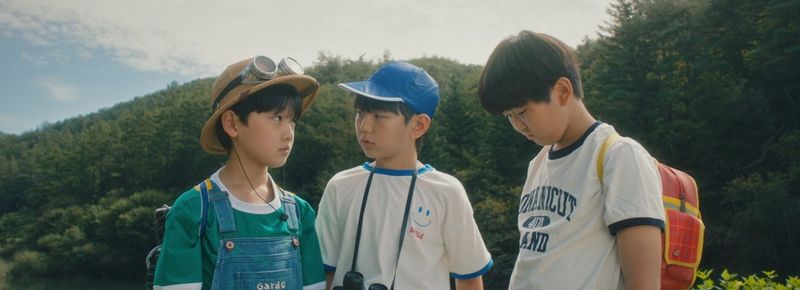
"We Remembered the Alien" portrays the story of boys who set out to find their older sister who disappeared in a rural village in Jeolla Province in 1983, set in the mystery genre. Through the imaginative concept of aliens, it approaches the memories of modern and contemporary Korean history, which are marked by surveillance, control, and silence.
Migration and diaspora are also major pillars. 'Jeongam in My Dreams' records the lives of the descendants and Jeongam Village, which was established by Koreans from North Chungcheong Province who migrated en masse to Manchuria in 1938. 'The Place I Returned To' follows the memories of her maternal grandfather—who was forcibly mobilized to Palau during the Pacific War, returned home, and even experienced the Yeosu-Suncheon Incident—through the eyes of his granddaughter.
The animation 'Dom Lyubvi' captures the language, food, and daily lives of neighbors in the Koryo-jin community in Ushtobe, Kazakhstan using rotoscoping techniques.
The issues faced by today's systems and individuals were also included in the finals. 'Survival Swimming' addresses the issues of competition, systems, loss, and mourning through the story of a student traumatized by a tragedy and a fixed-term teacher facing pressure to renew their contract.
'The Language of Uiju' follows the issues of language, identity, and belonging faced by a protagonist born in a third country as he prepares for a North Korean defector English speaking competition.
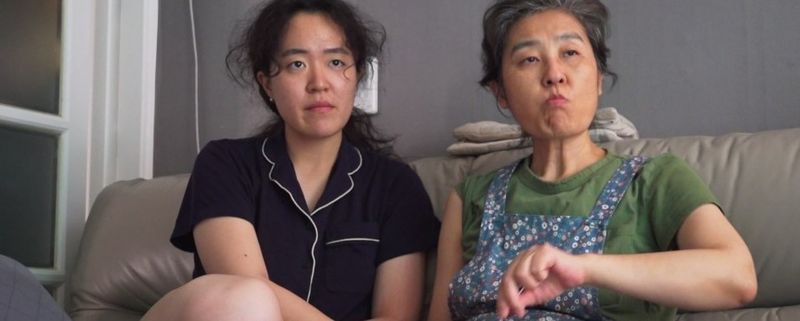
'Speak, Young Granny' is an autobiographical documentary in which the director, diagnosed with premature menopause at the age of 24, records her physical changes and life. Starting from personal experience, it broadens its perspective to include the social standards demanded of young women and an understanding of other generations.
The judges evaluated this year's entries noting that they stood out not only for works that directly addressed the Jeju 4·3 Incident, but also for those that expanded upon the questions raised by the event to include issues of colonialism and division, migration and discrimination, and the relationship between the individual and the community. The preliminary judging was conducted by Producer Kim Min-kyung, Seoul Art Cinema Programmer Kim Bo-nyeon, Director Kim Seol-hae, and Yonhap News Reporter Byun Ji-cheol.
The Jeju 4·3 Film Festival has continued its approach of examining 4·3 through film by expanding it beyond the history of a specific period and region to include state violence and war, discrimination and migration, resistance and solidarity, and recovery and peace.
Starting with a special screening commemorating the 75th anniversary of Jeju 4·3 in 2023, the film festival introduced the short film competition "Bulanji" starting from its 2nd edition in 2024. Last year, the scope of the program was expanded to include Jeju 4·3, the 2·28 Incident in Taiwan, the massacre of Koreans during the Great Kanto Earthquake, the Bu-Ma Democratic Uprising, the Sabuk Uprising, and even current issues of war and violence such as Palestine.
The 10 entries selected for this year's finals also continue this trend. They connected issues from different eras and spaces, ranging from direct memories of the Jeju 4·3 Incident to forced mobilization during the Japanese colonial period, diaspora and identity, and today's institutions and individual lives.
The finalists will be screened at the Jeju Content Promotion Institute Be:in Theater from November 22 to 28 during the 4th Jeju 4·3 Film Festival. The Grand Prize, Feature Film Award, and Documentary Award will be selected through the final judging, and the Audience Award will also be determined by audience voting.
Lim Moon-cheol, Chairman of the Jeju 4.3 Peace Foundation, said, "This year, the largest number of works in history have been submitted, allowing us to encounter diverse stories and perspectives," adding, "I hope this will be a time for the audience to reflect together on how the memories of 4·3 connect with today's lives."
[email protected] Jeong Yong-bok Reporter