When to Buy and When to Sell? A Stock Investment Strategy That Reads Trends Instead of Making Predictions [fn Book Briefing]
- Input
- 2026-09-29 16:26:19
- Updated
- 2026-09-29 16:26:19
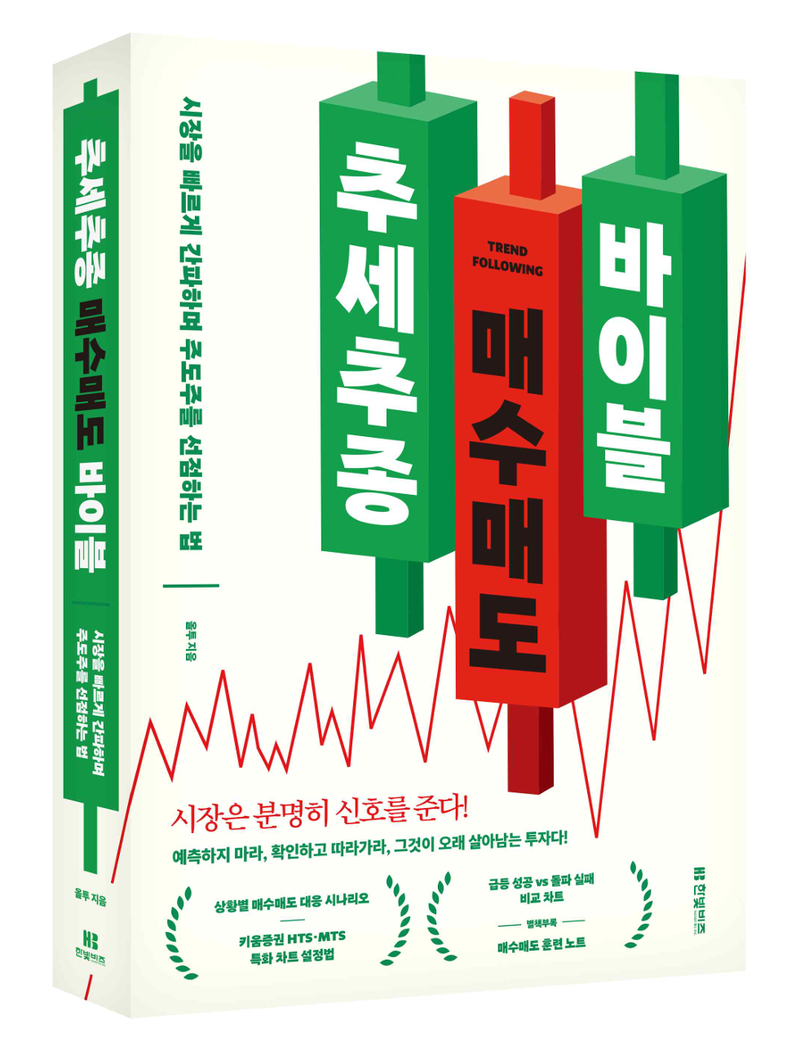
The book was written by Alltoo, a trend-following trader and head of Alltoo Stock Lab. It presents principles developed through the author's direct application of strategies used by William O'Neil, Mark Minervini, and Stan Weinstein. Rather than predicting stock prices, the book focuses on responding to confirmed market trends.
The author explains in the book, "Even a company with excellent earnings will struggle to rise on its own when the broader market is collapsing." Readers learn to identify recovery signals and signs of large-scale institutional selling through the moving averages and trading volumes of the KOSPI Composite Index and KOSDAQ (Korea Securities Dealers Automated Quotations). The book also helps them determine when it is better to stay out of the market.
The next step is to identify sectors attracting capital and the leading stocks within them. Charts from the same sector are compared to check whether stocks have reached new highs and to assess the extent of their pullbacks. The book considers a stock's entry point to be the stage when it begins rising again after passing through a "base," a brief consolidation period following an advance.
It also introduces four chart patterns: Cup and Handle, Volatility Contraction Pattern (VCP), Double Bottom (DB), and High Tight Flag (HTF). Successful and unsuccessful examples are presented side by side, allowing readers to compare changes in trading volume and prices and evaluate the conditions for buying.
For selling, the book emphasizes predetermined criteria and emotional discipline. Investors set a stop-loss price when buying and continue holding stocks whose upward trends remain intact, while considering staggered selling when signs of weakening emerge. It examines situations such as a breakdown in moving-average support or a shift in trading-volume trends.
The book also addresses the tendency to sell hastily out of anxiety after making a small profit, or to hold losing positions while waiting to break even. It explores the regret that follows when a stock rises further after being sold and the hesitation that can arise after a series of stop-loss trades. Knowing a buy signal and actually adhering to one's principles are separate matters. By addressing charts and psychology together, the book highlights that gap.
It includes a review method for office workers who cannot continuously monitor prices during trading hours. They can spend five minutes before work and 15 to 20 minutes after work reviewing the market and their holdings and preparing for the next trade. The book recommends making decisions based on closing prices and using scheduled orders.
A companion workbook containing 12 actual stock charts is also provided. Readers record whether they would buy, along with their purchase price and stop-loss price, and then compare their decisions with the author's explanations and the stock's subsequent price movements. The main book's appendix includes buy-and-sell checklists and trading journal templates.
[email protected] Jang In-seo Reporter