While Fishing Households Nationwide Rise 10%, Jeju Falls 12.8%... Jeju Posts the Sharpest Decline in Fishing-Household Population
- Input
- 2026-09-29 15:35:17
- Updated
- 2026-09-29 15:35:17
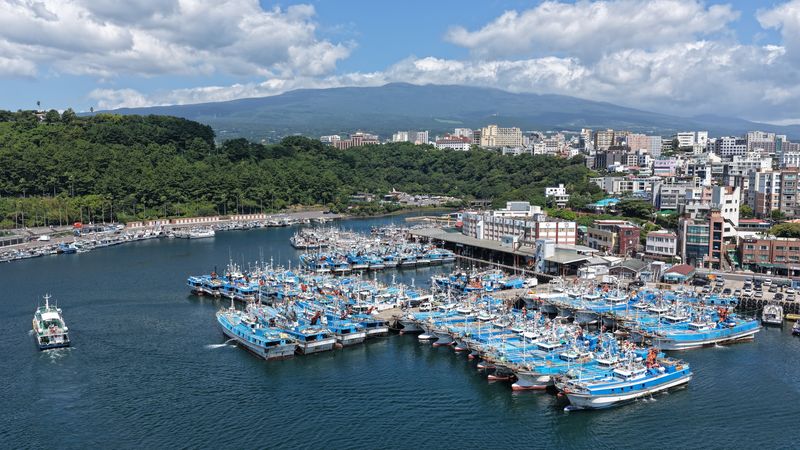
【Financial News Jeju = Jeong Yong-bok】 While marine fishing households nationwide increased 10.0% from 2020, the number in Jeju Province fell 12.8%. Jeju Province also recorded an 18.8% decline in its fishing-household population, the sharpest decrease among all provinces and major cities covered by the survey.
Over the same period, farm households in Jeju Province increased 25.6%, and Jeju City had the largest number of farm households among cities, counties and districts nationwide. Within Jeju Province's primary sector, the operating and population bases of agriculture and fisheries moved in opposite directions.
According to the results of the 2025 Census of Agriculture, Forestry and Fisheries released on the 29th by the Ministry of Data and Statistics, Jeju Province had 2,617 marine fishing households as of December 1 last year.
■ Nationwide total rises 10%, while Jeju loses 384 fishing households

Jeju Province's fishing households fell from 3,001 in 2020 to 2,617 last year, a decrease of 384 households, or 12.8%. During the same period, marine fishing households nationwide increased 10.0%, from 43,141 to 47,443.
Jeju Province recorded the largest decline among the provinces and major cities where fishing households were counted. The number fell 3.7% in Busan, 2.5% in Gyeongsangbuk-do and 0.9% in South Jeolla Province. By contrast, it rose 60.9% in Incheon, 40.5% in North Jeolla Province and 31.5% in South Chungcheong Province.
Jeju Province's share of all fishing households nationwide also fell by 1.5 percentage points, from 7.0% in 2020 to 5.5% last year.
The decline in the population was even steeper. Jeju Province's fishing-household population fell by 1,287, from 6,833 to 5,546, a decrease of 18.8%. Nationwide, the fishing-household population declined 2.5% over the same period, from 97,066 to 94,643.
Jeju Province also recorded the largest decline in fishing-household population among the provinces and major cities. The population fell 16.9% in Busan, 12.1% in South Jeolla Province, 11.1% in Gyeongsangbuk-do and 7.0% in Gangwon State.
Jeju Province's share of the nationwide fishing-household population fell from 7.0% to 5.9%. By administrative city, Jeju City had 1,551 fishing households last year, while Seogwipo City had 1,066. The fishing-household population totaled 3,306 in Jeju City and 2,240 in Seogwipo City.
The aging structure of Jeju Province's fishing communities was also evident alongside the decline in fishing households. Of the 2,617 fishing-household operators in Jeju Province, 874 were in their 60s and 1,128 were aged 70 or older. Those aged 60 and above totaled 2,002, accounting for 76.5% of all operators.
The proportion of fishing-household operators aged 60 or older was 2.7 percentage points higher than the nationwide figure of 73.8%. By contrast, Jeju Province had only 46 operators under 40. There were 170 operators in their 40s and 399 in their 50s.
Jeju Province also depended more heavily on part-time operations than the country as a whole. It had 966 full-time fishing households, or 36.9%, and 1,651 part-time fishing households, or 63.1%. The part-time share was 4.4 percentage points higher than the nationwide figure of 58.7%. By province and major city, Jeju ranked third, behind Incheon at 73.4% and South Chungcheong Province at 71.1%.
The decline in the number of fishing households did not necessarily mean that the scale of their operations had contracted. Last year, 346 fishing households in Jeju Province, or 13.2% of the total, reported sales of fishery products of at least 200 million won. Nationwide, the proportion of fishing households with sales of at least 200 million won was about 8.0%.
When the threshold is lowered to 100 million won or more, the figure for Jeju Province rises to 462 households, or 17.7% of all fishing households.
■ Farm households rise 25.6%... Jeju City ranks first nationwide with 23,221 households
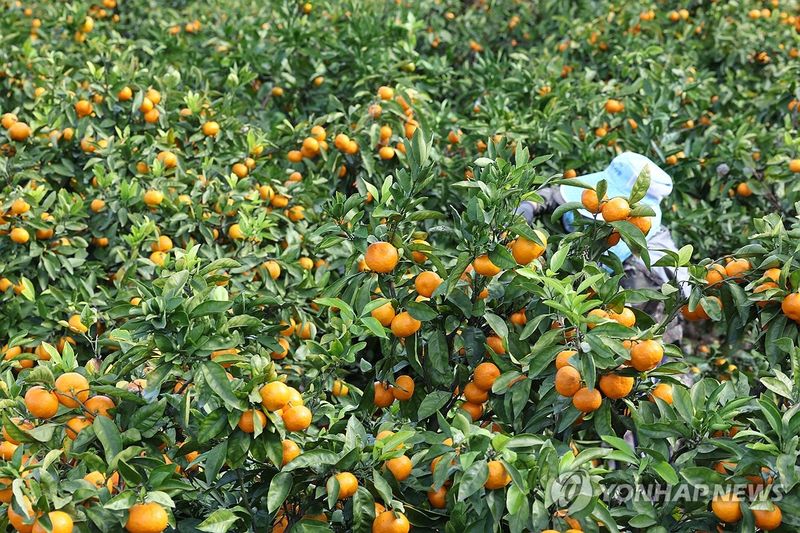
Agriculture showed the opposite trend from fisheries. Last year, Jeju Province had 38,153 farm households, up 7,788 from 30,365 in 2020, or an increase of 25.6%. This was 5.6 percentage points higher than the 20.0% nationwide increase in farm households.
Among the provinces, Jeju Province recorded the second-highest growth rate, after Gyeonggi Province's 26.4%.
Jeju Province's farm household population also increased by 9,227, from 79,797 to 89,024, an increase of 11.6%. The nationwide growth rate was 8.3%.
Jeju City ranked first nationwide in the number of farm households. It had 23,221 households, up 5,438 from 17,783 in 2020. Cheongju City in North Chungcheong Province followed with 22,099 households, ahead of Changwon City in South Gyeongsang Province with 19,937 and Pohang in Gyeongsangbuk-do with 16,732.
Seogwipo City ranked eighth nationwide with 14,932 farm households. It ranked sixth in 2020, when it had 12,582 households.
About half of Jeju Province's farm households also engaged in economic activities outside agriculture.
Of the 38,153 farm households in total, 19,399 were full-time farms, accounting for 50.8%, while 18,754 were part-time farms, accounting for 49.2%. The part-time share was 10.4 percentage points higher than the nationwide figure of 38.8%, the highest among the provinces.
Jeju Province's fruit-centered agricultural structure was also pronounced. Based on the crop that generated the highest sales over the past year, 23,568 farm households in Jeju Province were primarily engaged in fruit cultivation. They accounted for 61.8% of all farm households in Jeju Province.
Nationwide, 17.1% of farm households were primarily engaged in fruit cultivation. In Jeju Province, 24,825 farm households actually cultivated fruit, including 23,677 mandarin-orange farms.
The average cultivated area per farm household in Jeju Province was also larger, at 0.95 hectares, than the nationwide average of 0.87 hectares. It ranked behind North Jeolla Province at 1.20 hectares, South Jeolla Province at 1.16 hectares and South Chungcheong Province at 1.11 hectares.
■ Expanded survey coverage... Caution against interpreting 'more farm households = agricultural recovery'
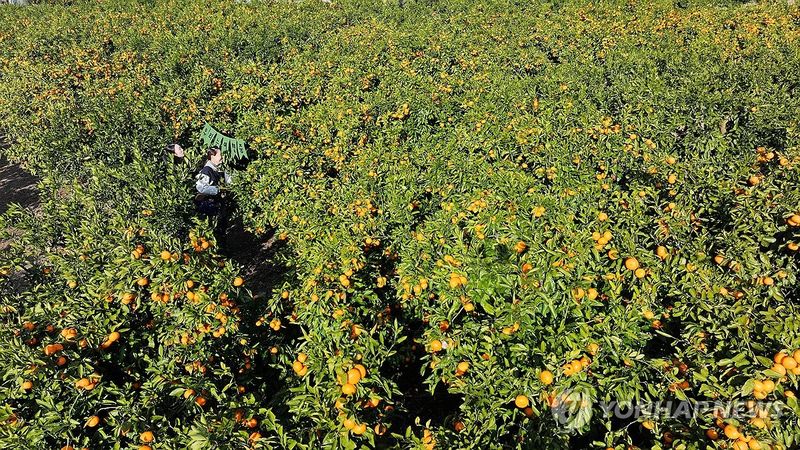
The most important factor to consider in these statistics is the change in the survey methodology. Starting with the 2025 Census of Agriculture, Forestry and Fisheries, the Ministry of Data and Statistics added administrative data, including land registers, fishery declaration and registration lists, and forestry management entities, to the list of survey subjects.
Because households that were not captured in previous surveys could be included in the new survey, the changes between 2020 and last year may reflect both actual changes in operating entities and the effects of expanded survey coverage.
Therefore, it is difficult to immediately interpret the 25.6% increase in Jeju Province's farm households as an influx of new farmers or a recovery in agricultural conditions. The 10.0% nationwide increase in fishing households should also be examined under the same conditions.
Even under those conditions, marine fishing households in Jeju Province fell 12.8%, while the fishing-household population declined 18.8%. In particular, 76.5% of fishing-household operators were aged 60 or older, and there were only 46 operators under 40. The changes in the human and operational base of Jeju Province's fishing communities require separate analysis.
However, this survey alone does not provide grounds to identify any one of the following as the cause of the decline in fishing households: worsening profitability, changes in catch volumes, labor shortages or aging. A closer examination of fishing income and production, new entrants and business closures, and the operating performance of fishing vessels and aquaculture businesses will be necessary to determine the causes more specifically.
In Jeju Province, the number of farm households increased, putting Jeju City at the top of the nationwide ranking among cities, counties and districts. In its fishing communities, however, the numbers of fishing households and their population declined at the fastest rates in the country. The census confirmed that even within the same primary sector, the operational and population bases of agriculture and fisheries are being reshaped in different directions.
[email protected] Jeong Yong-bok Reporter