Supreme Court Rules That a Debt Must Still Be Paid Even If a Provisionally Attached Claim Is Rescinded by Agreement, Reversing 25-Year-Old Precedent
- Input
- 2026-09-30 07:41:21
- Updated
- 2026-09-30 07:41:21
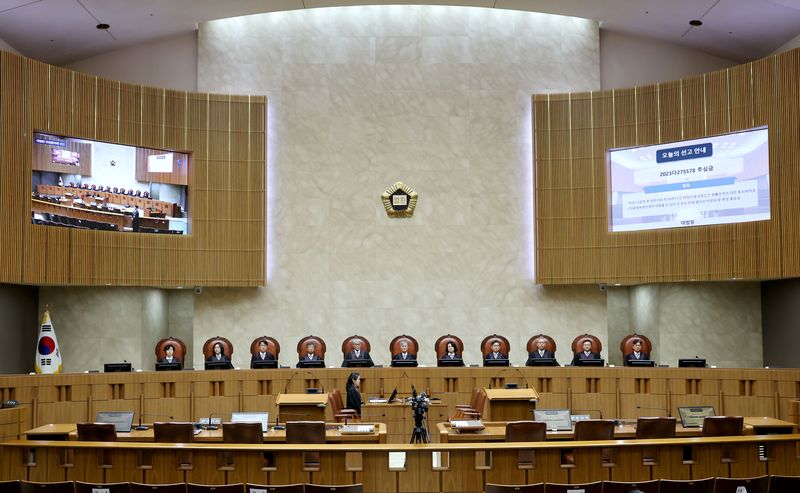
The Supreme Court Grand Bench, presided over by Chief Justice Cho Hee-dae with Justice Kwon Young-jun as the reporting justice, overturned a lower court ruling against the plaintiff in an appeal in a suit seeking payment of collected funds on the 29th and remanded the case to the Ulsan District Court. All 11 participating justices reached the same conclusion.
The plaintiff was a creditor of a monetary claim held by Company A, which operated a biogas power-generation business in Gyeongju. After Company A transferred the business to Company B for 850 million won, the plaintiff obtained a provisional attachment of 350 million won from the claim for the transfer price. The plaintiff later obtained an order converting the provisional attachment into a formal attachment and authorizing collection. In the meantime, Companies B and A mutually rescinded the assignment agreement and argued that they therefore had no obligation to make the payment.■ "It Is Reasonable for the Debtor to Bear the Risk of Rescission by Agreement After Attachment"The previous legal doctrine was established in a Supreme Court of Korea ruling issued in June 2001. It held that, unless the debtor and the third-party debtor had mutually rescinded the contract in a special case solely to extinguish the claim, the third-party debtor could invoke the rescission against the creditor.
The Supreme Court Grand Bench overturned that doctrine 25 years later. The court stated, "Rescission by mutual agreement is not essentially different from disposition of the claim subject to attachment, in that it is an act by the debtor that extinguishes the claim subject to attachment while the effect prohibiting disposition after attachment is in force." Because rescission by mutual agreement involves a newly concluded contract after attachment rather than the exercise of a right reserved from before attachment, it cannot be treated in the same way as statutory or contractual rescission.
The court reached the same conclusion when balancing the interests involved. It stated, "As a rule, the legal risk triggered by rescission by mutual agreement after attachment should be borne by the debtor as between the attaching creditor and the debtor." Regarding cases in which the debtor is insolvent, the court emphasized, "That risk should be borne by the third-party debtor who chose to accept it and enter into the rescission by mutual agreement, and it should not be shifted to the attaching creditor, who is unrelated to the rescission."■ Exceptions Apply, but the Third-Party Debtor Must Prove ThemThe Supreme Court Grand Bench recognized three exceptions: (1) when the requirements for statutory or contractual rescission were met but the parties merely used the form of rescission by mutual agreement; (2) when the claim subject to attachment is a future fractional right arising from an ongoing contract; or (3) when, in light of the content and nature of the contract and claim, the claim’s significance under the contract, and the circumstances surrounding the rescission by mutual agreement, there are special circumstances making it manifestly unfair to deny the third-party debtor’s ability to assert the rescission solely because of the attachment. The third-party debtor seeking to assert one of these exceptions must prove it directly.
The court found that the third-party debtor would not be unfairly disadvantaged. The third-party debtor can be relieved of the payment obligation through an enforcement deposit, have the enforcement canceled by having the debtor deposit funds to release the provisional attachment, and, if forced to perform, seek restitution from the debtor for the corresponding amount.
Both the first and second trials rejected the plaintiff’s claim under the previous doctrine, saying, "It is difficult to view the rescission by mutual agreement as having been undertaken solely to extinguish the claim without a reasonable reason." The Supreme Court of Korea found that the legal doctrine supporting those rulings had disappeared. It also pointed out that the lower court had not examined whether the case fell under an exception to the new doctrine, leaving that issue for the remand proceedings.
A Supreme Court of Korea official explained that the significance of the ruling lies in discarding the previous doctrine, which had led to the uniform conclusion in most cases that rescission by mutual agreement was permissible after a claim was attached. The ruling instead gives priority to the purpose of the compulsory execution system—satisfying claims by converting attached assets into cash—and protects the interests of attaching creditors over the debtor’s freedom to dispose of the assets.
The Supreme Court Grand Bench consisted of 11 justices because former Justice Lee Heung-gu of the Supreme Court of Korea retired on the 7th, while Noh Gyeong-pil became head of the National Court Administration on July 14 and therefore did not participate in the Grand Bench hearing held on July 22. In addition, one seat on the Supreme Court remained vacant.
[email protected] Kim Dong-gyu Reporter