Singing in the Jeju Language on Hangul Day: 'Nul' Academic Forum Becomes a Participatory Cultural Event
- Input
- 2026-09-29 14:51:07
- Updated
- 2026-09-29 14:51:07
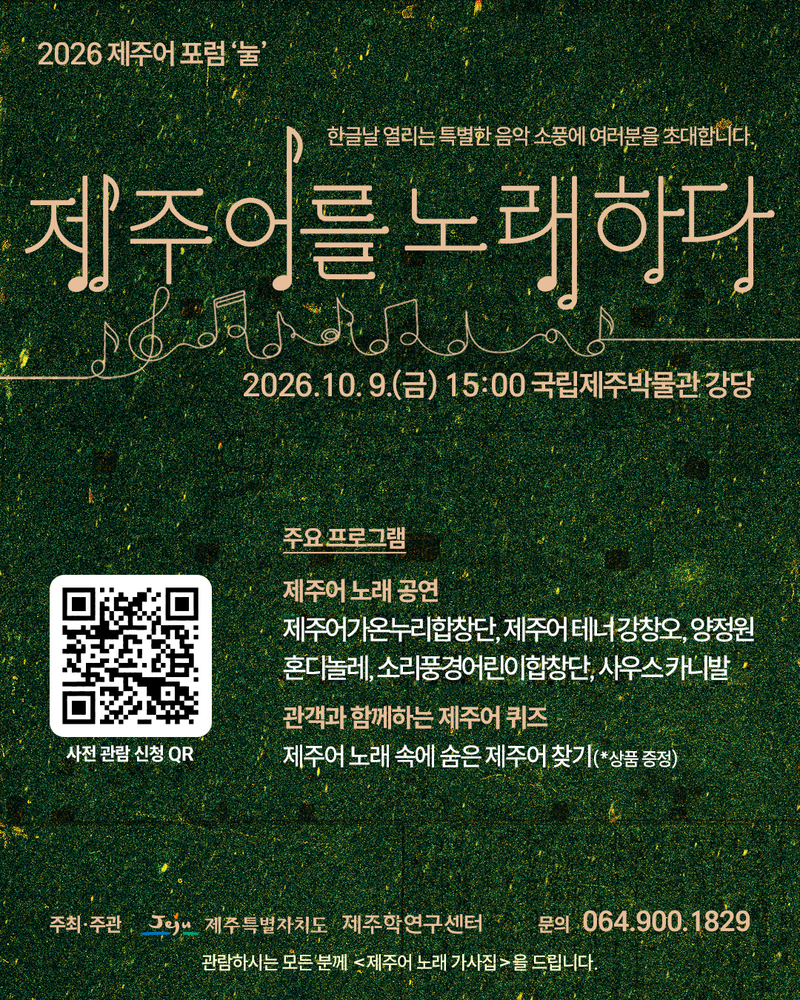
[Financial News Jeju = Jeong Yong-bok] A cultural stage where people can sing and listen to the Jeju language, long discussed primarily as something to preserve and pass down, will open in Jeju on Hangul Day. The event seeks to broaden the use of Jeju language in everyday life by transforming a forum traditionally centered on academic discussions into a program of choral, classical and band performances, as well as a mass sing-along for the audience.
Jeju Special Self-Governing Province and the Jeju Studies Research Center said on the 29th that the '2026 Jeju Language Forum Nul—Singing in the Jeju Language' will be held at 3 p.m. on October 9 in the auditorium of the Jeju National Museum.
Jeju Language Forum Nul has been an event discussing ways to preserve and pass down the Jeju language since 2020. This year, it is shifting away from an academic-centered format and refocusing as a popular cultural event where residents and tourists can listen to and sing Jeju-language songs themselves.
A key feature of this year's event is its broader approach, moving from preserving the Jeju language to encouraging its actual use. Alongside efforts to document and study the language, the organizers aim to connect language-use experiences across generations by introducing everyone from children to adults to Jeju language through song.
The lineup spans Jeju-language choral singing, classical music and popular music. The Jeju Language Gaonnuri Choir, affiliated with the Jeju Language Preservation Association, will perform at the opening, while Jeju-language tenor Kang Chang-oh will present classical masterpieces with Jeju-language lyrics.
Jeju-language singer Yang Jung-won will perform songs capturing the lives and emotions of the people of Jeju. Hondinolle, a group made up of active teachers, will present original Jeju-language songs, while the Soripunggyeong Children's Choir will sing in Jeju with children's voices.
South Carnival, a band that has incorporated the Jeju language and Jeju's culture and emotions into its music, will also take the stage.
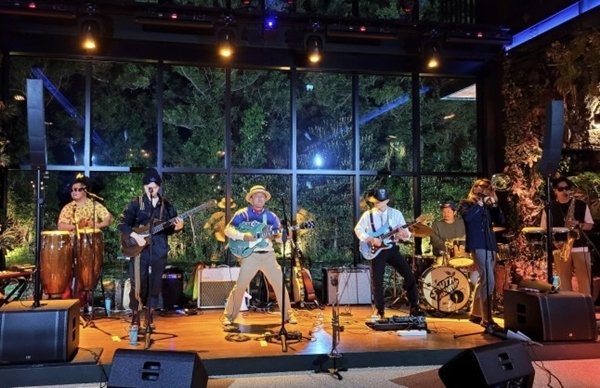
The event will be more than a performance for audiences to simply listen to. Between performances, a 'Jeju-language lyrics quiz show' will ask attendees to guess the meanings of Jeju words in the song lyrics. The event will conclude with the performers and audience joining together in a mass sing-along of the Jeju folk song 'Neoyoung Nayoung.'
All attendees will receive a 'Jeju-language song lyric booklet' so that even those unfamiliar with the language can understand the performances. The booklet includes the Jeju-language lyrics and standard Korean translations, allowing audiences to revisit the songs and Jeju expressions after leaving the venue.
The forum's expansion into a performance-based event reflects the view that language preservation should not end with research and documentation. Expanding opportunities to hear, speak and sing the language in everyday life is seen as increasing the chances that it will be passed on to the next generation.
The lineup, which brings a children's choir, active teachers, a professional vocalist, a Jeju-language singer and a band onto one stage, is an attempt to present the Jeju language not as the language of a particular generation but as a form of contemporary cultural content.
Anyone interested in the Jeju language can attend free of charge, and advance registration is available.
Kim Wan-byeong, director of the Jeju Studies Research Center, said, "It is important that the Jeju language not remain limited to documentation and preservation, but continue as a cultural asset that people sing and enjoy together." He added, "I hope Hangul Day will be an occasion for people to encounter the beauty and emotions of the Jeju language naturally through song."
[email protected] Jeong Yong-bok Reporter