Local Share of Future Response Fund to Be Adjusted: Local Grant Tax or Project Support?
- Input
- 2026-09-29 15:15:30
- Updated
- 2026-09-29 15:15:30
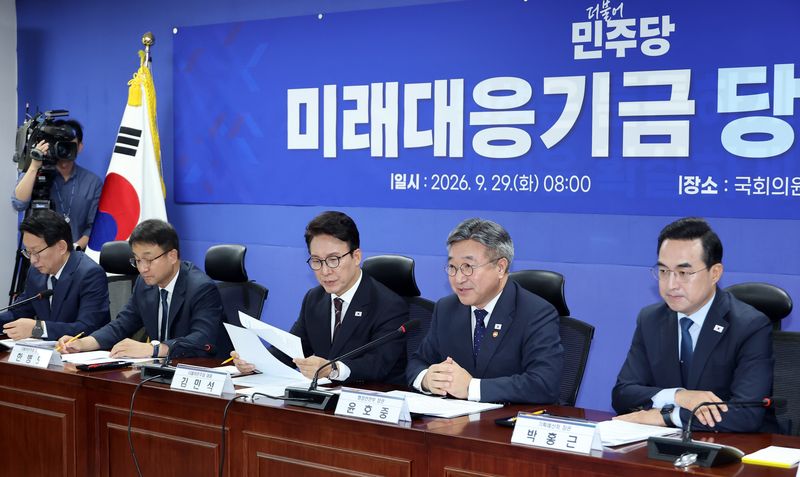
The Democratic Party of Korea and the government held a ruling party-government consultation on reforms to the Future Response Fund and Local Grant Tax at the National Assembly on the 29th, discussing measures to shore up local finances with governors and mayors. Local governments strongly called for a larger share to be allocated to them, as the creation of the Future Response Fund could reduce the increase in Local Grant Tax relative to the rise in tax revenue.
Under the current system, Local Grant Tax increases in line with a rise in national tax revenue. However, once the Future Response Fund is established, part of the increase in tax revenue will be deposited into the fund, potentially reducing the increase in Local Grant Tax from what was initially expected. Local Grant Tax itself would not decrease, but from the perspective of local governments, part of the funding they could have received as tax revenue increased would instead flow into the fund.
Local governments argued that a share of the tax-revenue recovery should also go to them, as their fiscal capacity has deteriorated due to tax shortfalls over the past several years. Park Chan-dae, mayor of Incheon and representative of the council of governors and mayors, said, "Local governments have endured by drawing down the funds they had accumulated and issuing local bonds. We hope that, as tax revenue recovers, a share of that recovery will also go to local governments." There were also calls to adjust the Local Grant Tax rate, which has been frozen for 20 years since 2006.
The ruling party and government also reportedly agreed that the current fund design needs to be revised and supplemented to reflect these demands. Woo Sang-ho, governor of Gangwon State, told reporters after the consultation, "It may be somewhat difficult to proceed with the plan as it is currently drafted. There was a consensus that we should consider adjustments aimed at increasing the amount of support provided to local governments."
The key issue, however, is how to return funding to local governments. Local governments are calling for expanded Local Grant Tax, which they can use flexibly according to local circumstances, rather than project funds earmarked for specific purposes. The government, on the other hand, says it will consider other options, including support for regional projects, while maintaining the Future Response Fund's fiscal stabilization function instead of distributing all of the increased tax revenue as Local Grant Tax. An official from the Ministry of Planning and Budget said, "We will consider whether it would be appropriate to provide the money as Local Grant Tax or, after consulting with local governments, provide it by investing more in specific projects. Providing greater government funding for projects that require local government contributions could also be a way to support local governments."
The National Assembly has also begun reviewing the relevant bills. The National Assembly Finance and Economic Committee introduced bills related to the establishment of the Future Response Fund at a plenary meeting the previous day and referred them to a subcommittee. Based on the opinions raised at the meeting, the government plans to continue additional consultations with the party and local governments. The specific form and scale of support are expected to be coordinated during the subcommittee's review of the bills and the review of next year's budget proposal in November.
[email protected] Song Ji-won Reporter