Installed Computers at an IPO Scam Call Center, Found Guilty... Supreme Court: "This Was Not Aiding and Abetting"
- Input
- 2026-09-29 14:39:17
- Updated
- 2026-09-29 14:39:17
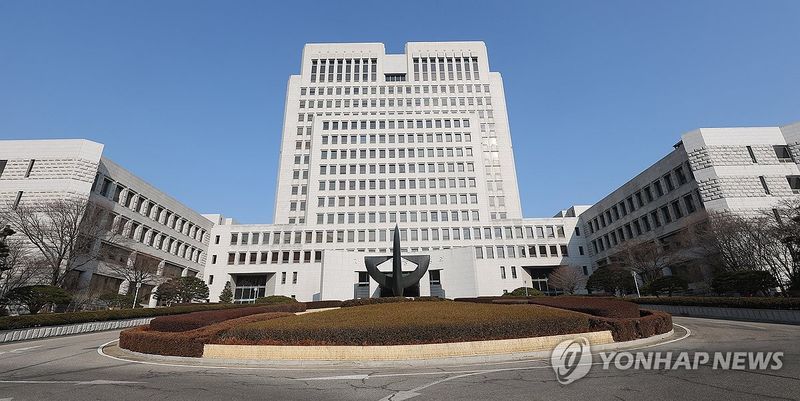
According to legal sources on the 29th, the First Petty Bench of the Supreme Court of Korea, with Justice Cheon Dae-yeob presiding, on the 3rd quashed the guilty portion of a lower court ruling in the appeal of A, 28, an on-site computer repair-and-sales operator who had been indicted on fraud charges and found guilty of aiding and abetting fraud. The court remanded the case to Suwon High Court after the lower court had sentenced A to two years in prison, suspended for three years, and ordered the forfeiture of 5.52 million won.
A was brought to trial for installing computers and other office equipment at a call-center office in Siheung, Gyeonggi Province, and helping relocate the office at the request of B, a middle and high school classmate, between November 2024 and May of the following year.
B, the leader of the organization, worked with team leaders C and D to call an unspecified number of people from the call center and deceive them by saying, "We are refunding subscription fees to people who suffered losses after subscribing to paid stock-information websites." The group then lured the victims into KakaoTalk group chats and falsely claimed that it would sell cheaply IPO shares scheduled to be listed on KOSDAQ (Korea Securities Dealers Automated Quotations). From February through May of the following year, they collected 425.92 million won from 11 victims under the pretext of payment for IPO share purchases. Prosecutors indicted A on charges including fraud and membership in and participation in a criminal organization, alleging that he knew these circumstances but assisted the crime by installing the equipment needed for it.
The central issues at trial were whether A had the intent to aid and abet the crime and whether his installation of the computers could be regarded as having made a real contribution to the commission of the fraud. The admissibility of the police suspect-interrogation record used as grounds for finding intent was also examined.
The first and second trials reached the same conclusion. The first trial found that it was difficult to view A as having acted as a member who was aware of the purpose of the fraud, and acquitted him of joining and participating in a criminal organization and operating an unauthorized financial investment business. However, it found him guilty only of aiding and abetting fraud, a reduced form of the fraud charge, on the grounds that he had at least recognized that the crime would be carried out using the computers he installed and relocated. A was sentenced to two years in prison, suspended for three years. The second trial also dismissed both A's and the prosecution's appeals. The grounds included the fact that A disposed of the computers and wiped their SSDs at B's direction, that the office windows were covered with blackout film, and that words such as "unlisted stocks," "ranking," and "rate of return" were written on a board.
The Supreme Court of Korea reached a different conclusion. The court stated, "For an aider and abettor to be established, the aiding act must be closely related to the principal offender's commission of the crime and must be capable of being evaluated as having made a real contribution to the crime's commission, such as by causing the principal offender to realize a specific danger or increasing the opportunity for the criminal result to occur." This is the legal principle established in a ruling issued in October 2023.
The court also noted that A had operated an on-site computer repair-and-sales business since 2020, received only ordinary installation fees, and was not separately given any share of the criminal proceeds. There was also no indication that he had contacted any members of the organization other than B. B likewise testified at the first trial that he had never explained the purpose of the computers to A.
The court rebutted the circumstances cited by the second trial one by one. Telegram is widely used for purposes unrelated to crime, disposing of a storage device so that personal information on it cannot be recovered is not unusual, and the words written on the board did not themselves reveal any illegality. The court ruled, "The existence of circumstances that raise some doubts about the legality of a business does not, by itself, permit the conclusion that the defendant had the intent to aid and abet by recognizing the specific details of the crime and the resulting infringement of legally protected interests and facilitating them."
The Supreme Court also found an error regarding the admissibility of evidence. The police suspect-interrogation record dated May 27 of the previous year, which the second trial used as grounds for finding intent, could not be used as evidence of guilt under Article 312(3) of the Criminal Procedure Act of the Republic of Korea because A and his attorney denied its contents at trial. Nevertheless, the second trial admitted it as evidence. The Supreme Court also said that most of the circumstances cited by the second trial were not included in the other records to which A had consented.
[email protected] Kim Dong-gyu Reporter