Hangang Bus Weekend Fare Hike from 3,000 to 6,000 Won Proposed; April Implementation Next Year Under Consideration
- Input
- 2026-09-29 14:13:38
- Updated
- 2026-09-29 14:13:38
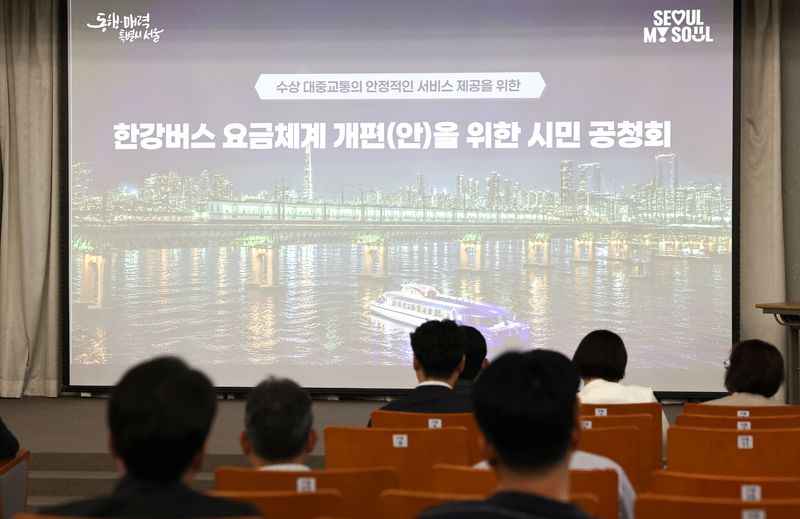
[Financial News] The Seoul Metropolitan Government plans to raise the regular weekend and holiday fare for the Hangang Bus from the current 3,000 won to 6,000 won. The weekday base fare will remain 3,000 won, while differential fares will be applied on weekends and holidays, when leisure and tourism demand is concentrated. The Seoul Metropolitan Government held a public hearing on the Hangang Bus fare system reform at Husaeng-dong in the Seosomun Annex on the 29th and unveiled the proposed changes.
Under the proposal, the regular weekend and holiday fare will double from 3,000 won to 6,000 won. The fares for teenagers and children will be adjusted from 1,800 won to 3,600 won and from 1,100 won to 2,200 won, respectively. After gathering public feedback at the hearing, hearing and voting by the Seoul Metropolitan Council in November, and completing system development, the Seoul Metropolitan Government plans to introduce the new fare system as early as April next year.
The city also plans to introduce an advance reservation system. Under the proposal, 10–20% of all seats would be available for advance reservations, with reservation users charged an additional 2,000 won on top of the base fare. The system will be piloted starting next month, after which the city will decide whether to formally adopt it.
The fare system is being revised because passengers are concentrated on weekends and holidays and the service is also running an operating deficit. As of June, the Hangang Bus had an average of 4,467 passengers per day on weekends, more than double the weekday average of 2,151. An additional seven to nine safety personnel are also deployed each day on weekends.
The Seoul Metropolitan Government estimates that the Hangang Bus's operating shortfall will amount to approximately 13.5 billion won through next year. If the proposed changes are implemented, operating revenue in 2028 is projected to increase by approximately 932 million won compared with keeping the current fares. The estimate also reflects the possibility of a decline in ridership following the fare increase.
The proposal was developed based on the results of a research project commissioned by The Seoul Institute. A survey of 2,107 Hangang Bus passengers at Yeouido Ferry Terminal and Jamsil Dock last month found that the median willingness-to-pay was 8,248 won. The Seoul Metropolitan Government proposed a 6,000-won weekend and holiday fare after also considering public transportation fare levels in the Seoul metropolitan area.
Park Jin-young, head of the Seoul Metropolitan Government’s Future Hangang Headquarters, said, "There is a need to examine a flat-fare system to improve service quality and ensure stable operation of the Hangang Bus."
At the hearing, however, some participants said that the Hangang Bus's role as public transportation should be considered alongside profitability. Park Dong-joo, a professor in the Department of Transportation Engineering at the University of Seoul, suggested, "In addition to tourism and leisure, it is necessary to consider the Hangang Bus's role as a daily means of transportation and reflect the purpose of each trip in fare policy."
In response, Han Sang-gyun, CEO of Hangang Bus, explained, "Applying differential fares to leisure trips could increase annual operating revenue from 1.7 billion won to 2.6 billion won, reducing the operating shortfall and Seoul Metropolitan Government subsidies." The Seoul Metropolitan Government plans to design the system so that differential fares are applied according to usage times and service types while maintaining the 3,000-won base fare.
[email protected] Seong Cho-rong Reporter