Ko Sang-baek, President of the Korea Health Industry Development Institute (KHIDI): "Biohealth Must Become an Industry That Solves Social Problems"
- Input
- 2026-09-29 15:00:00
- Updated
- 2026-09-29 15:00:00
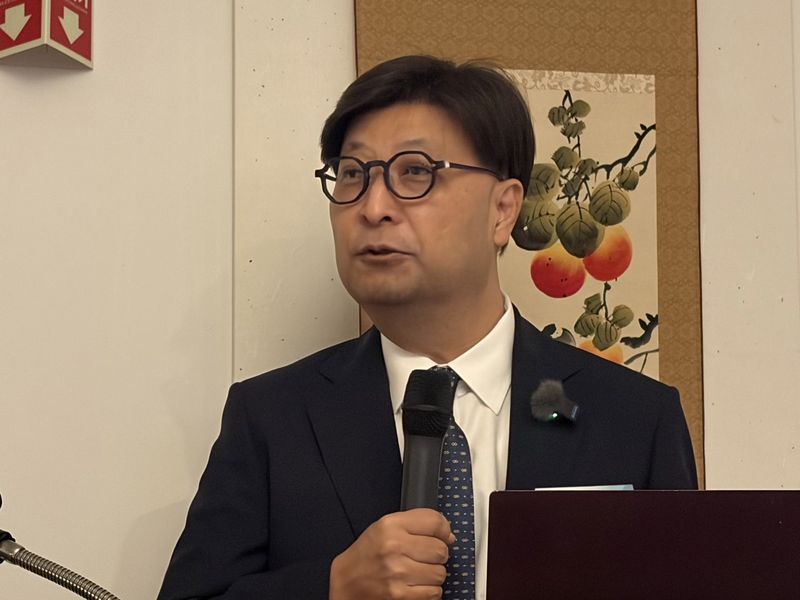
Ko Sang-baek, president of KHIDI, said at a luncheon meeting held on the 29th, "The biohealth industry is both a key engine of future national growth and a core industry for resolving difficult problems in the healthcare field, such as essential regional healthcare and care in a super-aged society."
Now in his second month in office, he identified essential regional healthcare, care challenges arising from super-aging, AI, R&D, and institutional integration as key issues when asked about KHIDI's priorities. In particular, he said he would strengthen the institute's research and policy functions. Although KHIDI's R&D budget has increased significantly, he explained that research and policy functions are needed to support both short-term projects and mid- to long-term strategies, given the limitations of the government-led, top-down approach in which the government sets the projects. Ko said he would pursue an organizational restructuring within KHIDI to reinforce its research and policy functions.
He also identified the use of AI and health data as key tasks. AI should be applied to the health industry to help solve public health issues, while the scope of health data use should be expanded. He said a two-track approach is needed, combining the use of anonymized and pseudonymized information with use based on individual consent. He also suggested establishing a cooperative framework through which relevant organizations, including National Integrated Bio Big Data, HIRA, and National Health Insurance Service (NHIS), can share and utilize data.
He also emphasized that healthcare R&D outcomes must move beyond research and lead to real-world medical applications and industrial development. This is in line with his opening remarks that KHIDI would establish a virtuous cycle of technology commercialization, in which research results lead to startups, investment, and global expansion.
Regarding regulations, he noted the need for improvement. Ko said, "Because the health industry is subject to regulation, rather than eliminating regulations themselves, we should improve the system reasonably so that innovative technologies can enter the market quickly."
Regarding institutional integration, he said that no specific timeline has yet been set. He explained that the matter requires consultations with the Ministry of Health and Welfare (MOHW) and the institutions subject to integration, adding that the process would be pursued without disruption through communication with the relevant organizations.
Ko said, "The promotion of the industry and R&D outcomes themselves cannot be the ultimate goals." He added, "Ultimately, we will review the direction of support for the health industry in connection with the goals of growing the national economy, improving public health, and enhancing quality of life."
[email protected] Jeong Sang-hee Reporter